
- Home
- Interest points
- Old church of Nuestra Señora de la Victoria
Info
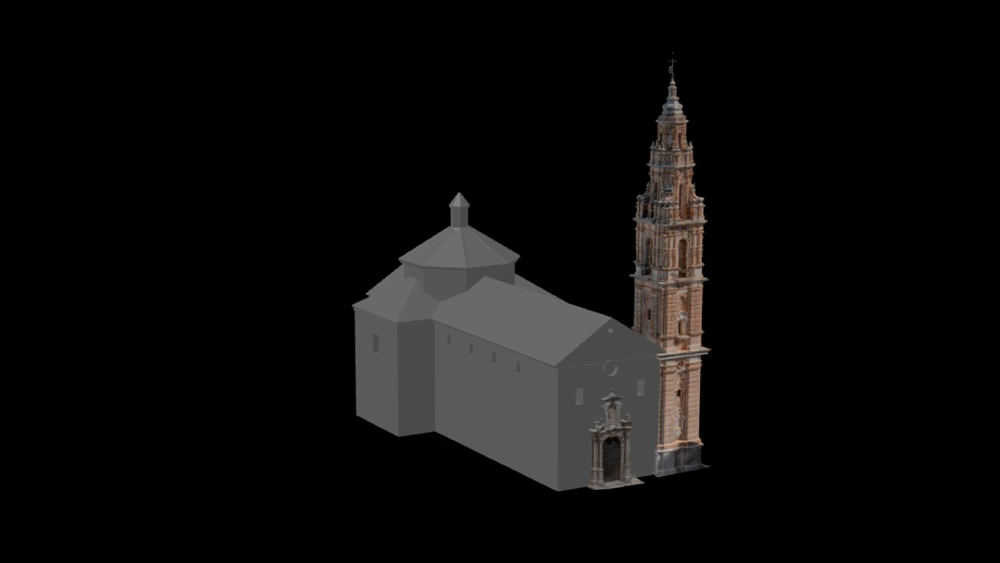
The church of La Victoria de Estepa was part of the convent of the Padres Mínimos. Partially demolished, it still conserves parts of the wall and the tower. Also the doorway, which is located in another church in the town.
Know more
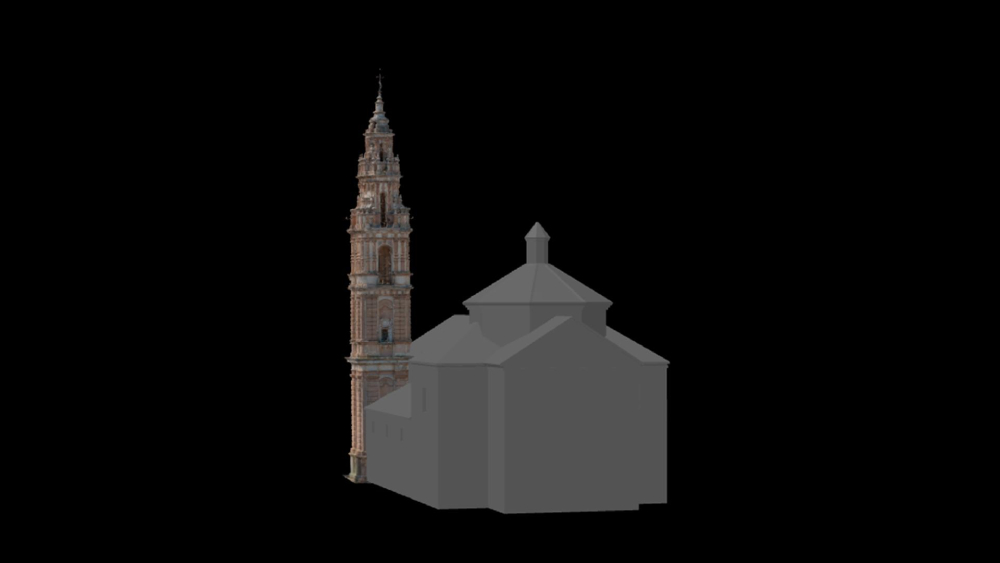
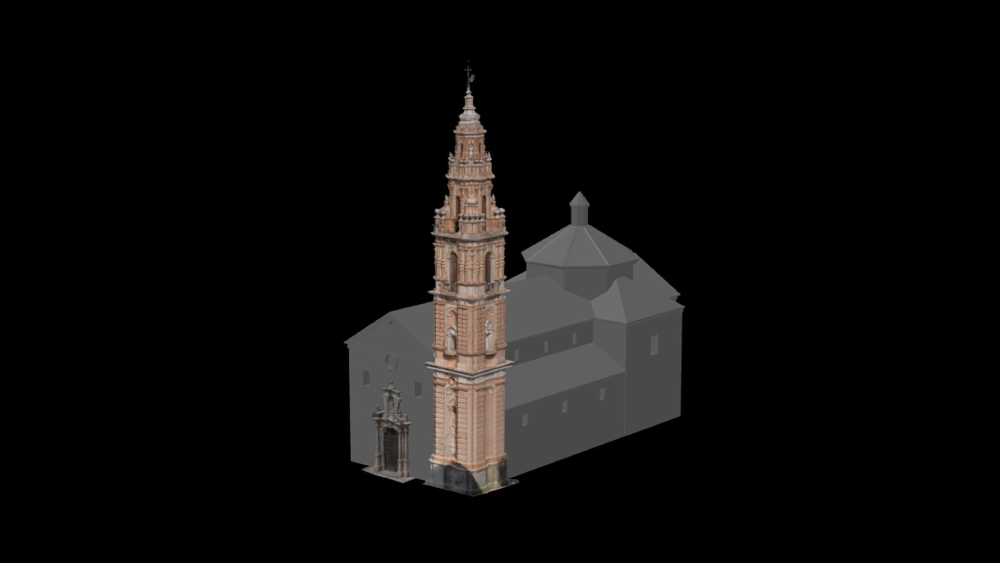
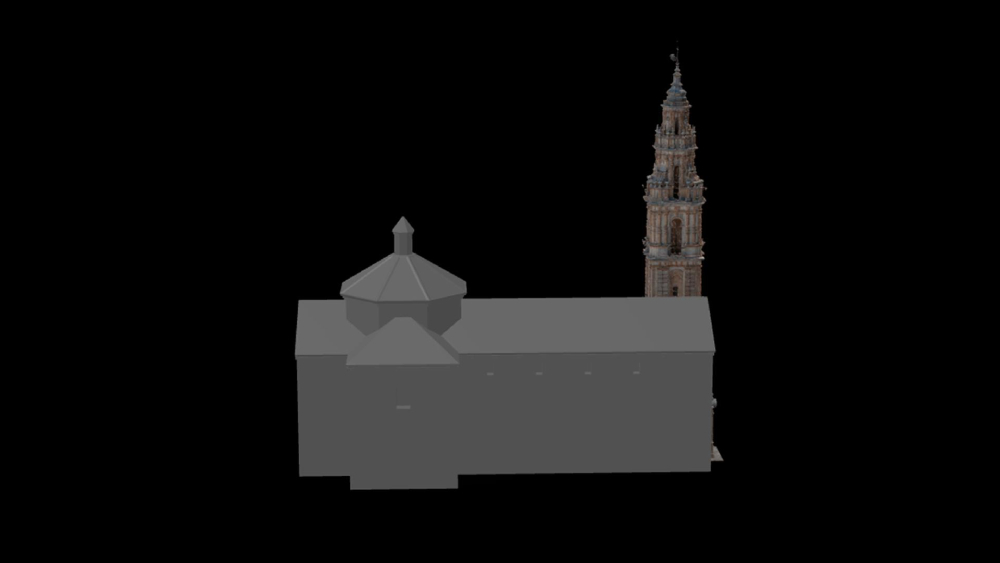
The church of La Victoria de Estepa was part of the convent of the Padres Mínimos. No remains of the convent remain, while the church, partially demolished, still preserves the side walls and the chancel. However, the tower still stands tall, like a slender spire raised towards the sky, defying the passage of time, orphaned of its half-demolished temple. Thanks to photographic documentation from the 1930s and 1940s, we can recreate the church, whose tower has become one of the hallmarks of Estepa.
The history of the church of La Victoria begins in 1561 with the arrival of the Minim friars in the town, an installation that was sponsored by the first Marquis of Estepa, Don Marcos Centurión. After an initial attempt to locate the convent on the hill of San Cristóbal, the monastery moved to its definitive location in 1652, extending over the following centuries to the block between the present-day streets of Ancha, José Luis Cabezas and Antonio Álvarez.
The construction of the church began at the beginning of the 17th century. According to a preserved contract between the representatives of the convent and the architect Pedro Martínez Orejuela, the date would be 1602, a fact that seems to be confirmed given that in 1603, practically a year later, there are already requests to reserve burial areas. However, according to the documentation in the Archive of Notarial Protocols of Estepa, construction work on the church began on 1 April 1604, following the plans drawn up by Juan de Ochoa, the master builder of Córdoba. The work was carried out by Bartolomé Muñoz, also from Córdoba, and has a Latin cross plan with a single nave covered with a barrel vault divided into sections by transverse arches on Doric pilasters. Behind the main arch, the ante-presbytery was covered with a hemispherical dome on pendentives, at the back of which was the main altarpiece. On the façade there are two openings and a central oculus above a monumental doorway, attributed to the stonemason Juan Antonio Blanco from Ostipón. This façade has a split pediment on paired Corinthian columns on pedestals. The pediment is crowned by a niche that houses an image of the Virgen de la Victoria, patron saint of the Mínimos.
Construction continued until at least 1620, as evidenced in the will of Doña Catalina de Bailén, which orders the sale of all her assets and, with the surplus, the purchase of chalices and other elements for worship. Other reports indicate the continuation of work on the church. The last documented works respond to late Baroque aesthetic criteria, typical of the 18th century. The tower was erected between 12 April 1760 and 7 May 1766, according to an inscription on the tower. It has five sections of different architectural order, and brick was mainly used in its construction, reserving stone to reinforce its base and for details such as the cornices or the spire. The use of cut and moulded brick gives the monument a unique character, framing it in a style that is peculiar to Sevillian Baroque architecture. The first two sections have cushioned pilasters, the third has balustraded columns and the top is a spire with two sections decorated with various motifs.
Although the convent of Mínimos de Estepa was noted for its wealth in the 18th century, in 1835 it was closed in the context of the processes of exclaustration and disentailment of the religious orders, and in 1836 it was destroyed in order to sell its remains as building materials. As for the church, it was saved from demolition, and in 1940 it was still standing. However, in the following decade and due to its ruin, it was demolished, leaving standing only what was not at risk of collapse, dismantling the façade which was installed in the nave of the epistle of the church of San Sebastián.
Today, apart from the tower, two small chapels remain in the chancel and the start of the perimeter walls. The interior space is now understood as a Romanesque garden that contains the remains of some stone altarpieces and the tombstones that covered some of the tombs.
3D Objects
Videos
Victoria Church and Tower
Bibliography
LUQUE CARRILLO, J. El arquitecto Juan de Ochoa. 1554-1606. Córdoba. 2020.
VVAA. Antiguo Convento de la Victoria. Ficha Técnica Junta de Andalucía.