
- Home
- Interest points
- Puerta de Sevilla
Info
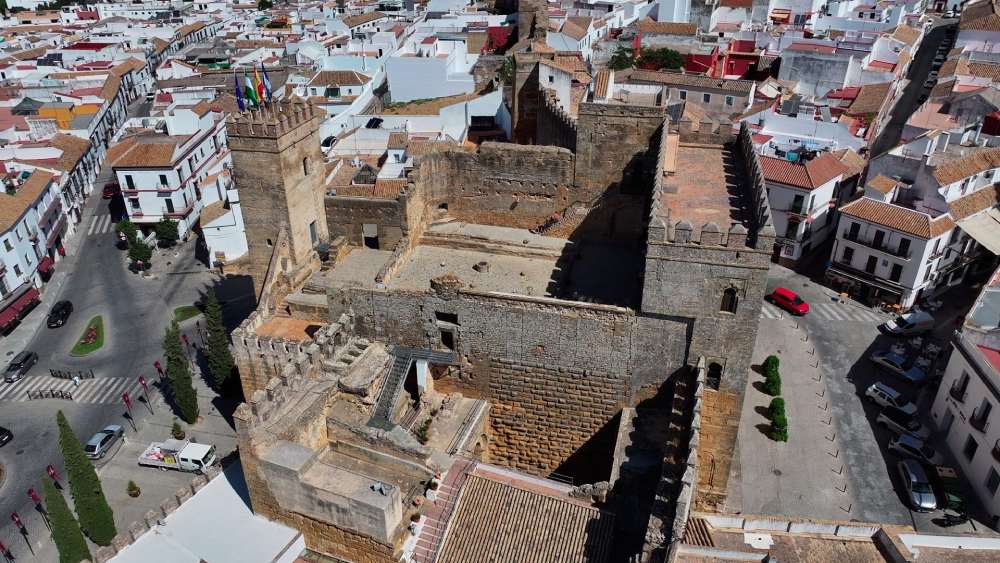
The bastion we know today as the Alcázar de la Puerta de Sevilla in Carmona formed part of the city's defensive enclosure and allowed access to the city from the west.
Opening hours:
Tuesday to Friday from 9:00 am to 6:00 pm.
Saturdays, Sundays and public holidays: from 9:00 to 21:00
Monday closed
Know more
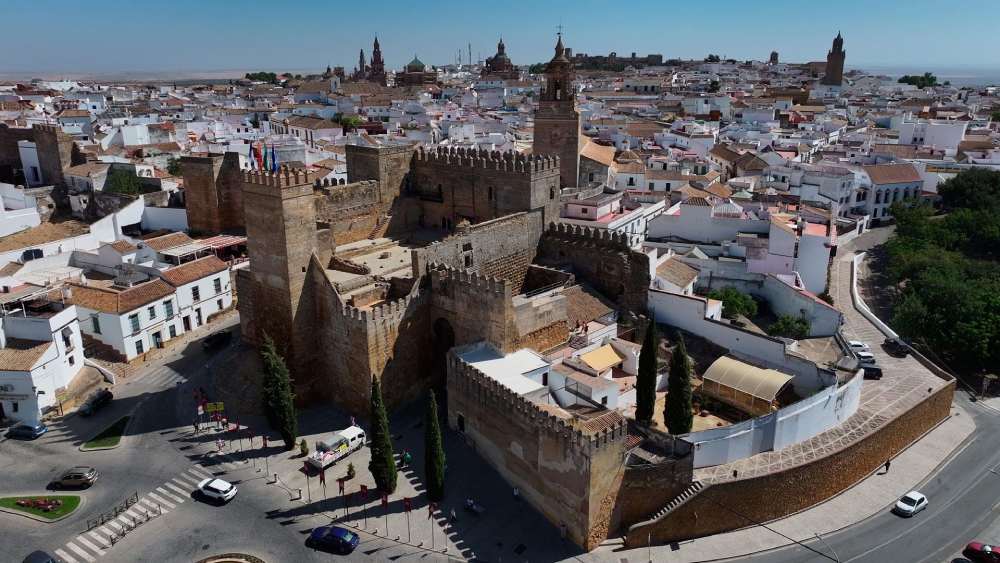
The bastion we know today as the Alcázar of the Puerta de Sevilla in Carmona was part of the city's defensive enclosure and provided access to the town from the west. The structures we can see are the result of over 2,000 years of history, reflecting the evolution of military engineering, or the art of defence, from the Punic period to the Modern Age. Over these centuries, a simple bastion transformed into a complex defensive system that still evokes awe when passing beneath its imposing walls.
The first enclosure protecting the access to the city of Carmo from the west was a fortified stronghold with a square-shaped plan, which, taking advantage of the pre-existing topography, extended outward from the city walls. The bastion featured a small advanced tower that facilitated the defence of the gate, located to its side, in the event of an attack.
This structure is commonly dated to the Punic period, although some researchers date it to the early Roman era, linking it to Hannibal's presence in southern Iberia and the military events of the 3rd century BC during the Second Punic War between Carthage and Rome. However, remnants have been found that seem to indicate that this fortification was already superimposed over an earlier defensive enclosure dating back to the 8th century BC.
During the Roman Republican period, in the context of the Roman civil wars, the gate was reformed and monumentalised. The access was reinforced with a trapezoidal courtyard or intervallum, surrounded by walls with two openings covered by barrel vaults at the ends. The intervallum allowed for the defence of the second gate from above, should attackers manage to breach the first. The Puerta de Sevilla, along with the Puerta de Córdoba, marked the ends of the cardo maximus, the east-west artery that structured Roman Carmo.
Furthermore, in the second half of the 1st century BC, the Punic bastion was further elevated, and on the upper terrace, a powerful base was constructed, upon which a tetrastyle temple was built. The temple would have been accessible from the city by means of a system of stairs and terraces, with several design hypotheses, including the one presented in the early scientific studies of the Puerta de Sevilla.
The next significant phase of reconstruction occurred during the Islamic Lower Medieval period, with works dating from the 9th to the 13th centuries. For nearly a thousand years, the gate continued to be in use with its Roman configuration, and the city's defences were renewed after the fall of the Umayyad Caliphate with military architectural advances from the Almoravids and Almohads.
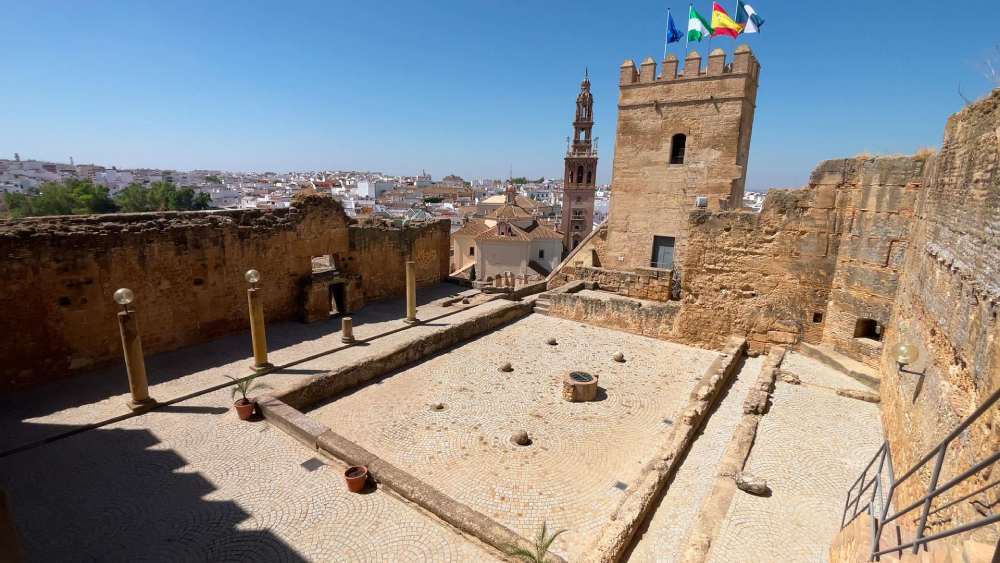
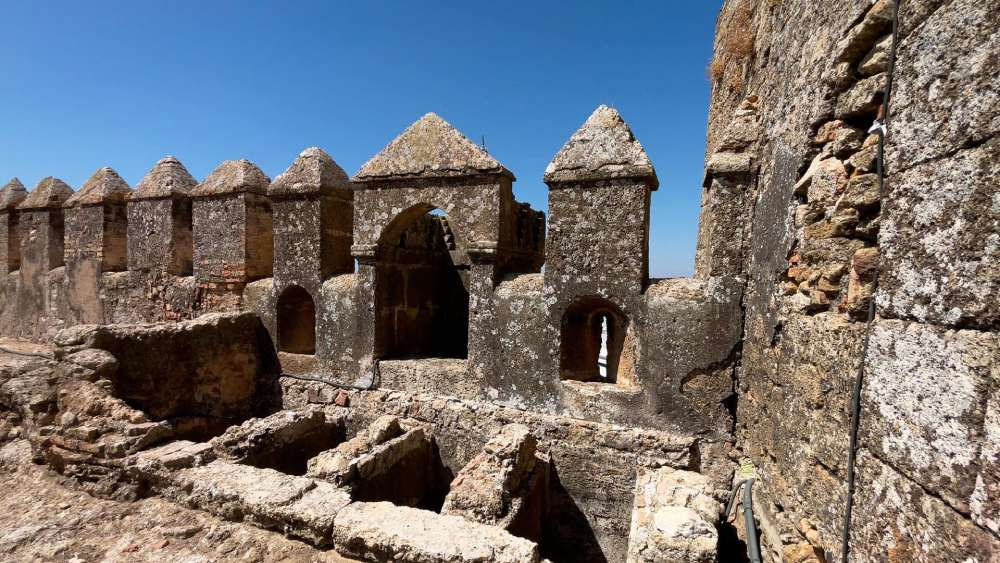
Thus, during the Andalusian period, the defensive system around the gate became much more complex. In this phase, a rectangular structure was added to the Roman-era access system, featuring two openings framed by pointed horseshoe arches, allowing for the addition of a "buhedera" (a small fortified room) and a "ladronera" (a space for defending against thieves). These openings allowed for vertical defence against attackers attempting to access the gate. Between the access points, the open space or intervallum still remained. As for the area previously occupied by the temple, a cistern was now built to supply water in case of an attack on the defensive complex.
With some subsequent, less significant reforms, the Puerta de Sevilla today offers a kaleidoscopic view through which we can approach the various historical events that have shaped the imposing bastion of Carmona.
3D Objects
Videos
Puerta de Sevilla
Bibliography
HERRERA, H. Puerta de Sevilla en Carmona. Boletín de la Real Academia de la Historia. 1906.
JIMÉNEZ, A. La Puerta de Sevilla en Carmona. 1989.
LINEROS ROMERO, R. Urbanismo romano de Carmona. CAREL. 3. 2005.
RODRÍGUEZ RODRÍGUEZ, I. La Puerta de Sevilla. Monumento Nacional desde hace 100 años. CAREL. 5. 2007.
SCHATTNER, T. La Puerta de Sevilla en Carmona y otras puertas romanas en la Península Ibérica. Rómula. 4. 2005.
VVAA. Alcázar y Puerta de Sevilla. Ficha Técnica Junta de Andalucía.