
- Home
- Interest points
- Museo Histórico Municipal de Écija
Info
The Municipal Historical Museum of Ecija, located in the Benamejí Palace, offers a journey through the history of the city, from Prehistoric times to the Modern Age, highlighting its Roman and Andalusian past. Among its most important pieces are the Wounded Amazon and a rich collection of mosaics and archaeological artefacts that reflect the importance of Ecija in the Roman province of Baetica.
HOURS
(19 September to 30 June):
Tuesday to Friday: 10:00-13:30 and 16:30-18:30
Saturdays: 10:00-14:00 and 17:30-20:00
Sundays and public holidays: 10:00-15:00
(Mondays closed. Closed on January 1st, January 6th and December 25th)
SUMMER TIMETABLE
(1 July to 18 September):
Tuesday to Friday: 10:00-14:30
Saturdays: 10:00-14:30 and 20:00-22:00
Sundays and public holidays: 10:00-15:00
(Monday closed)
Know more
The Municipal Historical Museum of Écija, located in the majestic Palace of Benamejí, offers visitors a journey through the rich history of the city. This Baroque building, constructed between 1700 and 1760 and declared a Cultural Heritage site, is a magnificent example of Andalusian civil architecture from the period. Its monumental brick façade and the two viewing towers at the ends create a striking contrast with the sobriety of the exterior, which is only broken by the spectacular Baroque portal crowned by the coat of arms of the Marquises of Benamejí.
The museum is organised into various exhibition halls covering different historical periods, from Prehistory to the Modern Age, providing a detailed look at the city and its surroundings’ evolution.
Prehistory and Protohistory
The Prehistory hall explores the earliest traces of life in the Guadalquivir valley, where groups of hunter-gatherers settled hundreds of thousands of years ago. Through flint tools and other displayed objects, one can understand the technological evolution of these groups. The room also addresses the Neolithic Revolution, which brought agriculture and sedentary life, marking the start of the first peasant economies.
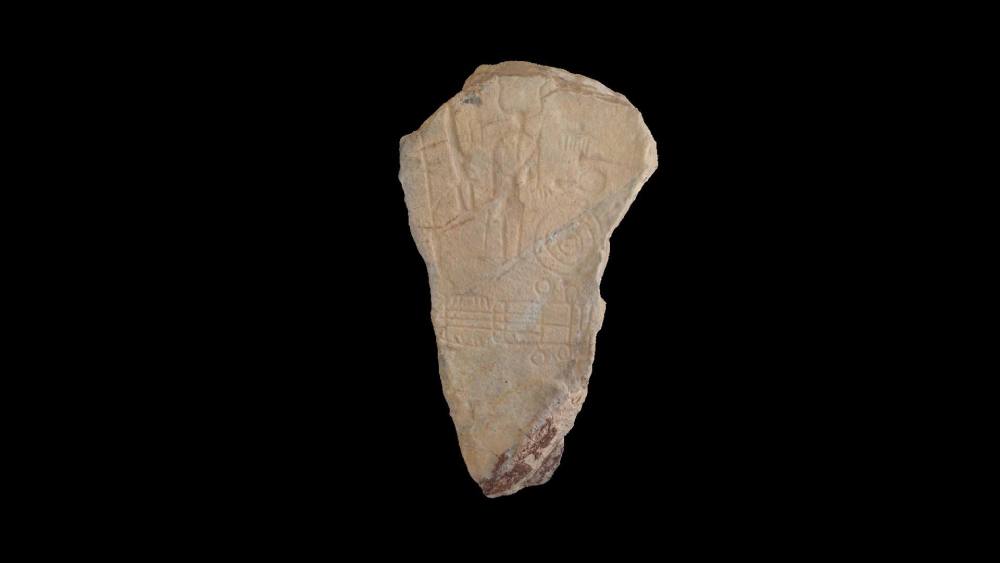
In the Protohistory hall, the Tartessian and Turdetanian periods are highlighted, marking the transition from prehistoric to historic societies. The exhibition includes valuable items such as the Écija Plaque, a masterpiece of Tartessian goldsmithing, and a model of the Alhonoz archaeological site, one of the region’s most important Iberian settlements.
The Roman Era
The museum also dedicates several rooms to the Roman period when Écija, known as Colonia Augusta Firma Astigi, became one of the most important cities in the Roman province of Bética. The city was a major producer of olive oil, which was exported across the empire, and this prosperity is reflected in the archaeological remains on display in the museum. These include a recreation of a Roman boat used to transport oil, as well as amphorae and other tools from the olive oil industry.
Another room, titled "In the Image of Rome", shows how Astigi was designed and decorated following the model of the imperial capital. Architectural elements like capitals, pedestals, and fragments of temples, as well as decorative and domestic objects, are displayed. Among the museum's greatest treasures is the bronze gilt screen, a unique Roman piece found during excavations at Plaza de España in Écija.
The Middle Ages and Al-Andalus
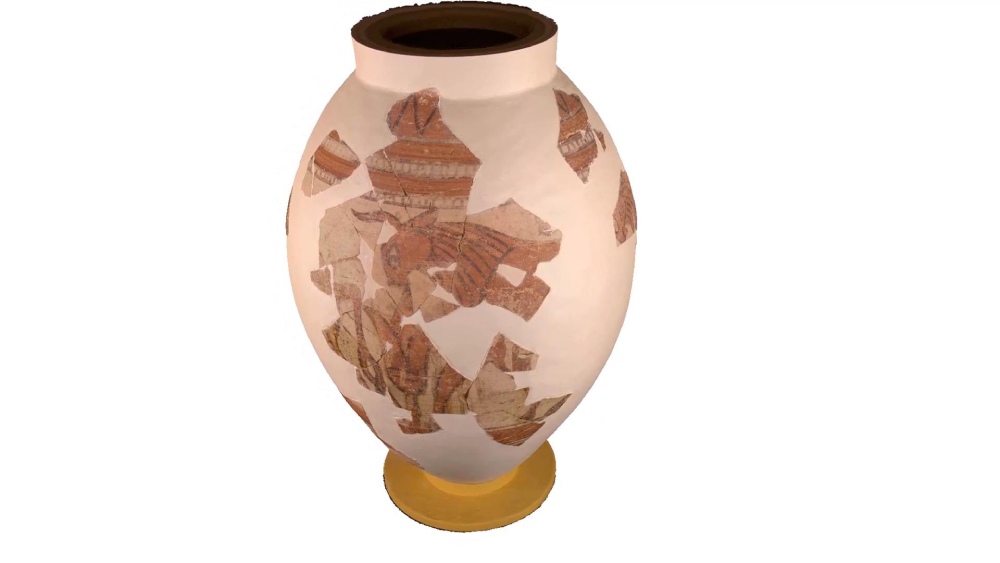
The section dedicated to the Middle Ages offers a look at the transformation of Écija after the fall of the Roman Empire. During the Muslim period, the city, known as Istiŷŷa, became an important agricultural and scientific centre in the Emirate and Caliphate of Córdoba. The room displays a collection of Andalusian ceramics and three Muslim burials, one of which is that of a pregnant woman, offering insights into life in the city during that time.
Art and Heritage Rooms
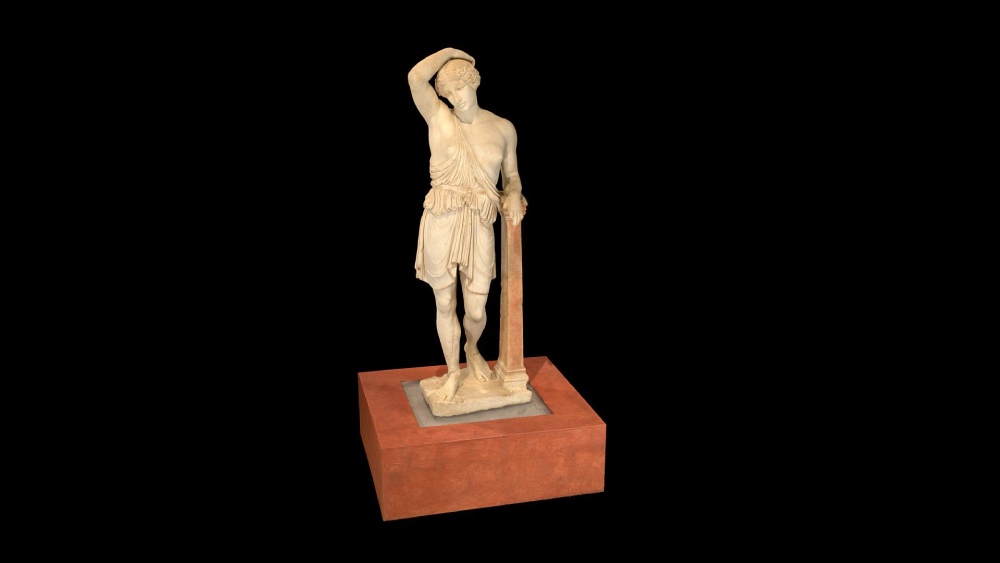
The museum also houses an impressive collection of Roman sculpture, with the Wounded Amazon being the most emblematic piece. This marble sculpture, discovered in Plaza de España, is a high-quality Roman copy of a Greek original and is considered one of the most important recent archaeological finds.
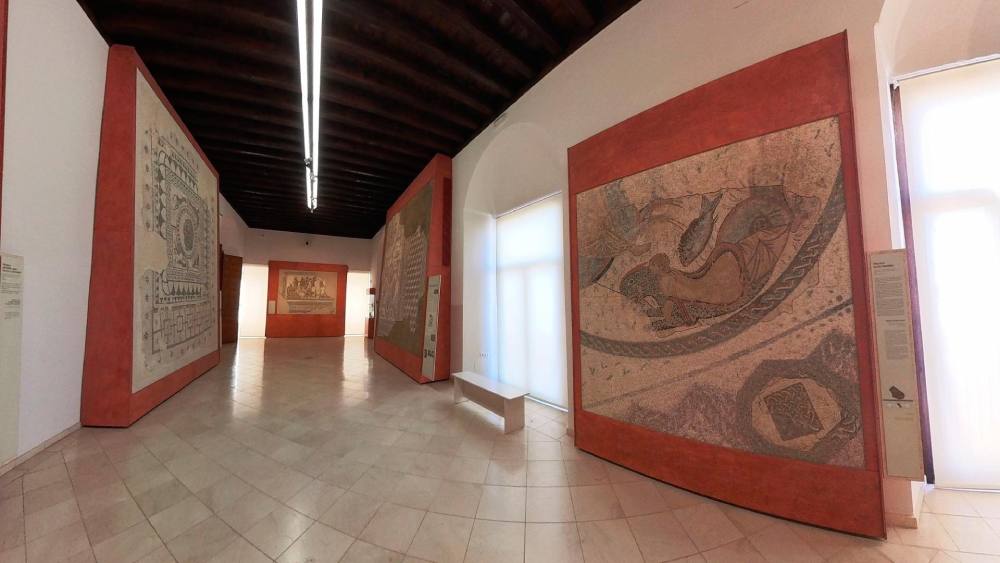
In the mosaic room, visitors can admire some of the most significant Roman mosaics found in Astigi, including the Mosaic of the Seasons and the Mosaic of the Triumph of Bacchus, which decorated the homes of the wealthiest families in the city.
3D Objects
Bibliography
https://museo.ecija.es/