
- Home
- Interest points
- Colegiata de Osuna
Info
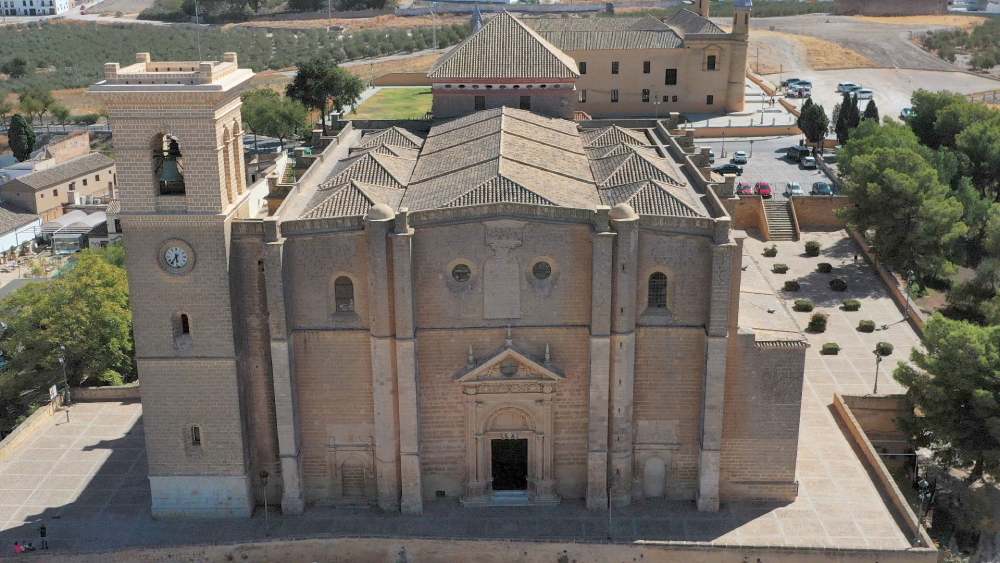
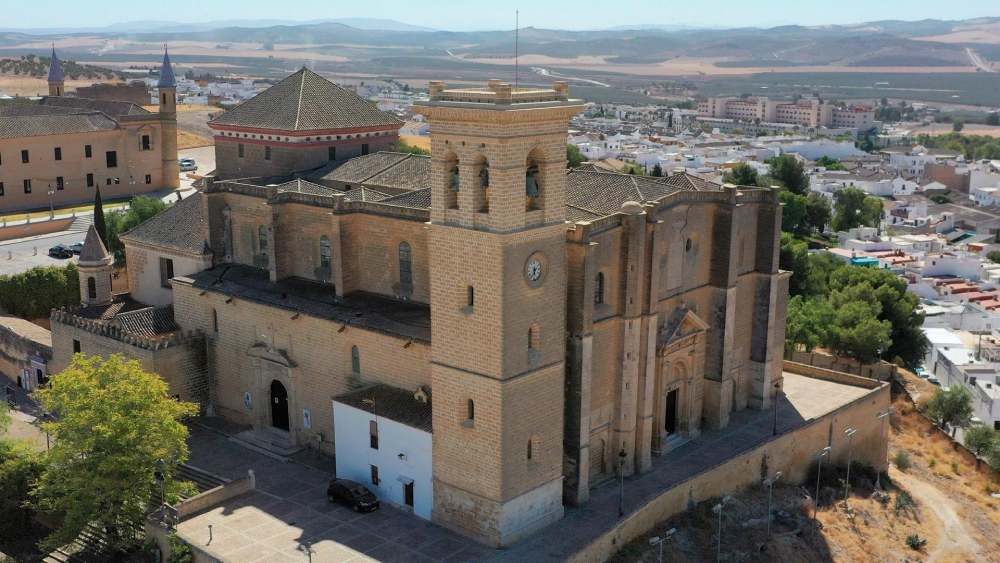
The Collegiate Church of Santa María de la Asunción de Osuna, founded in 1526, is a Renaissance temple with a rectangular floor plan and three naves, with a bell tower that was rebuilt after a lightning strike in 1918. Inside, there are chapels with ribbed vaults and a presbytery with a dome added in the 18th century. It houses the Ducal Pantheon, a Plateresque style complex that includes chapels and rooms, transformed in the 20th century by the architect Jacomo Gali.
Know more
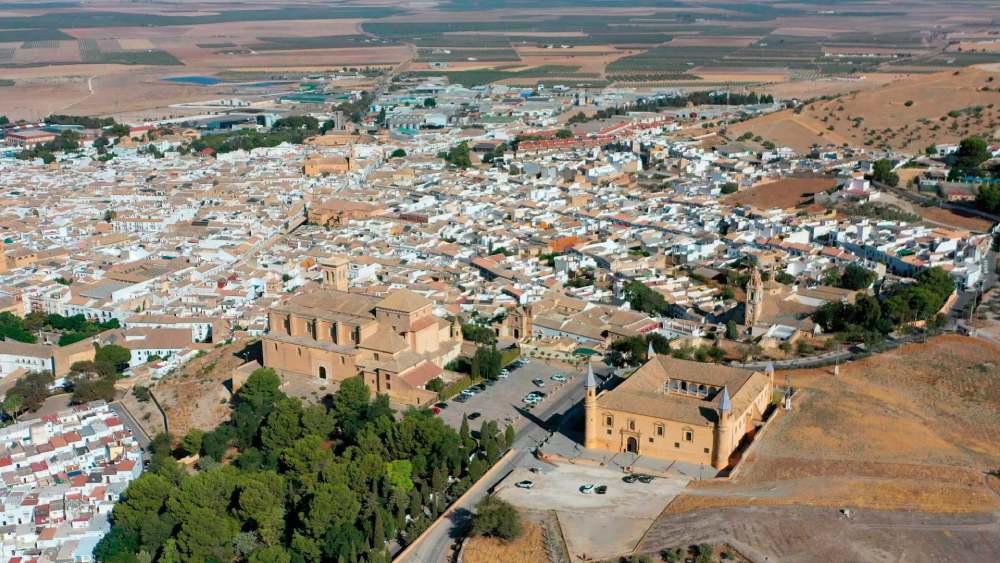
The Collegiate Church of Our Lady of the Assumption stands as a sober monumental building that dominates the urban centre of Osuna.
The project was conceived at the beginning of the 16th century, when the town of Osuna passed from the Order of Alcántara to the house of the Téllez de Girón, Counts of Ureña and later Dukes of Osuna.
The Telléz de Girón family developed a complex and varied programme of monumentalisation of Osuna, which included the construction of the university, a hospital, thirteen churches, the Collegiate Church and the Ducal Pantheon, making their town a notable cultural and religious centre worthy of the economic and political power of the family. In this centre, the elevation where the collegiate church, the university, the Convent of the Encarnación and, before its ruin, the castle residence of the dukes stood out as an authentic acropolis.
In the ambitious programme of the Téllez de Girón family to magnify Osuna and control the institutions of the town, following the model of the families that governed the Italian cities, the obtaining of the ownership of the Collegiate Church of Osuna was key. Obtained by a papal bull of Paul III, the document granted the right of patronage and to present the position of abbot to the Count of Ureña and his descendants.
The construction of the collegiate church began around 1530 on the site where the remains of the medieval parish church known as the Castle Church were.
Its main body would not be finished until 1540, although its current appearance is the result of various modifications, extensions and reforms that occurred until the 20th century.
The ashlar construction, built with alberiza stone extracted from local quarries, the imposing buttresses and the scarce decoration give it an austere appearance from the outside that contrasts with the aesthetic luxury of the interior when entering the building.
The temple was conceived in a Gothic style, but was modified following the Renaissance taste, presenting a rectangular floor plan with three naves of equal length. Of the three doorways of the main façade, located at the foot of the building, the side ones are blocked off, leaving as access the one currently known as Puerta del Sol, in Plateresque style and decorated with grotesques and medallions, from which one accesses the main nave.
Two doors added in later reforms give access to the side naves, the Puerta de la Cuesta to the Gospel nave and the Puerta del Sol to the Epistle nave.
Although the original design of the building would have been flanked by two towers, one was never built and the one we see today remained unfinished until it fell at the beginning of the 20th century, and was rebuilt.
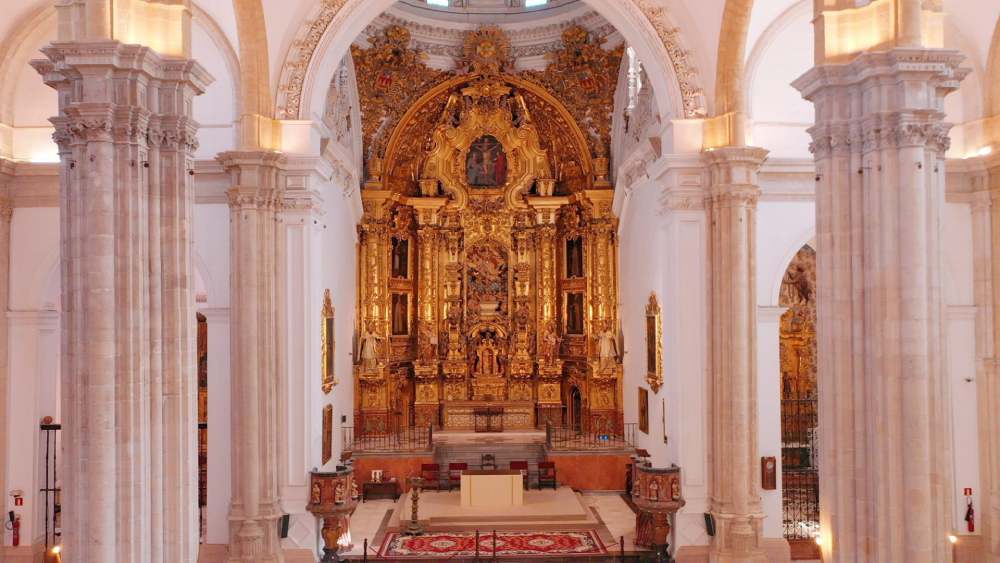
The spacious interior has three naves of equal length separated by semicircular arches supported by pillars on pedestals with columns and attached pilasters, with the central nave being the widest. At the back, the dome of the apse is the result of an 18th century reform.
A series of side chapels open onto the naves at the ends, which may correspond to the initial Gothic project. In the chapel of the Conception there are two Plateresque doorways, one leading to the old sacristy, now a room of the Museum of Sacred Art, and the second to the ducal pantheon.
Attached to the collegiate church, and partly under it, is one of the most unique constructions in this complex, the Pantheon of the ducal house of Osuna and county of Ureña, founded in the mid-16th century by the 4th count, Don Juan Téllez-Girón. The complex is accessed from the chapel of the Immaculate Conception through a Plateresque door decorated with motifs alluding to death as a sign of mourning and warning, as it was only opened when a member of the family was to be buried, remaining closed the rest of the time.
Of the different rooms that make up the pantheon, the most notable are the chapel of the Holy Sepulchre and the sepulchral crypt, two underground rooms that are under the main altar of the collegiate church. A location that was intended to place the relatives who rested in the crypt under divine protection.
The Renaissance architecture of the collegiate complex was completed with a rich iconographic programme where the altarpieces stand out as support, among whose scenes there is a representation of the Assumption of the Virgin Mary, under whose patronage the Collegiate Church is.
As a result of the patronage of the dukes and donations from devotees, numerous works of art (imagery, painting, altarpieces, etc.) were added to the original iconographic and decorative programme, constituting a rich treasure where the collection of baroque oil paintings stands out, with paintings such as Christ of the Atonement by José de Ribera, and works of imagery, such as Christ of Mercy by Juan de Mesa.
Videos
Colegiata de Osuna
Bibliography
AGREDANO ALONSO, J. La Colegiata de Osuna. Arte, Arqueología e Historia. 15. 2008.
VVAA. Colegiata de Nuestra Señora de la Asunción (Osuna). Ficha Técnica Junta de Andalucía.