
- Home
- Interest points
- Santa María Encarnación Parish Church
Info
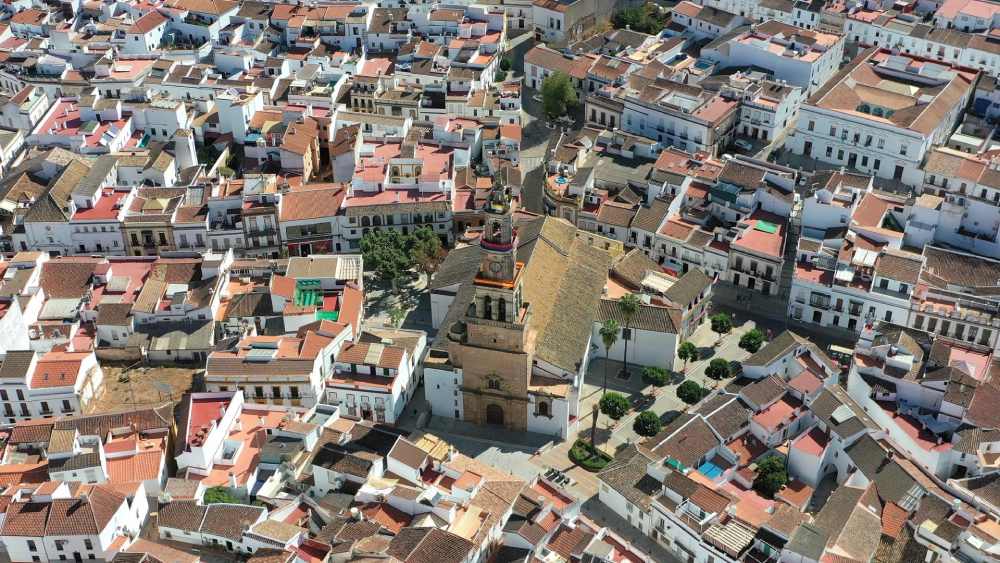
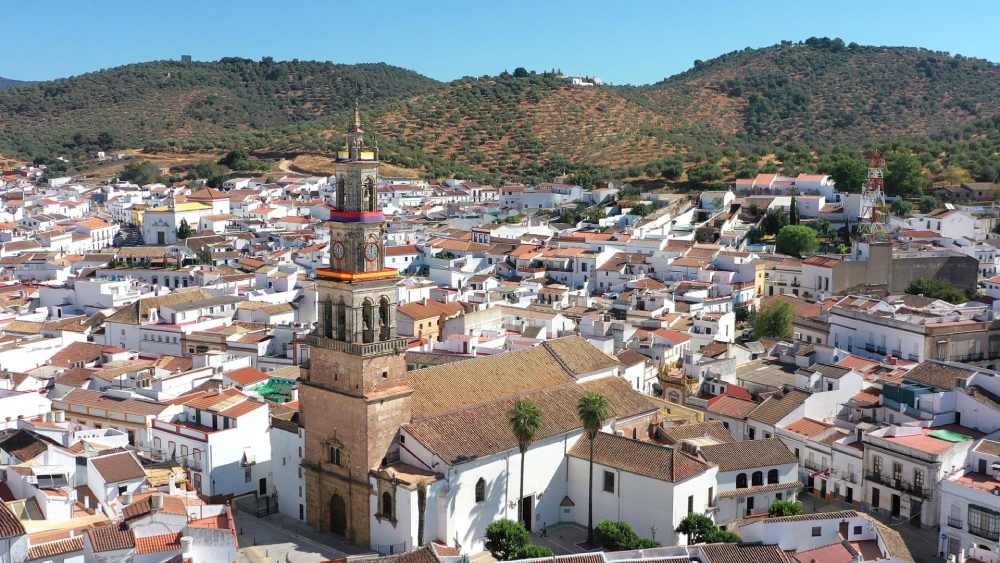
In the Plaza del Llano stands the parish church of Santa María de la Encarnación, which, ennobled by its tower-façade, is the most important church in the centre of Constantina,
Know more
In the Plaza de Llano del Sol stands the parish church of Santa María de la Encarnación, which, ennobled by its tower-façade, is the most important temple in the urban centre of Constantina.
The construction of the church dates back to between the end of the 14th century and the beginning of the 15th century, and seems to respond to the need to unify three old medieval churches into a single parish in order to serve the growing population of the town. The building was designed with three naves separated by pillars and pointed arches, a chancel and a tower-façade, of which the first body is preserved, the whole following a Mudejar typology.
Over the centuries, as is usual in buildings of this entity, numerous reforms and additions will take place. In the 16th century, the main façade was added and in later centuries, the three side chapels were attached to the old building, leaving the presbytery and its side chapels covered with ribbed vaults and the rest of the naves with groin vaults separated by transverse vaults.
However, at the beginning of the Spanish Civil War, the church suffered a fire that seriously affected the building, losing the original wooden roof of the central nave and the altarpiece of the main altar. The tower, however, was not damaged.
In 1941, restoration work began on the temple, whose reforms have taken place throughout the 20th century. In this process, the church has been provided with the furniture, altars and images that we can see today, where a simple altarpiece stands out, some pieces of which are attributed to Felipe de Ribas and images of great popular devotion such as the Virgin of Sorrows.
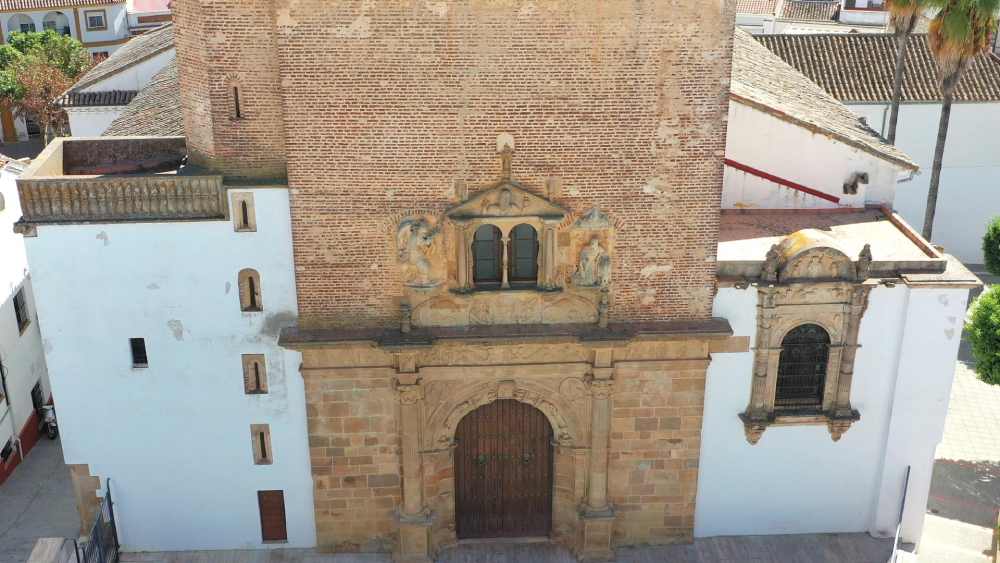
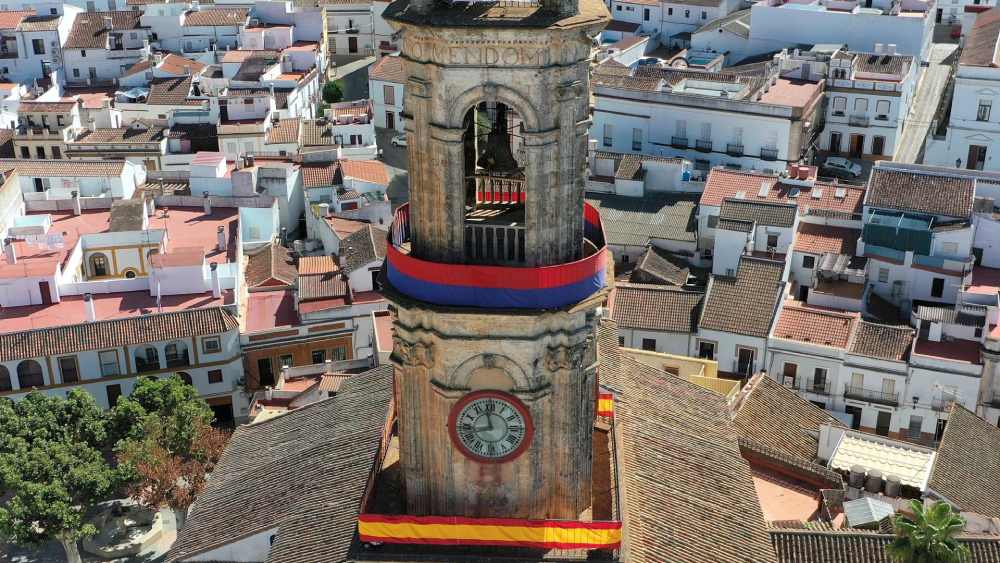
As many specialists have pointed out, the most outstanding building element is the tower, with five floors plus a spire, which reaches 50 metres and occupies the centre of the building. Its great slenderness is intensified by the strong contrast between the whiteness of the walls and the decorative stone motifs of the doorway and other parts of the façade. The construction was started by Martín de Gaínza, who is responsible for both the main doorway and the Renaissance window, completed around 1546. This master was later replaced by Hernán Ruiz II, who is possibly responsible for the project to complete the tower, which was completed by Pedro Díaz de Palacios between 1571 and 1575.
The tower rests on the large two-body Renaissance doorway made of carved stone. The “Door of Forgiveness”, which gives access to the church, has a semicircular arch and is flanked by columns with capitals, which are decorated with griffins and angel heads that support a complete entablature. At the top, the double window stands out, topped by a pediment, on whose sides are sculpted the images of the Virgin and Saint Gabriel in the scene of The Annunciation. The twin window is shown to us as one of the most notable stone carvings of the Renaissance in the province. The other window of the church of Santa María de la Encarnación is also Renaissance, with a semicircular arch, and is located to the right of the doorway. Through it, the baptismal font is illuminated.
Eighty-seven steps high, on a narrow and steep spiral staircase illuminated by loopholes, one reaches the clock machinery, which began to measure time in Constantina one hundred and thirty years ago. The time is marked on four dials from the fourth section of the tower. The tower's connection with timekeeping already appears early on with the old sundial located on one side of it. However, in 1662 the first mechanical clock was installed, located in the third section, and the dial on which the hours are inscribed is preserved. In 1890, the old clock was replaced by the one that the tower displays today and its mechanism requires that it be wound once a day every day of the year.
Three weights hang from the machinery, their weight and gravity cause the force that, through axes, moves the hands. These weights take twenty-four hours to touch the ground. Therefore, the weights must be raised every day so that the clock does not stop. Of the eight bells in the tower, the three located in the highest area are the ones that ring following the orders of the clock. However, its operation was interrupted many times until, on the occasion of its centenary, it was put back into operation thanks to the residents of Constantina and their Cavalcade of the Three Wise Men.
The commendable work of winding the clock daily allows the people of Constantina to maintain the historical link with time and its hands.
Videos
Parish Church of Santa María de la Encarnación