
- Home
- Interest points
- Hermitage of San Juan Bautista
Info
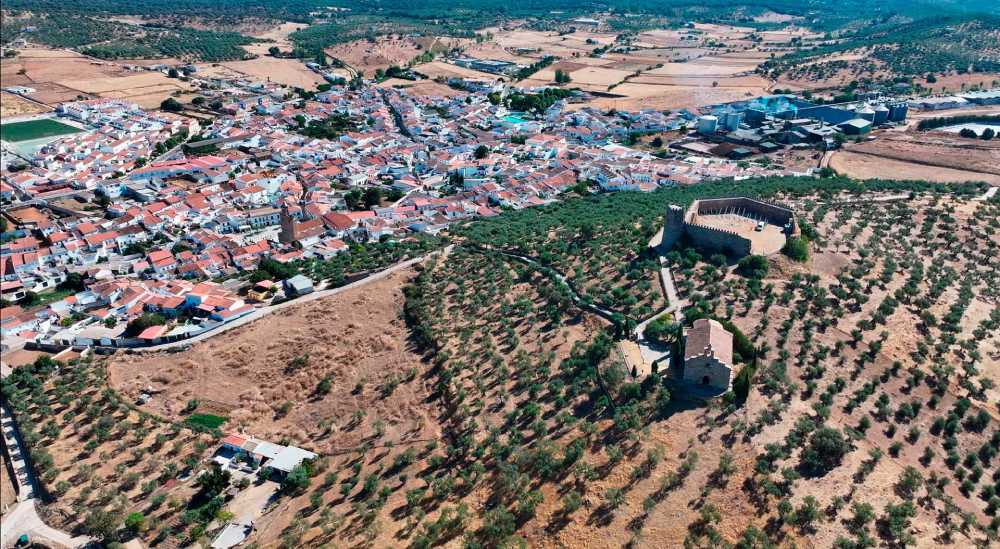
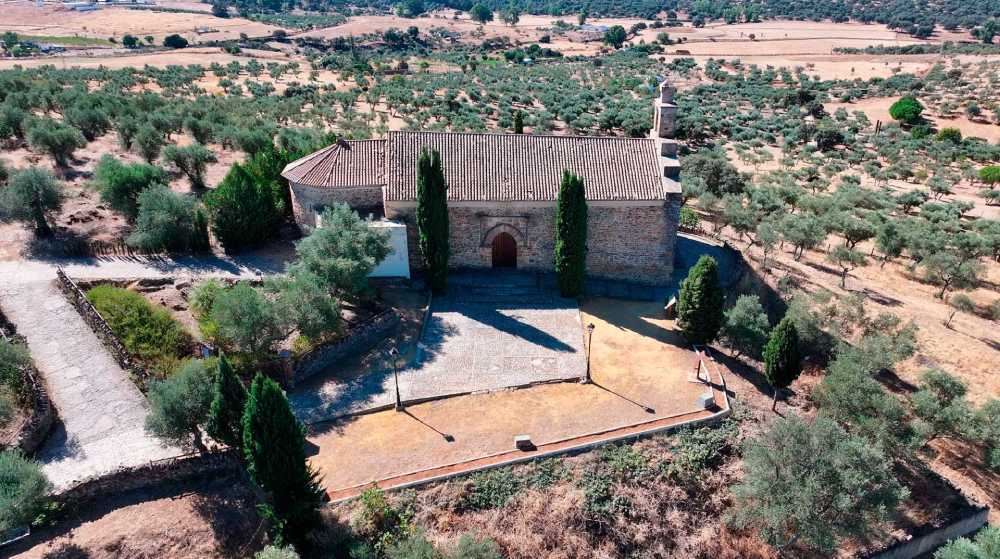
The Hermitage of San Juan, located on the hill of the castle of Alanís, was probably the first parish church in the town, with architecture dating from the 14th or 15th century. This Mudejar building with a single nave and decorated doorways housed sculptures and a mural of the Baptism of Christ, although many pieces disappeared in 1936. After its deterioration at the end of the 20th century, it was refurbished and is now used for civilian purposes.
Know more
The municipality of Alanís, located in the foothills of the Sierra Morena mountain range in Seville, has been known since ancient times for its profound religiousness. Proof of this is the large number of hermitages scattered around the town. These hermitages, the fruit of popular fervour, were erected thanks to funding and the pious donations of the faithful, playing an important role in the articulation of a rugged territory with scattered populations.
In 1699, the Libro de Visitas Pastorales (Book of Pastoral Visits) mentions five chapels scattered around the town of Alanís: Nuestra Señora de las Angustias, Vera Cruz, La Caridad y la Encarnación and San Juan Bautista, while in the following century these visits included those of Jesús Nazareno and the Hospitales de la Caridad y la Sangre, which shows the large number of chapels that existed during the modern period, in response to both the great devotion and the growing population.
In the 19th century, different historical events had a negative effect on these hermitages, either through the loss of their heritage due to the confiscations or the loss of popular devotion due to the secularising ideas of the time. As a result, many of them were left in a ruinous state. However, in the following century, repair work was undertaken that made it possible to rebuild these churches, as was the case with the church of San Juan in 1907.
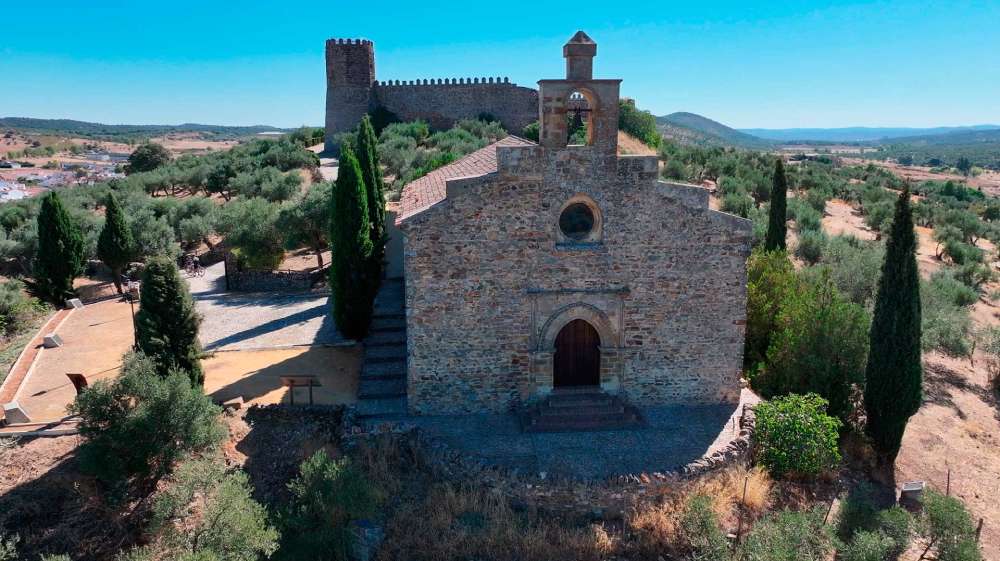
Located halfway up the slope of the hill on which the castle stands, San Juan has traditionally been considered the first parish church in the town, as it served as a place of worship when the population was concentrated around the castle hill. It is accessed by a path that, from the church of Santa Mª de las Nieves and along Calle Jesús, climbs gently up to this unique enclave built in the shade and shelter of the castle.
Its date of construction has been established as the first half of the 14th century, due to its Gothic architectural characteristics, although an inscription inside it, which has now unfortunately disappeared, dates it to the 15th century. It mentions the twenty-fourth knight of Seville, Don Cristóbal de Mosquera, as the founder of the church.
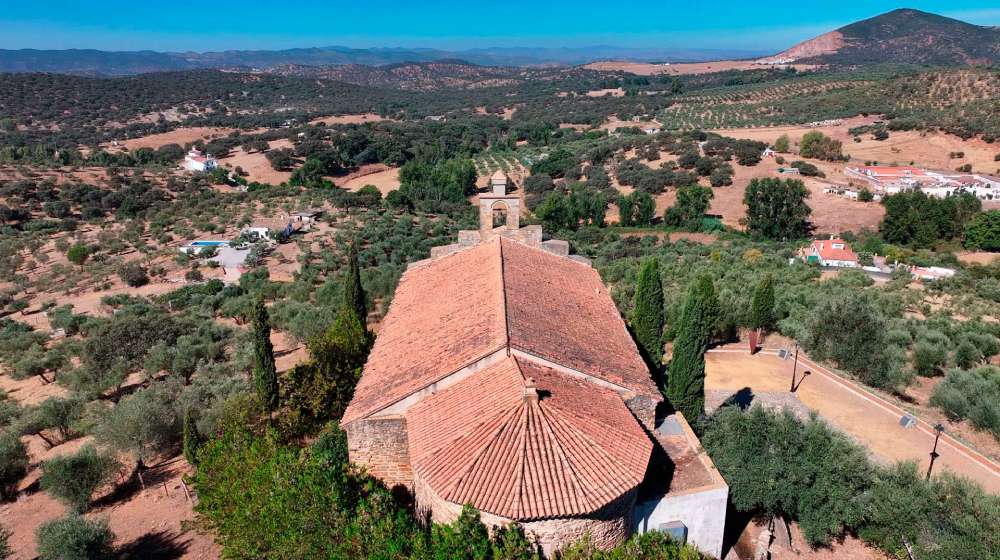
On the outside, the building is sober, with a rectangular floor plan and a singular semicircular apse that is more typical of the Romanesque style than the Gothic.
It is accessed through two Mudejar-style doorways. The doors open through pointed stone arches, which are backed by others decorated with diamonds or nail heads and framed by an alfiz framed by columns, the doorways are similar in style to those that give access to the parish church. Over the door of the main façade, a porthole was opened to illuminate the interior, topped by a small belfry with a bell.
Inside, the building has a single rectangular nave topped by a semicircular apse and divided into four bays by pointed brick arches - a model widely used in the medieval architecture of the Sierras of Córdoba, Seville and Huelva.
According to a letter from the parish priest in charge of the hermitage dated 1853, there were sculptures of Saint John the Baptist, Saint John the Evangelist, Saint Anthony the Abbot, Saint Anne and Saint Bridget on some of the supports, and there is also news of the existence of mural paintings with the theme of the baptism of Christ by Saint John.
Despite the work carried out at the beginning of the century, by the end of the 20th century the roof of the church had collapsed and its walls had been damaged by the elements. Various refurbishment works have managed to save this monument, which is now used for civilian purposes.
Videos
Ermitage San Juan Bautista
Bibliography
ANGULO ÍÑIGUEZ, D. Arquitectura mudéjar sevillana de los siglos XIII, XIV y XV. Boletín de la Sociedad Española de Excursiones. 1932.
HERNÁNDEZ GONZÁLEZ, S. Las ermitas de Alanís. Revista de Alanís. 1997.
PÉREZ, A. Ermitas, monasterios y conventos de Alanís. Difundiendo Alanís. 2018.
VVAA. El gótico-mudéjar por la provincia de Sevilla. 2015.