
- Home
- Interest points
- Plaza Mayor
Info
Located in the north of the province of Seville, Cazalla de la Sierra lies within the Sierra Morena Natural Park, an area of great natural and historical value. The origins of the urban centre date back at least to Roman times, the period when the first documented archaeological remains date from. With a richly preserved architectural heritage, the historic centre of Cazalla de la Sierra has been declared an Asset of Cultural Interest for its beauty and monumentality.
Know more
Located to the north of the province of Seville, Cazalla de la Sierra is situated within the Natural Park of Sierra Morena, a region of great natural and historical value. The origins of the urban centre date back at least to the Roman period, when the earliest documented archaeological remains were discovered. With a rich architectural heritage preserved, the Historic Complex of Cazalla de la Sierra has been declared a Site of Cultural Interest due to its beauty and monumentality.
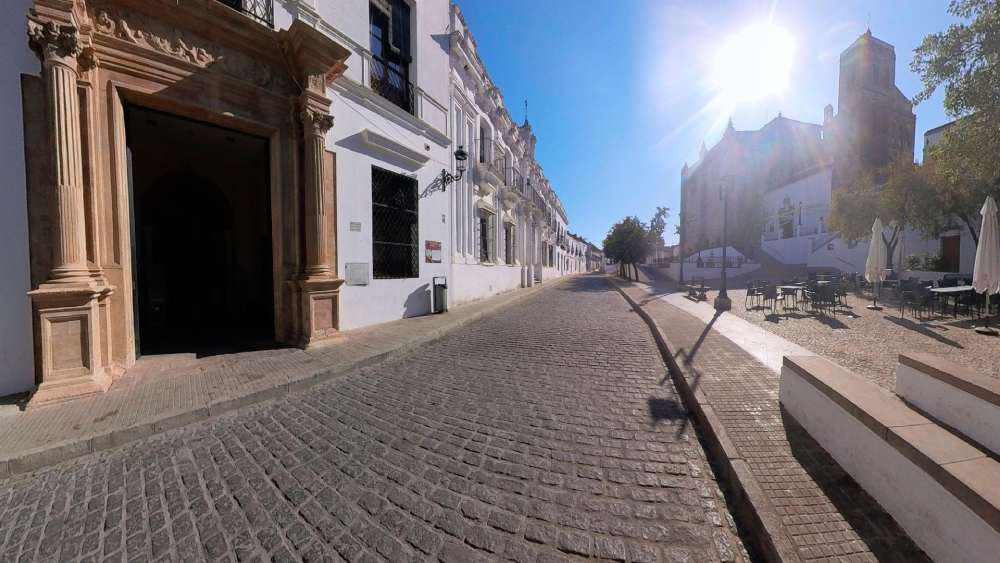
Within the Complex, the Plaza Mayor stands out, a large public space that emerged in the 16th century and became the central hub of the town, where the main civil and religious buildings were situated. Rectangular in shape and with a perimeter of approximately 250 metres, the space is distributed across different levels, adapting to the terrain's topography. The surrounding buildings offer a glimpse of the popular mountain architecture from various periods.
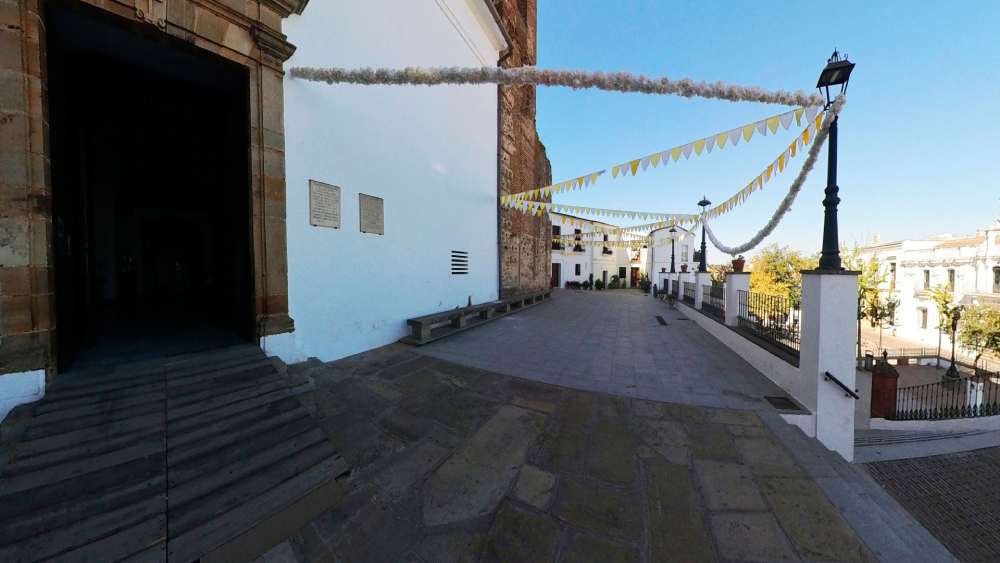
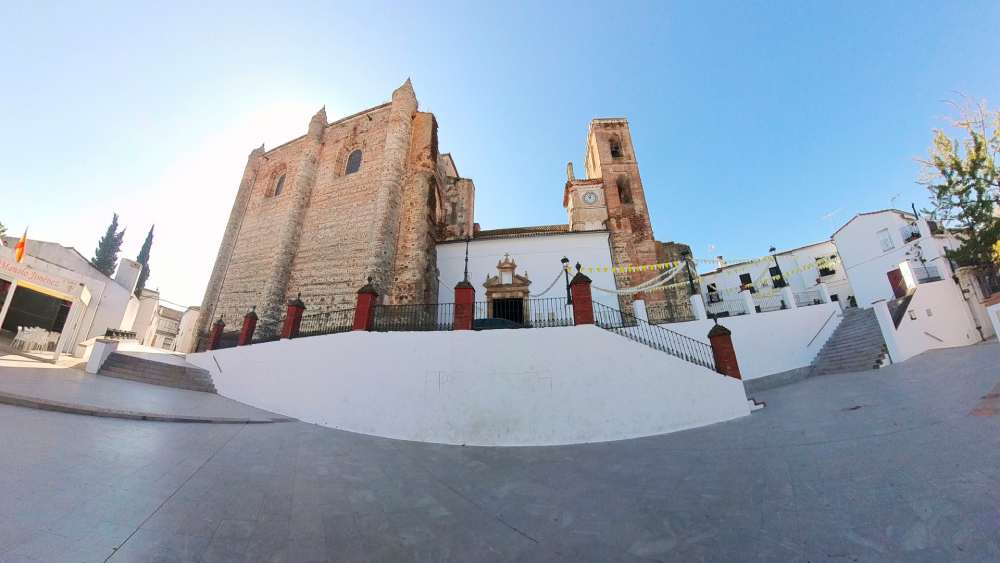
On one of the sides, one of the principal monuments of Cazalla stands out: the Church of Nuestra Señora de la Consolación. With its imposing architecture and privileged location, it serves as a visual landmark, both from the outside and within the town. The walls of the church reflect the successive construction phases this unique building has undergone, from its origins in the Mudejar period, through the magnificent Renaissance temple, to the later interventions in the 18th century. The church is accessed from the Plaza Mayor via a staircase leading to the main door of the temple.
The complex is notable for its tower-façade in Mudejar Gothic style and the large Renaissance volume, featuring three large circular buttresses topped with conical pinnacles.
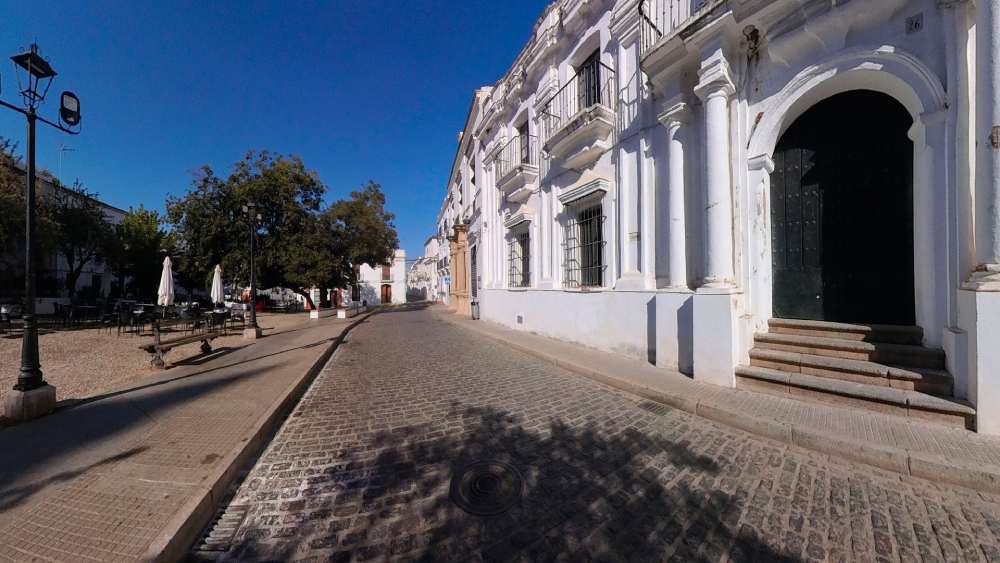
Opposite the church stands one of the emblematic buildings of the Plaza Mayor, which once housed the old courts of Cazalla. This 16th-century mansion is distinguished by its classical stone portal, consisting of a lintelled opening between fluted columns on pedestals with composite capitals, upon which rests a frieze decorated with grotesque reliefs, culminating in a pronounced cornice. This noble house is currently used as the Pensioners' Home.
A majestic 18th-century building that once housed the old town hall, it has now been adapted for the courtrooms. It stands out among the buildings in the Plaza Mayor for its Baroque façade, divided by large Tuscan pilasters and crowned by a blind balustrade. The portal is located in the centre, flanked by paired Tuscan columns on the lower level, and a balcony with a shield and Ionic columns above. The remaining openings are formed by windows on the ground floor and balconies on the upper floor.
Returning to the front where the church is located, we find a row of two- and three-storey houses, following the design of noble architecture from the 17th and 18th centuries. Among them, the corner house on San Luis Gonzaga Street stands out for its unique façade, featuring half-columns on pilasters framing the door and central window, above which rises a wavy frieze leading to a balcony flanked by columns with Ionic capitals.
This side of the square houses two-storey buildings, representing popular architecture from the late 19th and early 20th centuries. Some of these buildings display typical regionalist architectural elements, such as the use of exposed brick around the window frames and decorative tiles on the façades.
Finally, it is worth noting the location of the Tourist Information Office in the Plaza Mayor, from which the town provides information services on local points of interest, its natural surroundings, and the rich heritage and history of Cazalla de la Sierra, as well as the national significance of its wineries and distilleries.