
- Home
- Interest points
- Church of Nuestra Señora de Consolación
Info
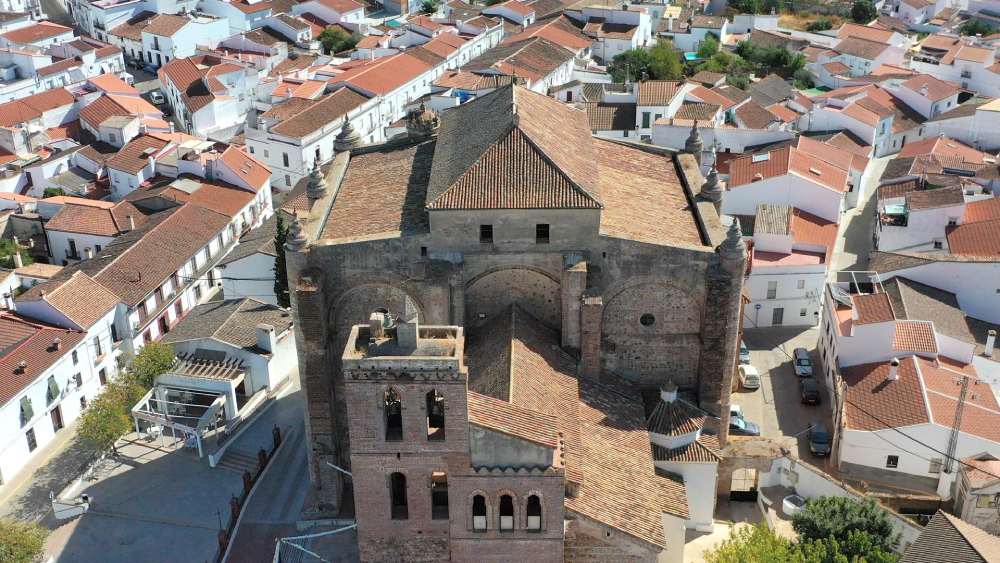
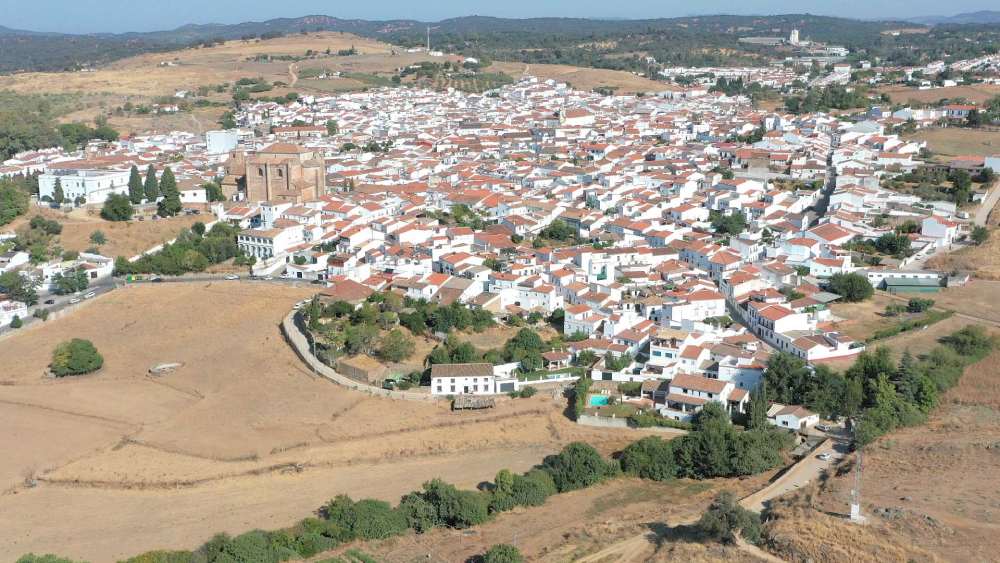
The parish church of Nuestra Señora de la Consolación is located in the highest and oldest part of Cazalla de la Sierra, occupying one of the sides of the Plaza Mayor, in which it stands out for its sober monumentality, rising above the town like a compact but heterogeneous bastion.
Know more
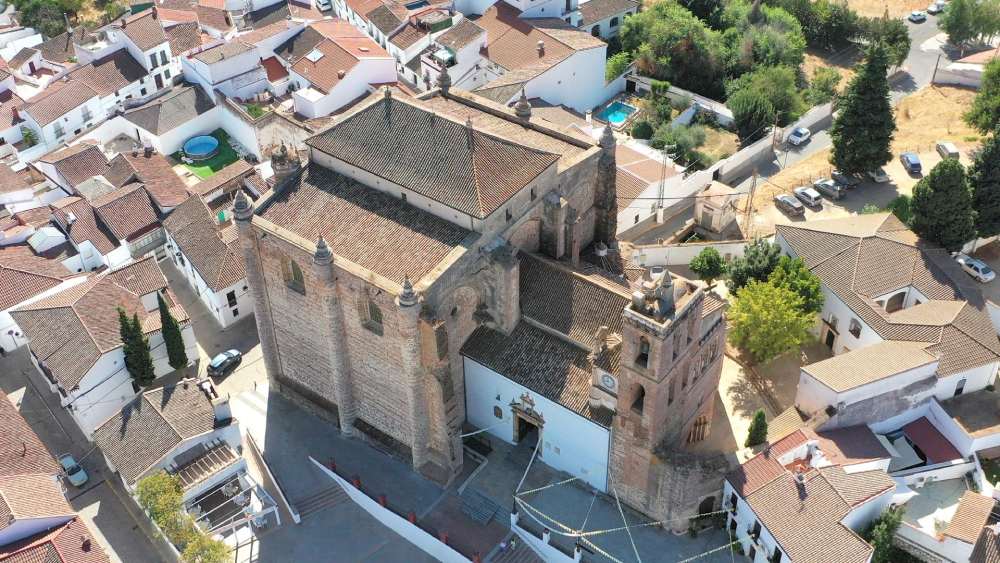
The parish church of Nuestra Señora de la Consolación is located in the highest and oldest part of Cazalla de la Sierra, occupying one of the sides of the Plaza Mayor, within which it stands out for its sober monumentality, rising above the city like a compact but heterogeneous bastion.
The different factories and artistic styles that the temple presents are a material reflection of the historical events that have occurred since the date of the beginning of the works, in the first half of the 14th century, until the last reforms, carried out in the 20th century.
Notable Mudejar, Renaissance and Baroque constructions impress with their purity, forming a unique whole that shakes with its monumentality.
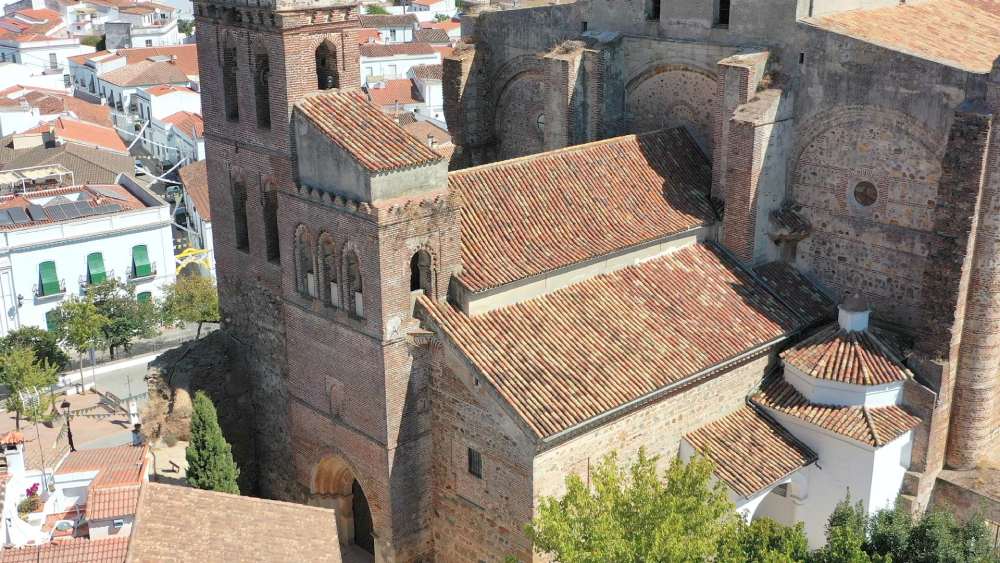
Initially, the building was built in Mudejar style, with a single nave and equipped with an access tower-façade that, today, forms part of the foot of the church. The building is a clear example of the particular style of the Christian kingdoms of the peninsula, where medieval European artistic traditions are combined with those of the East through the Andalusian world. This mixture of currents is materialized in the tower facade, which stands out in the ensemble for its uniqueness, which reminds us of the Andalusian architecture of the kingdom of Granada.
From 1350, and probably to accommodate more faithful, the building was extended by adding two narrow side naves on each side of the old church, configuring a crenellated temple with three bodies. The walls where the current entrances to the building open correspond to this second moment, although as we can see in the Epistle nave, the openings that gave access to the church at that time are blocked.
Between this phase and the mid-15th century, part of the church was enclosed, leaving two doors in the wall to access the enclosure, one located at the foot of the temple and another close to the Epistle Door. The remains of this wall and its doors have been wrongly interpreted as part of the walled enclosure of the Almohad town.
The next reform took place in the mid-15th century, in a late Gothic-Mudejar style. At this time, the bell tower was added, which stands on the crenellated section of the church, and the apse, which over time would be integrated into the head of the Renaissance church.
In 1538, coinciding with a powerful economic boom in Cazalla de la Sierra, a major restructuring of the building was carried out, as the Mudejar style that defined it stylistically was going to give way to the new Renaissance aesthetic. This work is attributed to the master Diego de Riaño and his disciple Martín de Gainza. With this reform, a large three-nave church was proposed that increased the width of the temple, but respected the previous alignments, including the apse. Although the work remained unfinished, it is the one that has left the greatest impression due to its monumentality. Inside, the diaphanous space covered by coffered vaults supported by superb pillars topped by decorated cubes with reliefs of apostles and saints stands out. The apse, with a polygonal floor plan, is covered with a coffered vault, and is raised from the rest of the temple by means of a step.
The following reforms were undertaken from the 18th century onwards and did not greatly affect the final configuration of the temple, reforming what remained of the Mudejar church. At this date, the primitive temple was covered with barrel vaults and lunettes, the opening and monumentalisation of the door that leads to the Plaza Mayor was undertaken, and the structure that houses the clock was placed.
In the 20th century, the church was seriously affected by the events that led to the military uprising. In 1936, a fire caused the disappearance of most of the altarpieces, including the main altarpiece, and the paintings that adorned the temple. Another treasure that disappeared, in this case as a result of pillage and looting, was the rich collection of goldsmith's work and textiles that had been exhibited at the Ibero-American Exhibition of 1929. The year after the fire, the restoration of the building and the replacement of the furniture and fixtures began, finishing the work in 1947. This fact was recorded in an inscription placed in the entrance portico to the temple.
Videos
Church of Nuestra Señora de Consolación
Bibliography
GARCÍA-DILS DE LA VEGA, S., FERNÁNDEZ FLORES, A., RODRÍGUEZ AZOGUE, A. Carta Arqueológica Municipal de Cazalla de la Sierra (Sevilla). 2017.