
- Home
- Interest points
- Castillo y Torre del Reloj
Info
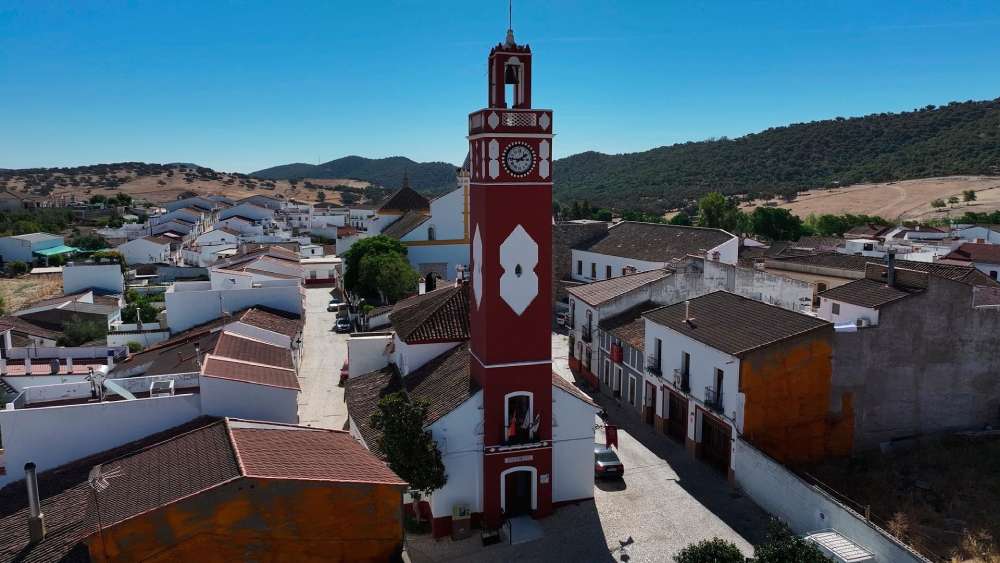
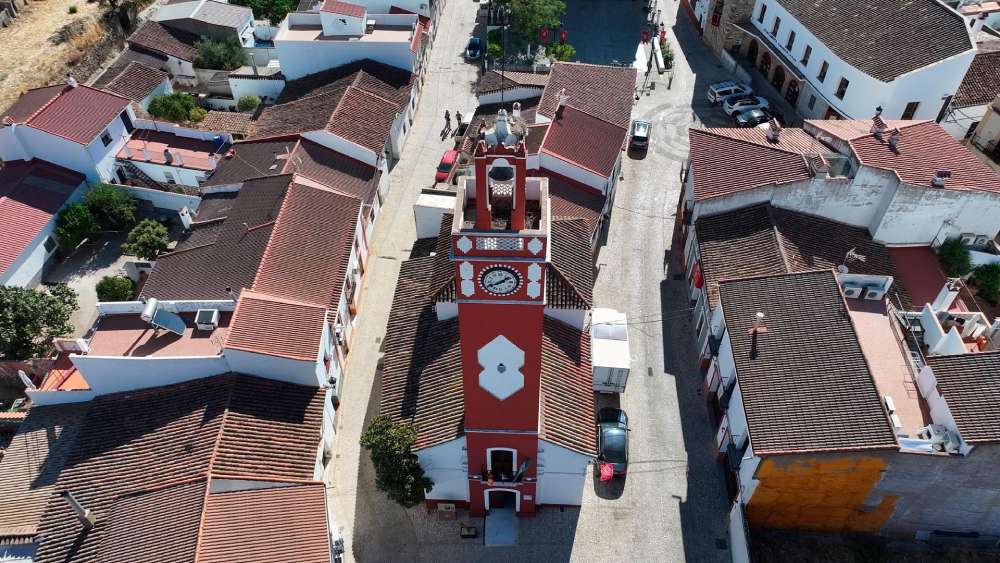
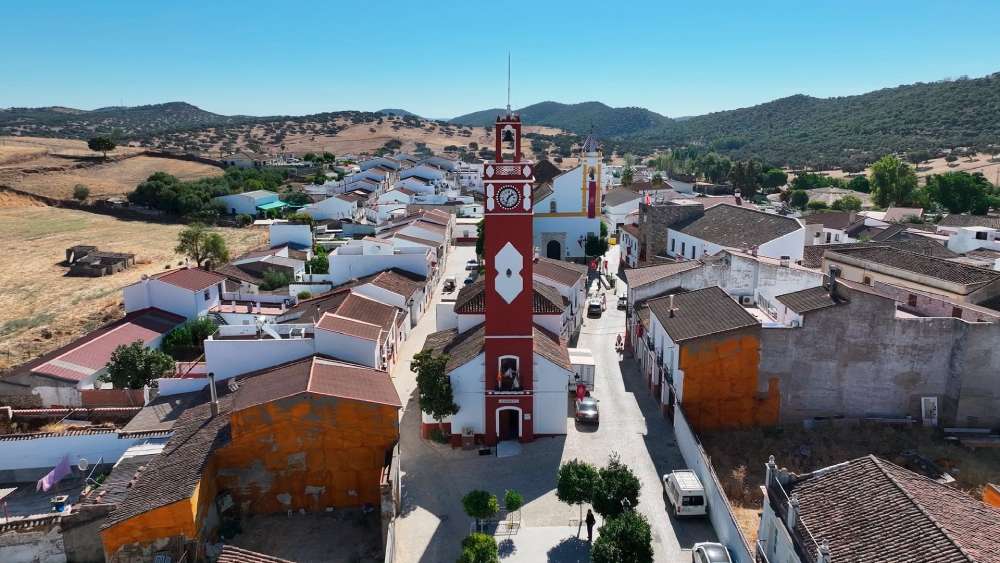
The castle of Almadén de la Plata, built in the 14th century on the site of a Roman fort from the 1st century AD, had defensive functions on the Silver Route and against Portugal as part of the Galician Band. Although much of it was lost in the 18th and 20th centuries, in 1997 it was partially rebuilt to house the current Town Hall. Nearby, the Clock Tower, erected in 1905 on the site of the old Hospital de los Angeles, still marks the hours in the Plaza del Reloj.
Know more
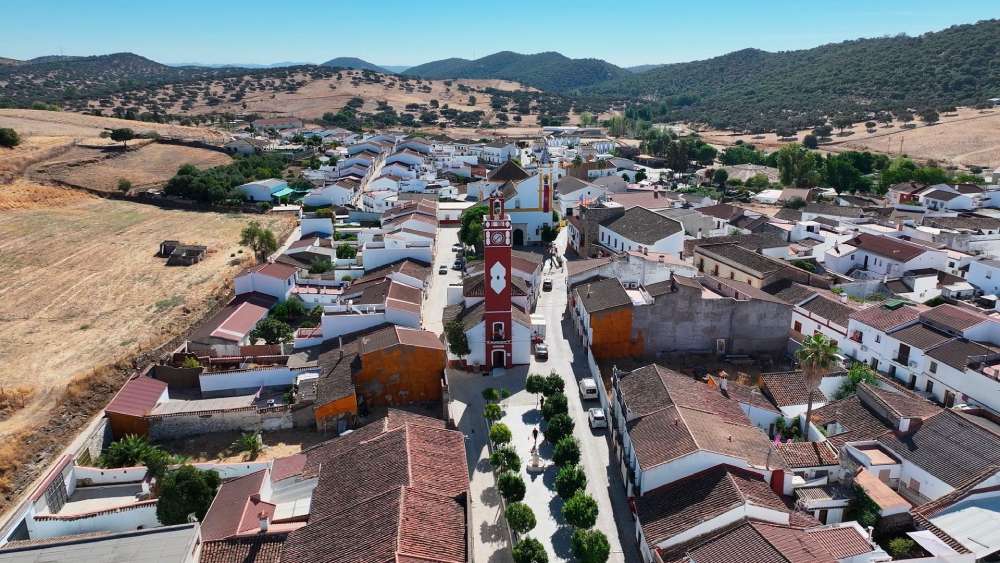
Within the urban area of Almadén de la Plata, two distinctive buildings stand out, bearing witness to the antiquity and history of this municipality: the castle and the so-called “Clock Tower.”
The Almadén castle dates back to the 14th century, and its construction served a threefold purpose: to protect the Silver Route, one of the region’s main communication routes, to ensure the peace and security of the populations settled there, and to defend the Castilian border against the Portuguese threat.
After the Castilian conquest of the Sierra Morena in Seville by King Ferdinand III "The Saint" in the mid-13th century, the territory of Almadén de la Plata was ceded, along with other municipalities, to the Council of Seville. This institution took on the responsibility of maintaining the stability of the territory, whose repopulation was crucial for the consolidation of Castilian power.
As a result, a series of castles were built, including that of Almadén de la Plata, whose aim was to ensure the free movement of people, livestock, and goods along the mountain paths, as well as supply the city of Seville, while organising the dispersed settlement of the territory under the protection of a fortress.
This fortification was also part of the defensive network known as the Galician or Portuguese Band, created in response to the attacks from Portugal that, during the 14th and 15th centuries, kept the border between the two kingdoms in a state of constant tension. This band extended across the northwestern part of the lands of the Kingdom of Seville, covering parts of the current provinces of Seville, Huelva, and Badajoz. Given its position along the Silver Route, the castle of Almadén de la Plata would have been part of the fortified sites protecting the roads from the Portuguese threat.
It was precisely the need to protect this route that determined the location of the castle. Unlike most fortresses, which were built at the highest point of their surroundings, Almadén de la Plata is situated in a valley, at the foot of two elevations: the hill of Los Covachos and the hill of El Calvario.
The castle was a military enclosure, of small size and a quadrangular layout, covering an approximate area of 2,000 m². Over time, new buildings were constructed on its grounds, eventually absorbing and concealing its walls, so today only part of it remains visible.
The best-preserved architectural elements are found on the northern wall. These include a square tower built with small masonry stones, which houses the stepped entrance to the old fortress, and its original door, constructed with a pointed brick arch.
It is unclear exactly when the castle ceased its military function, but by the late 15th century, and especially during the following century, with the pacification of the territory, these structures lost their defensive role. The loss of their original purpose led to a period of abandonment and deterioration, which often resulted in ruin.
In the case of the castle of Almadén de la Plata, historical sources tell us that by the late 18th century, it was in a marked state of disrepair, with its "foundations" still visible. It was during this century that the standing remains of the northern section were used for the construction of a municipal granary for storing grain.
To adapt the old fortress into a granary, an arcade was built facing the wall, allowing for the creation of a raised structure whose purpose was to preserve the grain by isolating it from moisture. The building continued to serve as a warehouse until the late 20th century, with the last renovations dated to 1960.
In 1997, the former granary was rehabilitated to become the Town Hall, allowing the preserved remains of the castle to be recovered, showcasing the original masonry and restoring the most distinctive elements of the 18th-century granary, such as the arcade.
A few metres from the castle is the Plaza del Reloj, where another of Almadén de la Plata's most iconic buildings can be found: the "Clock Tower." The building housing the tower was originally the old Hospital of Los Ángeles, which dates back to the 15th century and later became a chapel in the 17th century. In contemporary times, it served as the Town Hall until it was moved to the old castle and granary.
The tower, with a square plan and a height of 27 metres, was erected in 1905 on the façade of the former hospital and chapel. This brick construction has several levels, accessed by a staircase inside. On the ground floor is the door for entry, above which still remains the old tile indicating that the Town Hall was located there. A second level leads to a balcony from which the square can be seen. At the uppermost section is the famous clock, which faces two sides and still marks the hours today. Finally, the tower is crowned with a small rooftop with a parapet, upon which the bell tower stands.
This building is one of the most recognisable in the town: its slender profile, the original Neo-Mudejar style, and its characteristic colours—red on the walls and white on the details—make it stand out from the other buildings in the area as a symbol of Almadén de la Plata.
Videos
Almadén de la Plata Castle
Credits
MENDEZ IZQUIERDO, E., GIL GUTIÉRREZ, R. M. y LÓPEZ SERENA, M. R. Seguimiento arqueológico en plaza de la constitución de Almadén de la Plata. Sevilla. Anuario Arqueológico de Andalucía. 2020.
VARGAS DURÁN, M. A. Intervención en el pósito del trigo de Almadén de la Plata (Sevilla). Anuario Arqueológico de Andalucía. 1989.
VVAA. Castillo (Almadén de la Plata). Ficha Técnica Junta de Andalucía.