
- Home
- Interest points
- Old church of Santa Ana
Info
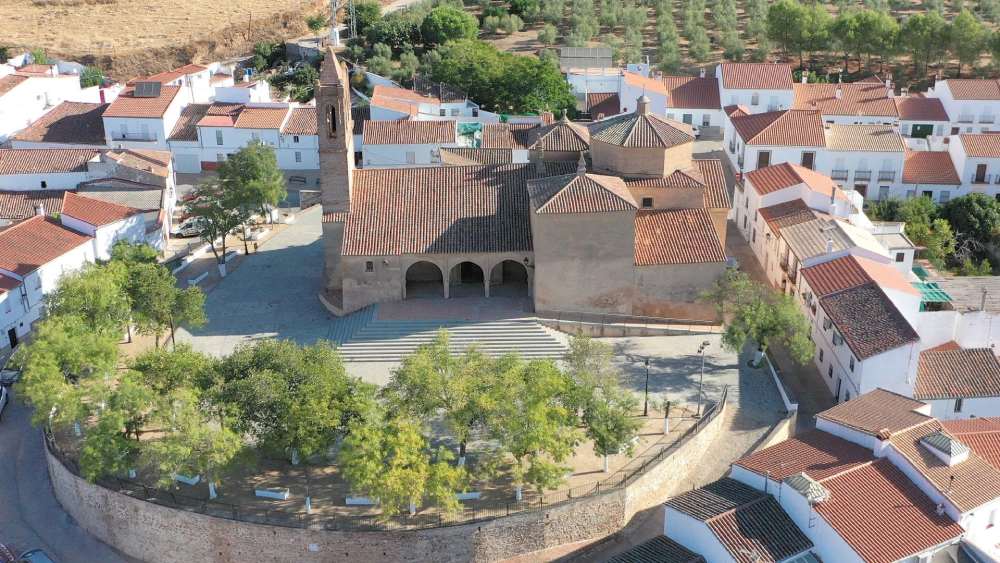
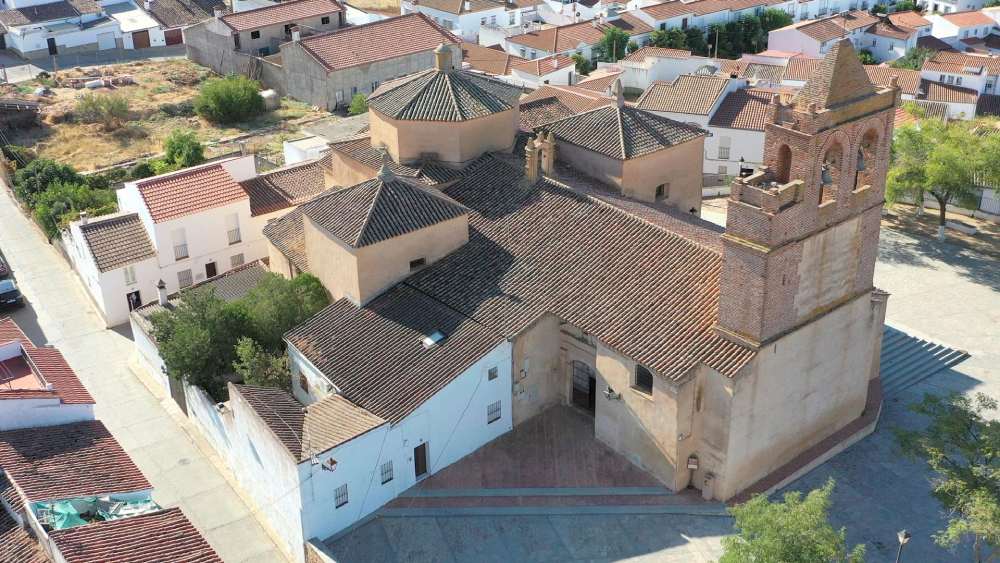
The old church of Santa Ana, built between the end of the 15th and the beginning of the 16th century, was extended in the 17th and 18th centuries, becoming a single-nave temple with Baroque decorative elements. Its three-part tower-façade with belfry and spire, its main chapel covered by a half-orange dome, and side chapels with polychrome domes and vaulted ceilings stand out.
Know more
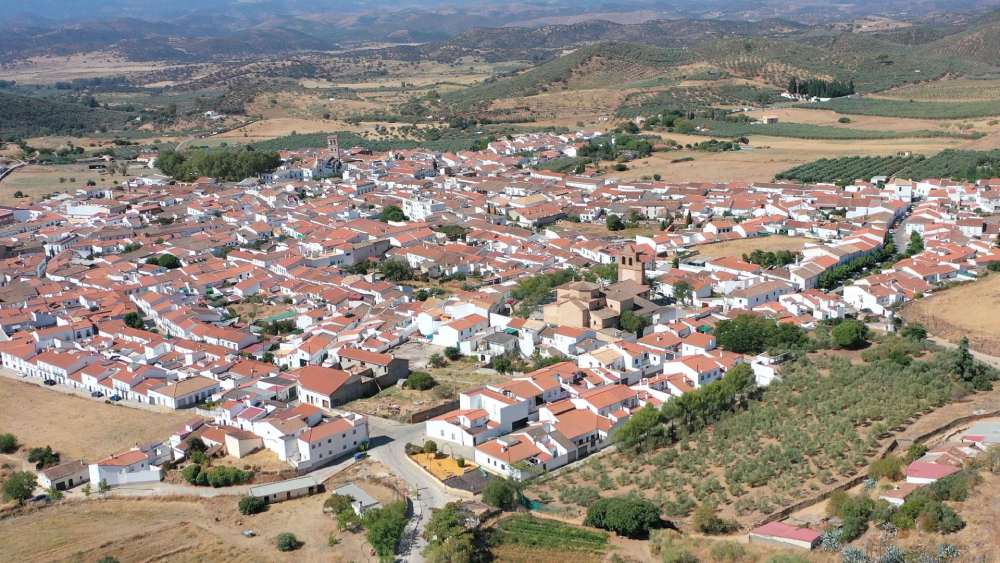
Located in the Sierra Norte of Seville, the town of Guadalcanal has a rich architectural heritage, in which the old Church of Santa Ana stands out as a notable example of mountain Mudejar architecture.
This temple stands on a promontory, to the northwest of the town, from which the surrounding area is dominated. Its construction dates back to the conquest of the town of Guadalcanal in 1241, which would become part of the lordship of the Order of Santiago. From this moment on, the construction of the Church of Santa Ana began, possibly on the remains of an old mosque of which there are no vestiges left.
However, the building we see today is the result of various architectural interventions that gave it great beauty and monumentality. At the end of the 15th century, a new construction impulse took place that gave it its general characteristics. Later, in the 17th and 18th centuries, remodelling and extensions were undertaken, such as the construction of a new apse and side chapels.
On the outside, the three-body Mudejar tower-façade stands out, located at the foot; its slender shaft is crowned with a bell body in which semicircular arches open, leaving the whole finished in a pyramidal spire. The interior of the church is accessed through two doors, which were remodeled in the 17th century. The one located on the south side, on the Epistle façade, is preceded by a Mudejar portico made up of an arcade of three slightly pointed arches. These are framed by alfices that rest on octagonal brick pillars. The doorway has a lowered arch, with pilasters on the sides finished at the top by a triangular pediment. The other doorway is found to the north, on the Gospel façade. Above a segmental arched opening there is an entablature that serves as a base for a broken triangular pediment, in the centre of which we can see a semicircular niche. The doorway is covered with a roof tile beautifully decorated with polychrome tiles from the 16th century.
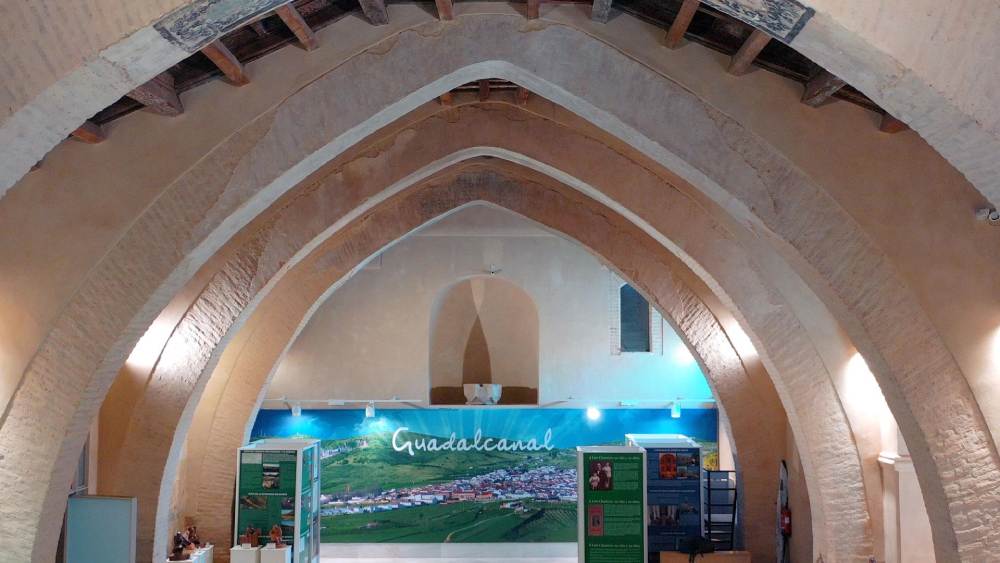
Going inside, we can see the sobriety of the temple, with a rectangular floor plan and in the Mudejar style. Its single nave consists of five sections, separated by pointed arches characterised by their great light. In the apse, remodelled in the 17th century, we find the main chapel, covered by a hemispherical vault resting on pendentives and semicircular arches. The roof preserves part of the wooden trusses from the Mudejar period. A profusely decorated three-panel coffered ceiling stands out, with an eight-pointed star in its central part. Numerous mural paintings are preserved inside the temple. On one of the arches, during restoration work, the following inscription was found: “In the year 1511 the levelling of this church was finished. Francisco Hernando, steward. Another of the most significant is the 16th century painting, which, in the form of a diptych, represents the Virgin and a saint. Both figures are seated on thrones and surrounded by decorative elements typical of the Gothic.
The side chapels were built from the extensions undertaken in the 16th and 17th centuries; new vaults are built above them, as in the chapels of San Ignacio and the Virgen del Carmen. The latter is richly decorated with elements alluding to the Virgin. Next to the chapel is a wrought iron pulpit from the 18th century. Of the church's furnishings, hardly any elements are preserved because a large part of the church's heritage was lost during the Civil War. Among the preserved pieces, there are some pieces from the Mudejar period, such as the baptismal font, made of stone in a hemispherical shape, or the holy water font, made of clay and with plant motifs. Other notable pieces are the funerary tombstones, located both on the walls of the side chapels and in the ante-presbytery, where the tomb of Juan de Castilla and his heirs is located.
The restoration work carried out by the Guadalcanal City Council in the church of Santa Ana has enabled the building to recover its splendour, and it is currently open to the public as a centre for interpretation and resources of Sierra Morena.
Videos
Former Church Santa Ana
Bibliography
TABALES RODRÍGUEZ, M. A. y ROMERO PAREDES, C. Investigaciones arqueológicas en la Iglesia de Santa Ana de Guadalcanal. Anuario Arqueológico de Andalucía. 1996.
VVAA. Iglesia de Santa Ana. Ficha Técnica Junta de Andalucía.