
- Home
- Interest points
- Molino del Francés
Info
The Molino del Francés is part of the Route of the Ciudadeja Mills, a route that shows the remains of old mills and a landscape that is characteristic of the Sierra Morena in Seville. Although some of the mills in the area have fallen into disrepair, this one has been restored by the Town Council and today its structure allows us to appreciate a complete view of the area's industrial past.
Know more
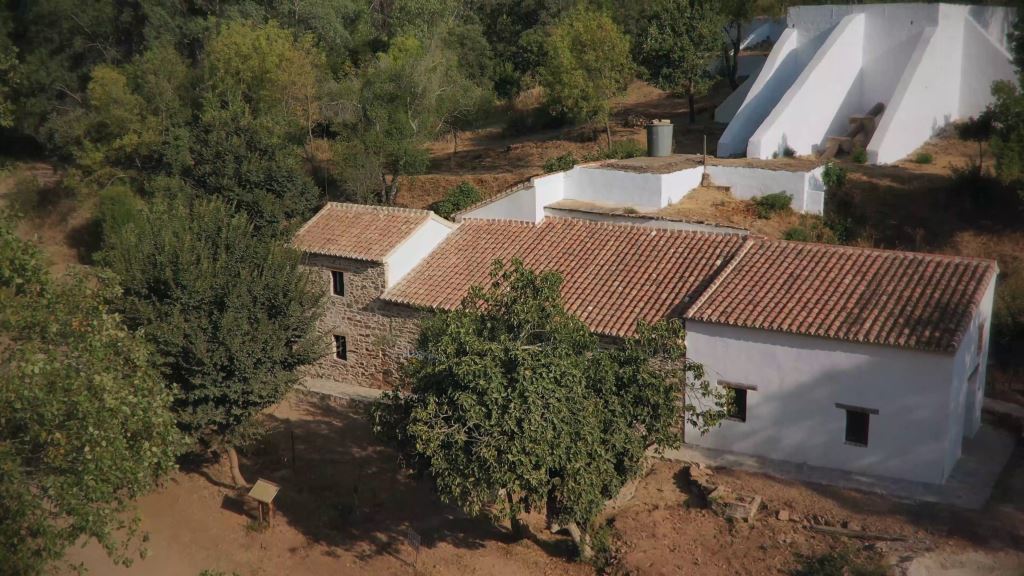
In Las Navas de la Concepción, the Molino del Francés is a notable example of early 20th-century hydraulic engineering, which still retains its original structure and ingenious design for harnessing the Ciudadeja River as a driving force.
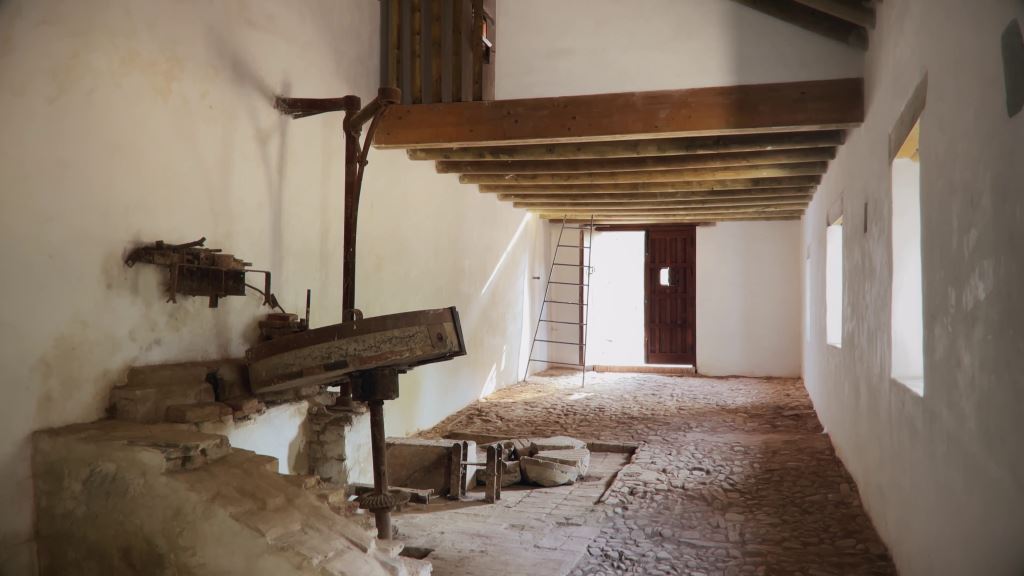
This mill, located on the farmstead of the La Venta estate, was not only used to grind wheat and produce flour, but also to generate electricity. It supplied electricity to both the farmhouse and the workers' dwellings. For this reason, it had two separate systems: one with millstones for flour production and another consisting of an electric generator.
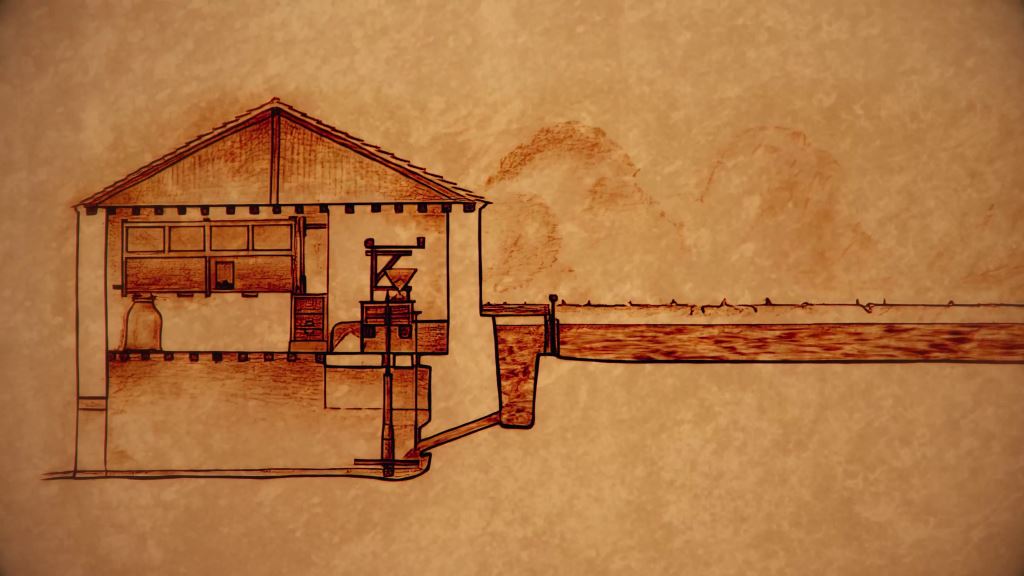
One of the most outstanding structures in the complex is its imposing water tank, which fed both mechanisms. The water intake located upstream is still preserved, as well as part of the channel that directed the flow to the mill. The water intake is a structure built across the riverbed. Its purpose was to create a small barrier to raise the water level and divert part of the flow to the channel, which led directly to the mill. Moderate in size but robust in construction, this intake was designed to withstand the stresses caused by river flooding.
The name Molino del Francés comes from its builder, a French citizen who arrived in the area at the end of the 19th century with the intention of exploiting the cork that was abundant on the estate.
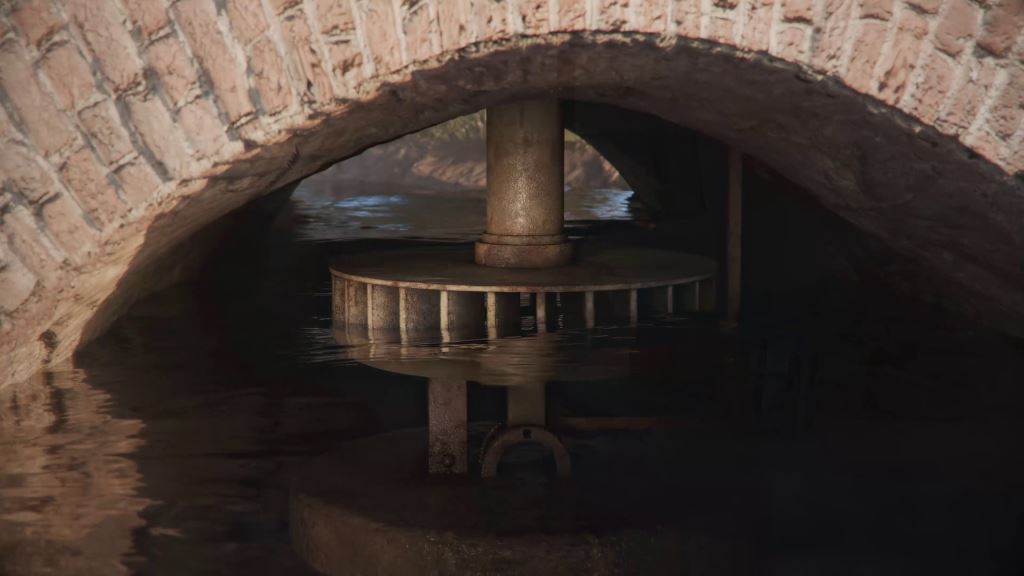
This is a bucket mill that was powered by water from the River Ciudadeja. It had two independent mechanisms: one for grinding grain and the other for producing electricity. To this end, a weir was built perpendicular to the riverbed in order to raise the water level. Through sluice gates, the flow was diverted to the mill's reservoir by means of an irrigation channel. From there, the water could be channelled directly to the electricity-generating machinery.
Videos
Molino del Francés