
- Home
- Interest points
- Dolmen de Montelirio
Info
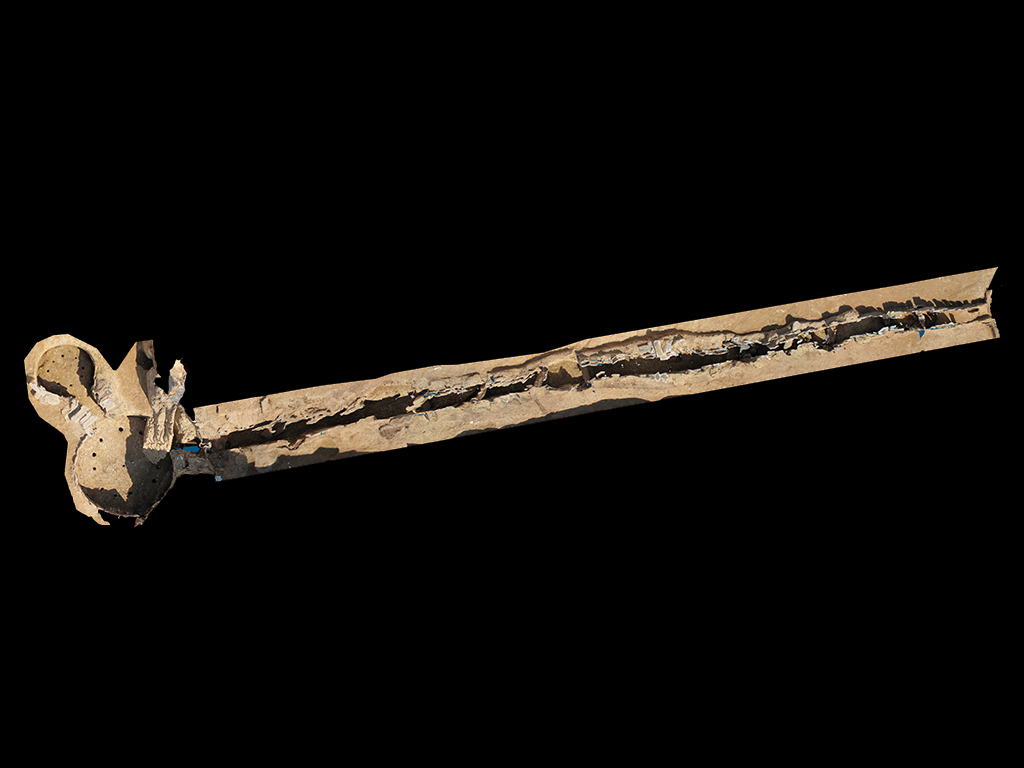
The Montelirio Dolmen is a prehistoric funerary monument consisting of a long underground corridor and two circular chambers linked by a short corridor. Twenty-six burials have been found there.
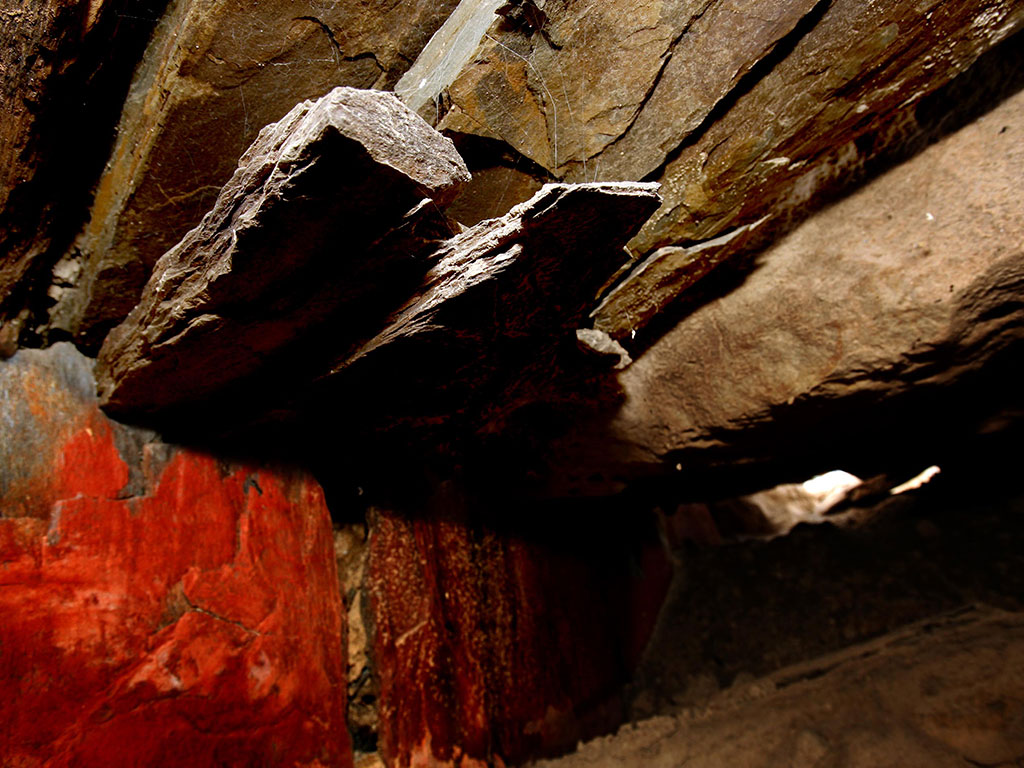
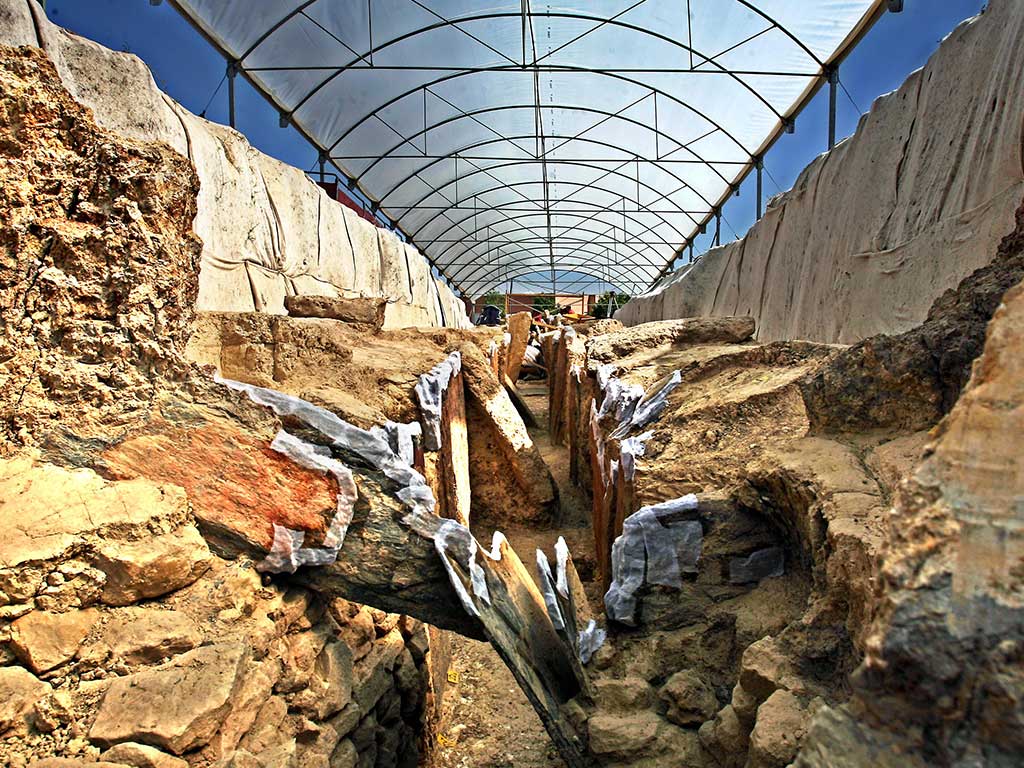
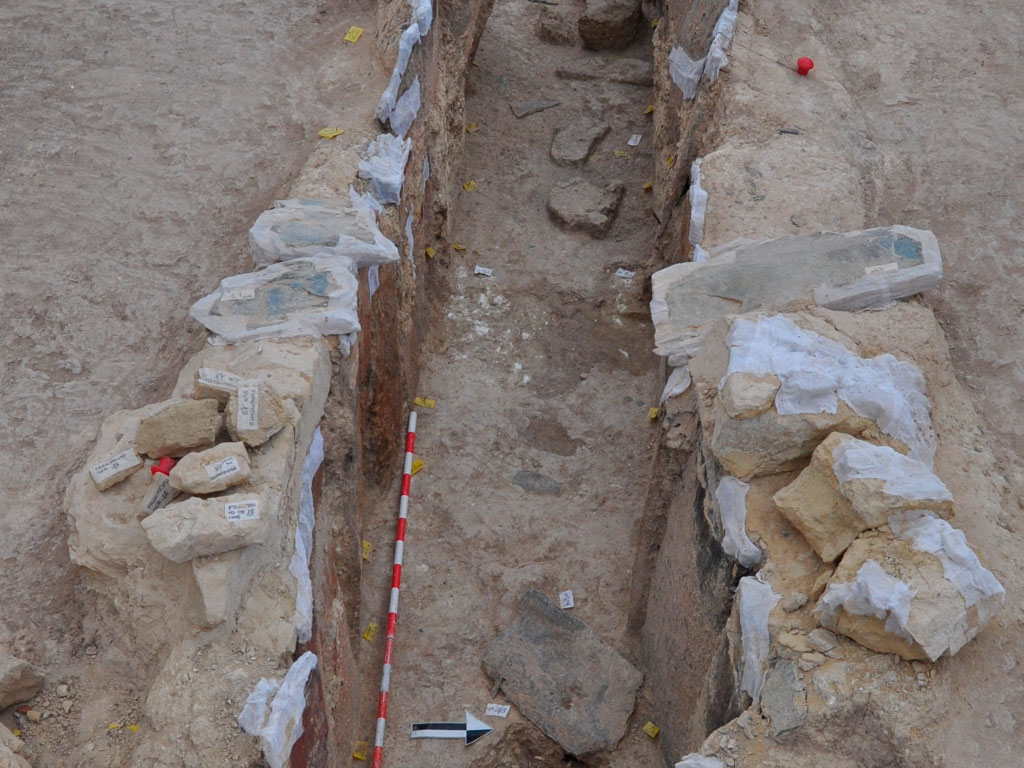
The tholos cannot be visited, as it is buried under the surface of the ground.
Know more
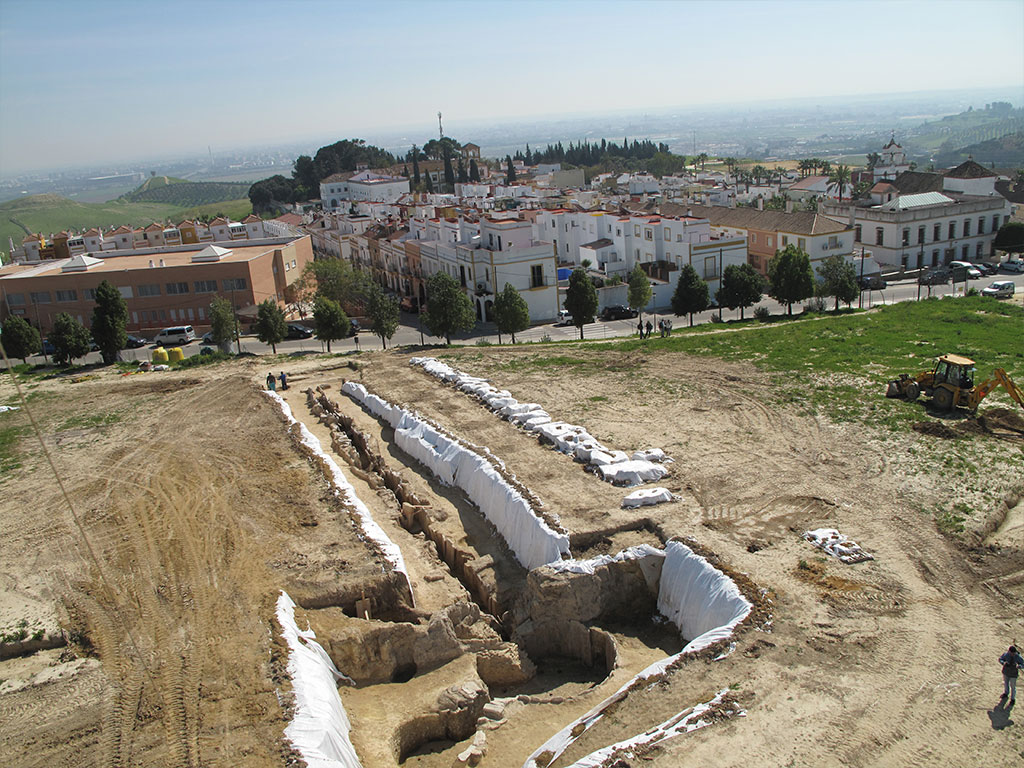
The tholos of Montelirio was built on a natural promontory between the 29th and 28th centuries BC. The construction comprises a long underground corridor and two circular chambers connected by a short corridor. Twenty-six burials have been found at Montelirio: three in the corridor, one in the tumulus, two in the Small Chamber (male and female) and 20 in the Large Chamber.
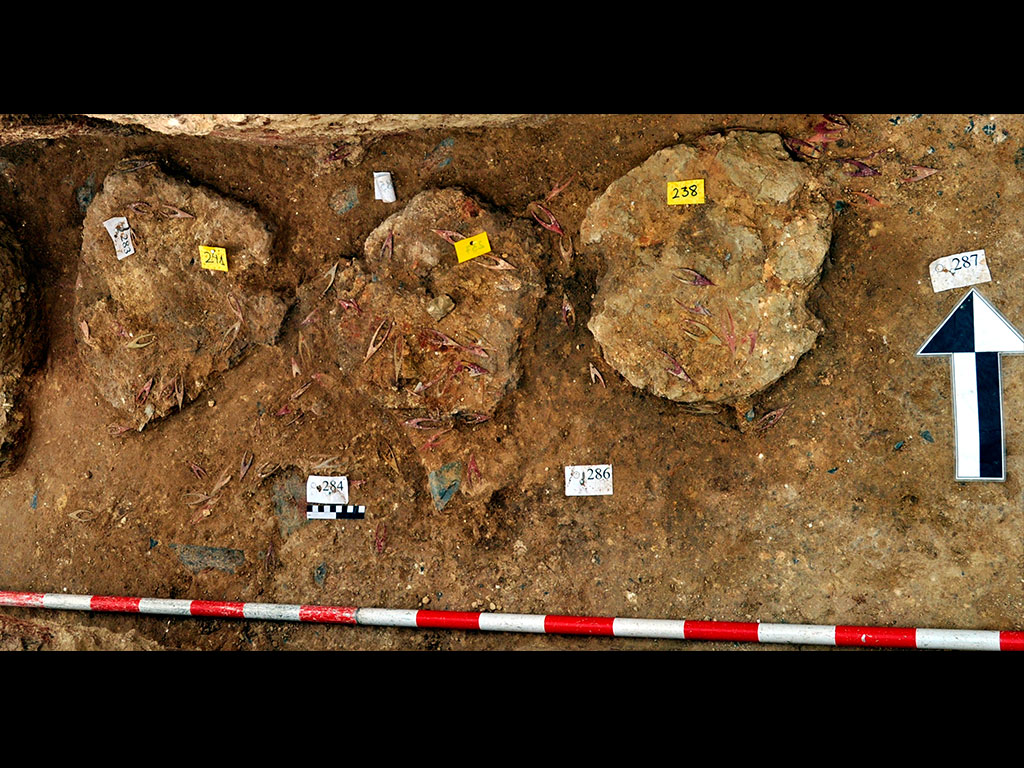
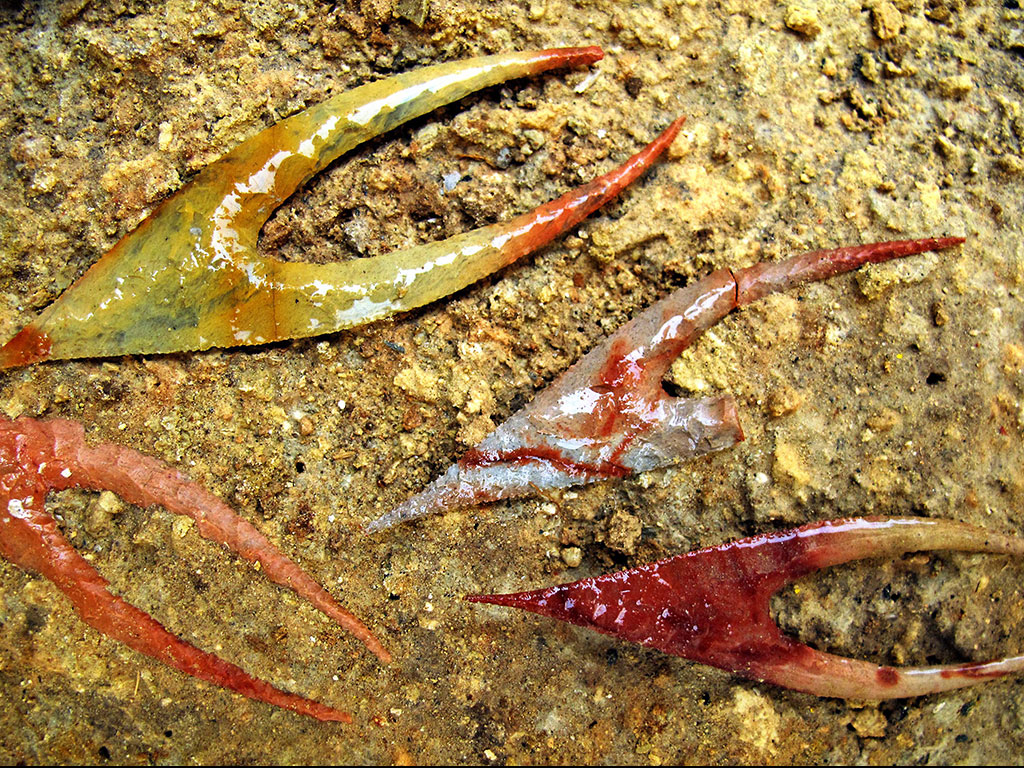
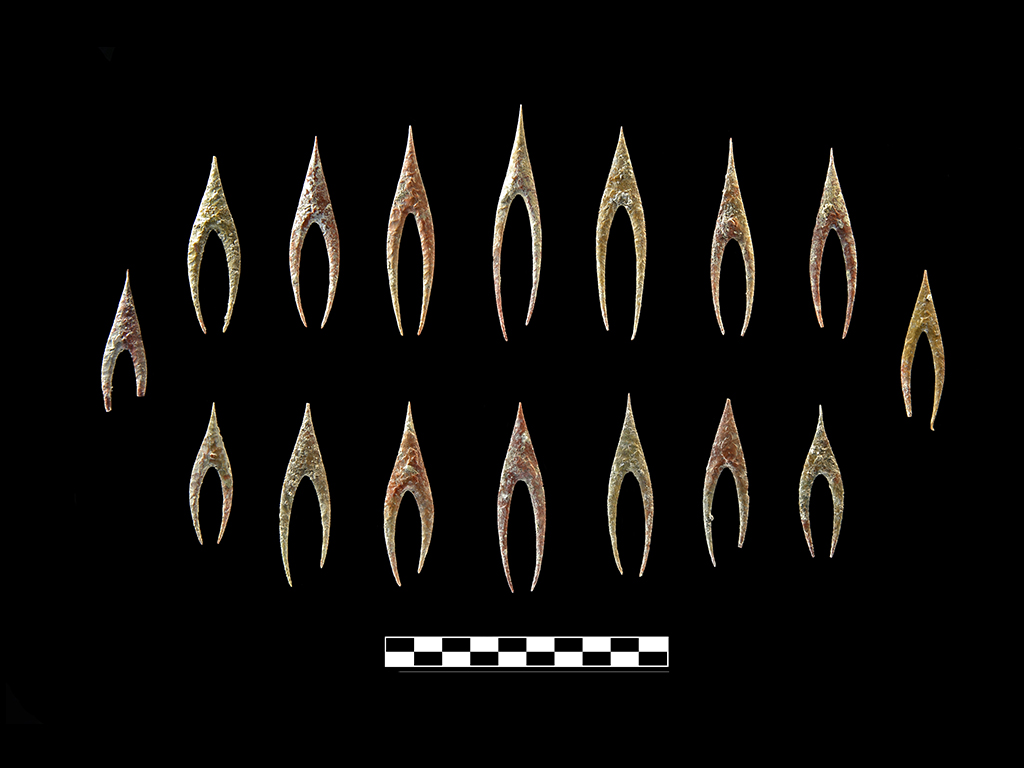
The corridor, 40 m long, was divided into three sections by lintels of red-coloured slate and represents a symbolic transition between two worlds: that of the living and that of the dead. Part of the funerary ritual took place in the central section. On two cylindrical altars made of clay and dyed red, aromatic herbs such as lavender and heather were burnt to purify the place, while knives, arrowheads and symbolic vessels made of clay were placed on the floor and walls. These offerings are flanked by two secondary burials, i.e. pits containing previously selected parts of the skeleton. In the transition between the second and third sections there is another primary exhumation on the pavement.
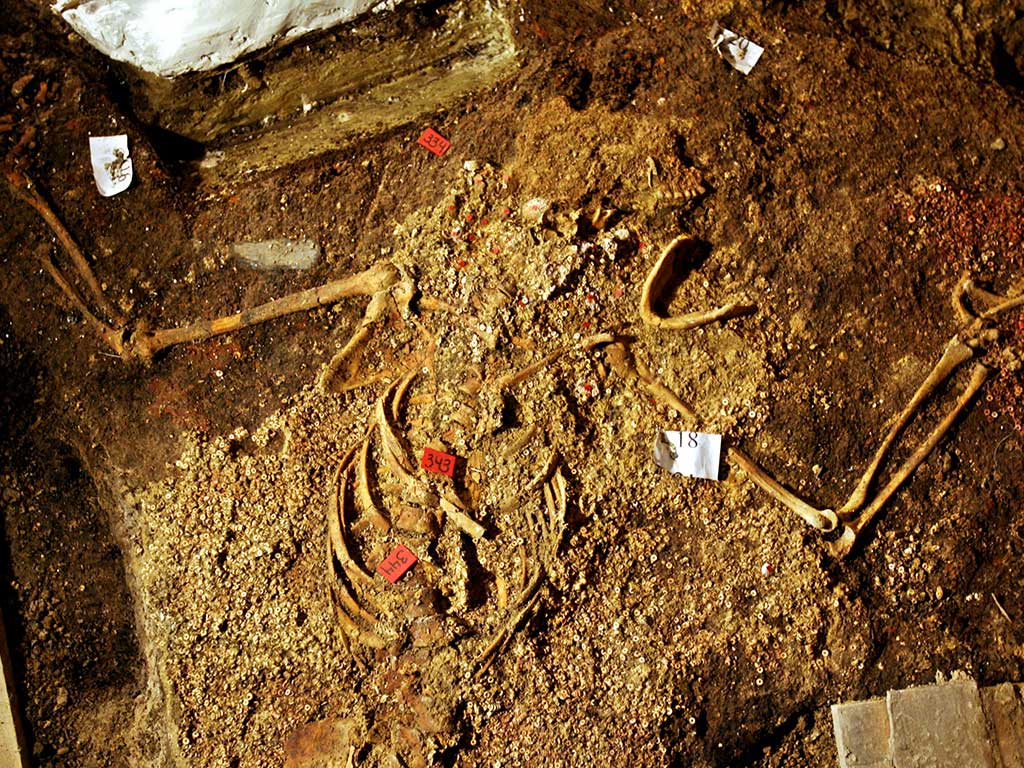
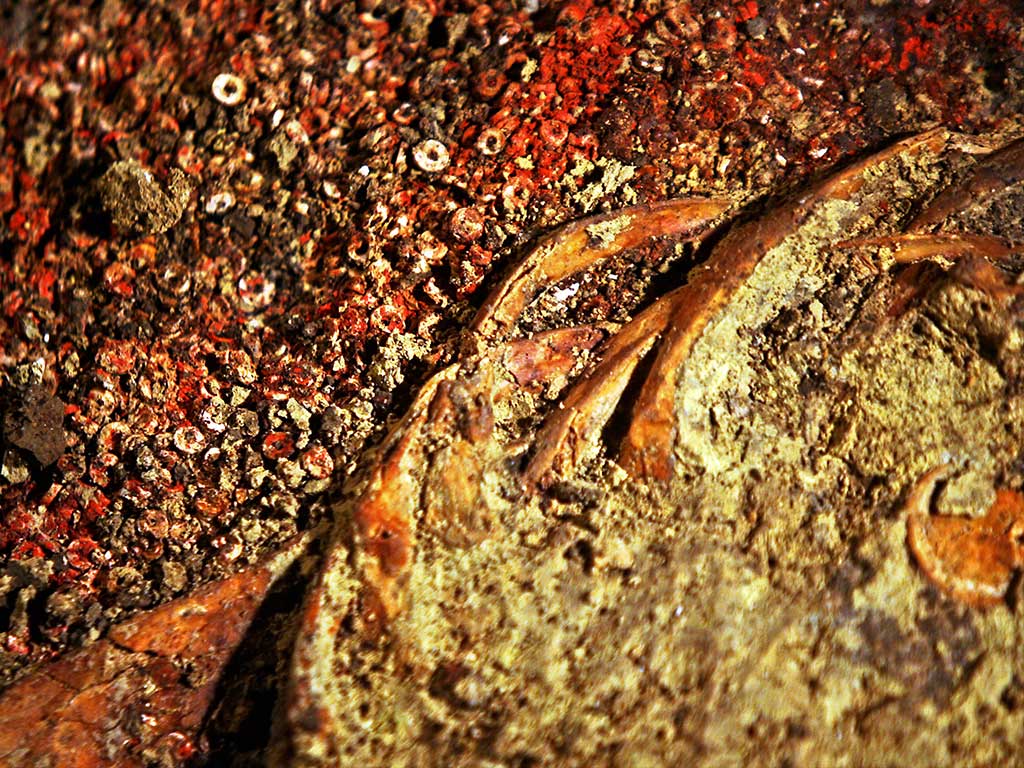
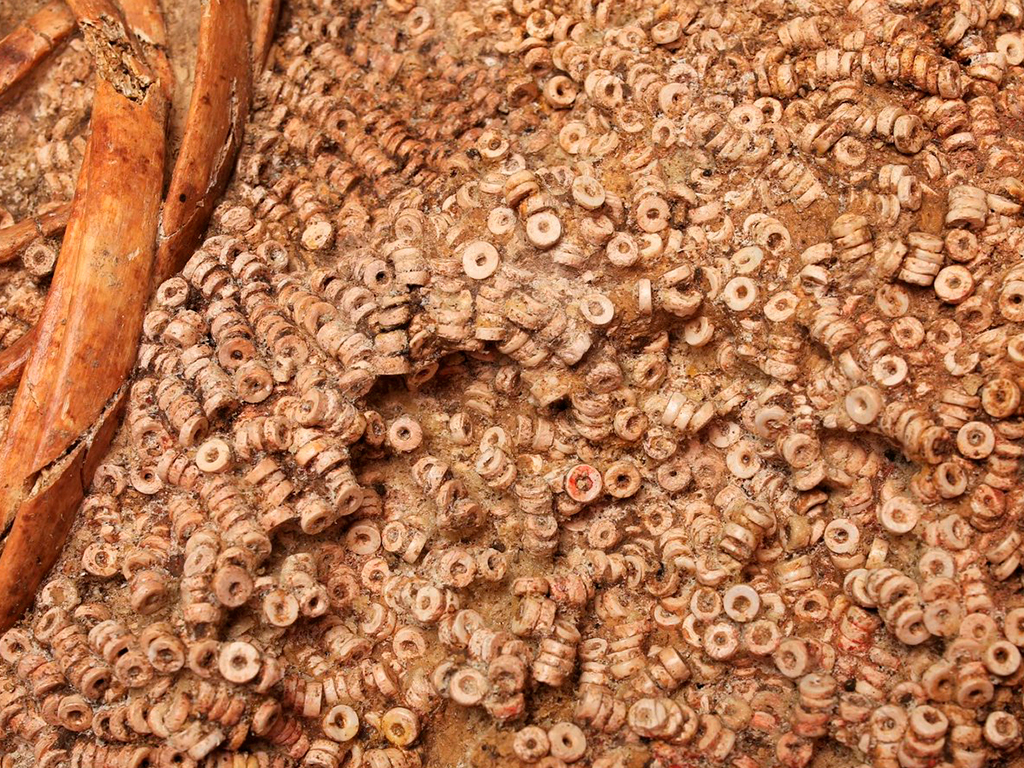
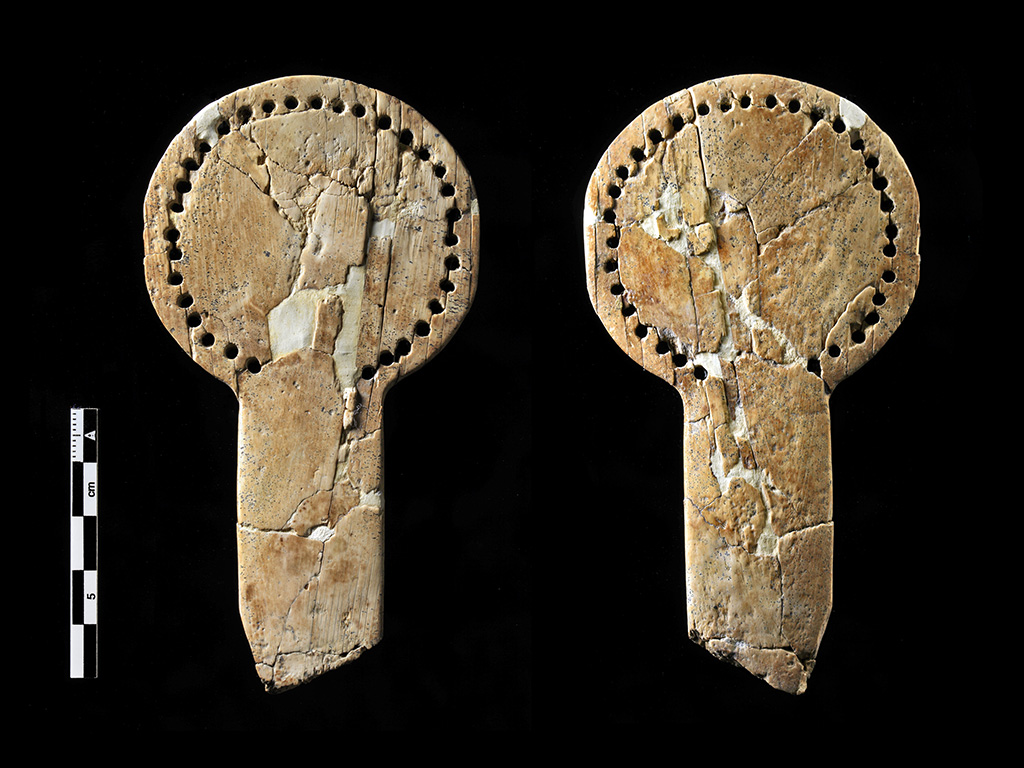
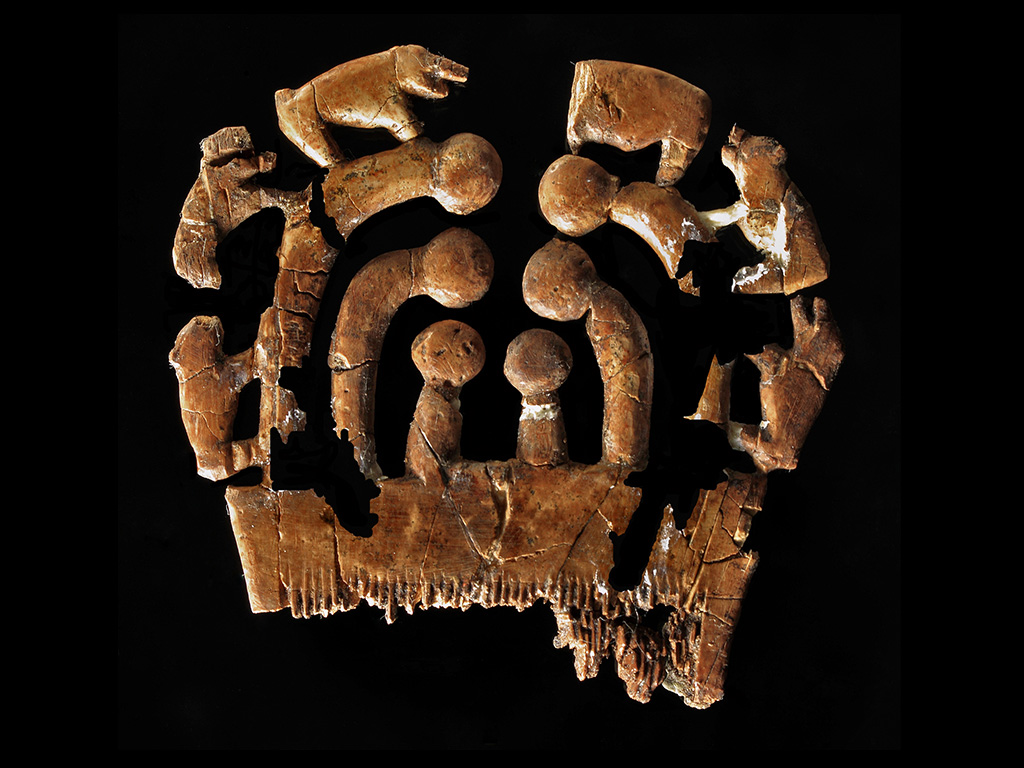
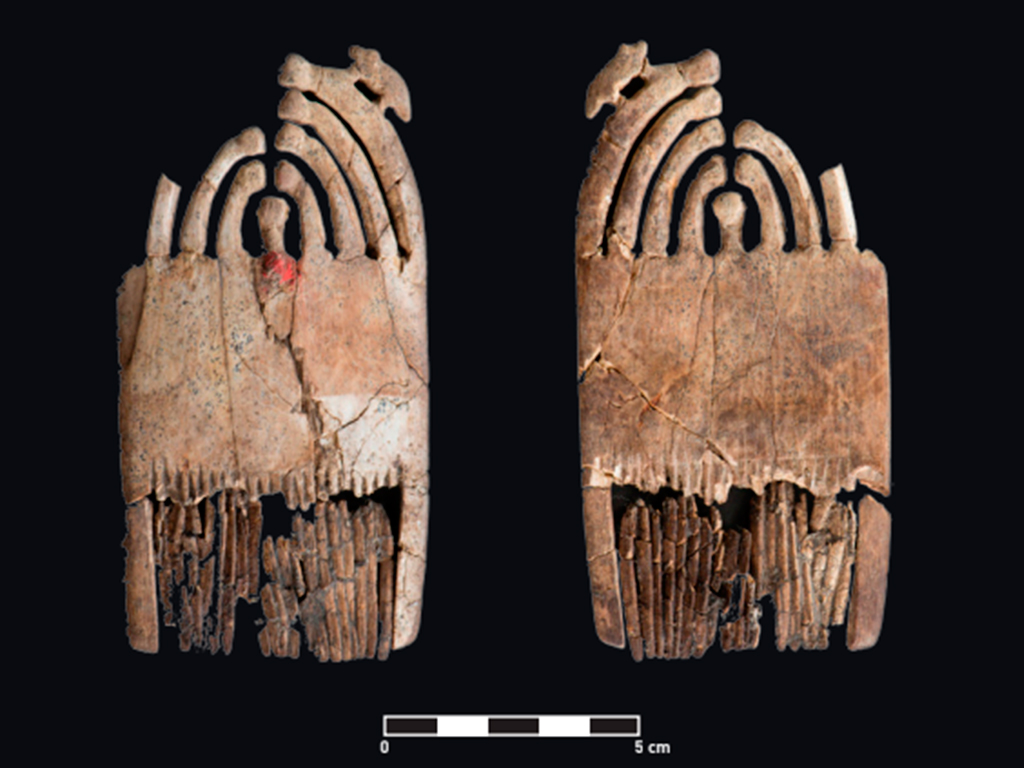
The corridor leads to a circular chamber lined with slate slabs painted in rust red with abundant splashes of cinnabar. Around 20 bodies were found in this large chamber, accompanied by a trousseau. Experts have raised the possibility that all 20 people were buried simultaneously or within a relatively short period of time. These women, arranged around a stele, were surrounded by a trousseau consisting of extraordinary objects made of gold, rock crystal, ivory or amber, as well as plates and pots for the afterlife. They were dressed in robes, some of them made of hundreds of thousands of beads, all covered with large quantities of red cinnabar-based pigment, around an altar and inside a megalithic monument. The archaeological evidence clearly demonstrates that a funerary ritual took place at Montelirio sometime in the 29th to 28th centuries BC, which was a special event for the inhabitants of the large settlement of Valencina and the surrounding region. The type of artefacts associated with these women, as well as the arrangement of their bodies and their particular physical conditions suggest that they were priestesses, people whose status was linked to the ideological or religious sphere of this community. All the material evidence points to the fact that the women who were buried in this tholos had a prominent role in this community.
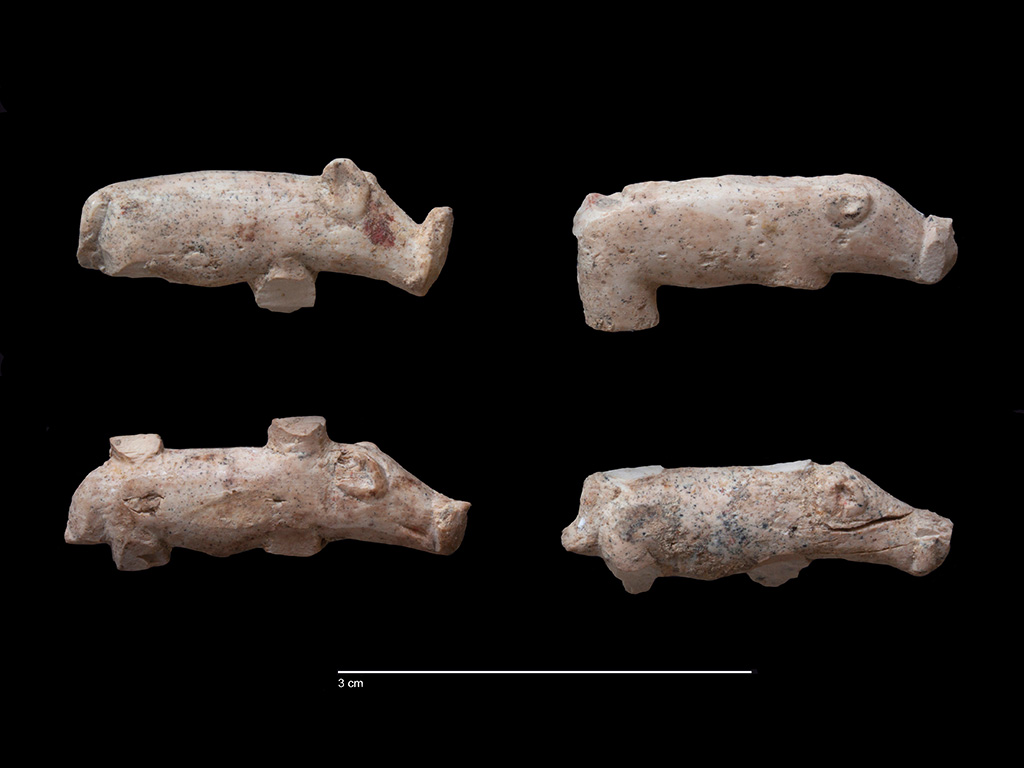
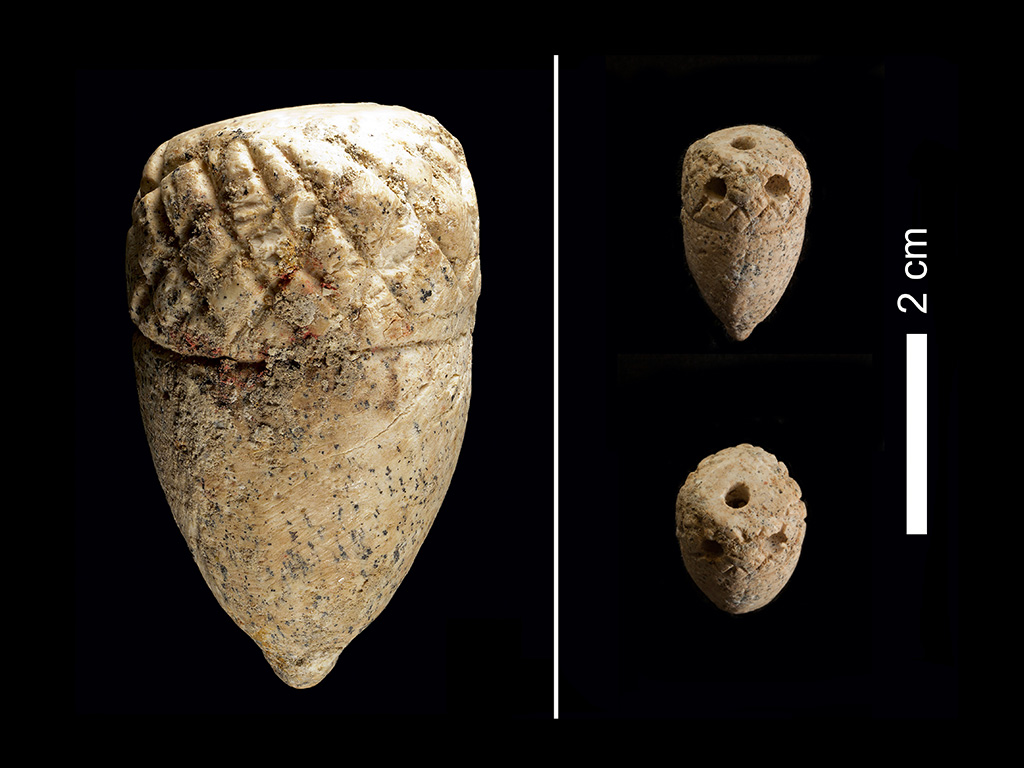
The main chamber, smaller in size and connected by a small corridor to the previous one, is the eternal resting place of the protagonists of the funerary rite: a man and a woman. The chamber, although plundered, preserves a rich trousseau made up of objects such as an elephant tusk, ivory piglets, acorns, gold and arrowheads.
3D Objects
Videos
Interior Montelirio
Hypothetical recreation of burial
Bibliography
FERNÁNDEZ FLORES, A., GARCÍA SANJUÁN, L. Y DÍAZ-ZORITA BONILLA, M. (Eds.) (2016). Montelirio. Un gran monumento megalítico de la Edad del Cobre. Arqueología Monografías, Consejería de Cultura, Junta de Andalucía.
FERNÁNDEZ FLORES, A. y AYCAR LUENGO, V. (2013). Memoria científica: Intervención arqueológica puntual en el dolmen de Montelirio (Castilleja de Guzmán, Sevilla). Memoria Final. Delegación Provincial de Cultura de Sevilla. Inédito.
LUCIAÑEZ TRIVIÑO, M., CINTAS PEÑA, M. y GARCÍA SANJUÁN, L. (2019). Mujeres en blanco y rojo. El ritual funerario en el tholos de Montelirio. Andalucía en la historia, nº 65., 44-49.
FERNÁNDEZ FLORES, A. y AYCAR LUENGO, V. (2013). Montelirio. Un sepulcro clave para la comprensión del registro de los grandes monumentos megalíticos de Valencina de la Concepción-Castilleja de Guzmán. En GARCÍA SANJUÁN, L., VARGAS JIMÉNEZ, J.M., HURTADO PÉREZ, V., CRUZ-AUÑÓN BRIONES, R. y RUIZ MORENO, T. (Coord.). El asentamiento prehistórico de Valencina de la Concepción (Sevilla): investigación y tutela en el 150 aniversario del Descubrimiento de La Pastora, 233-260.
MEDEROS MARTÍN, A. (2013). La cronología del dolmen de Montelirio (Castilleja de Guzmán, Sevilla). En JIMÉNEZ ÁVILA, J., BUSTAMANTE ÁLVAREZ, M.DE LOS Y GARCÍA CABEZAS, M. (Coord.). VI Encuentro de Arqueología del Suroeste Peninsular, 2597-2611.
Credits
Third-party video or image resources:
Copyright: JUNTA DE ANDALUCÍA. Department of Tourism, Culture and Sport. Belonging to the collection of the Archaeological Museum of Seville.
Ownership: Junta de Andalucía.
Author: Antonio Acedo Rendo,Álvaro Fernández Flores, images courtesy of Álvaro Fernández Flores.
Orthophotos: courtesy of Álvaro Fernández Flores.