
- Home
- Interest points
- Vetus Urbs (ciudad antigua de Itálica)
Info
The Itálica Archaeological Site of Cultural Interest Zona Arqueológica Itálica is a Roman settlement from the 3rd century BC divided into two areas: the Vetus Urbs (located under the village of Santiponce) and the Nova Urbs (visitable area of the site).

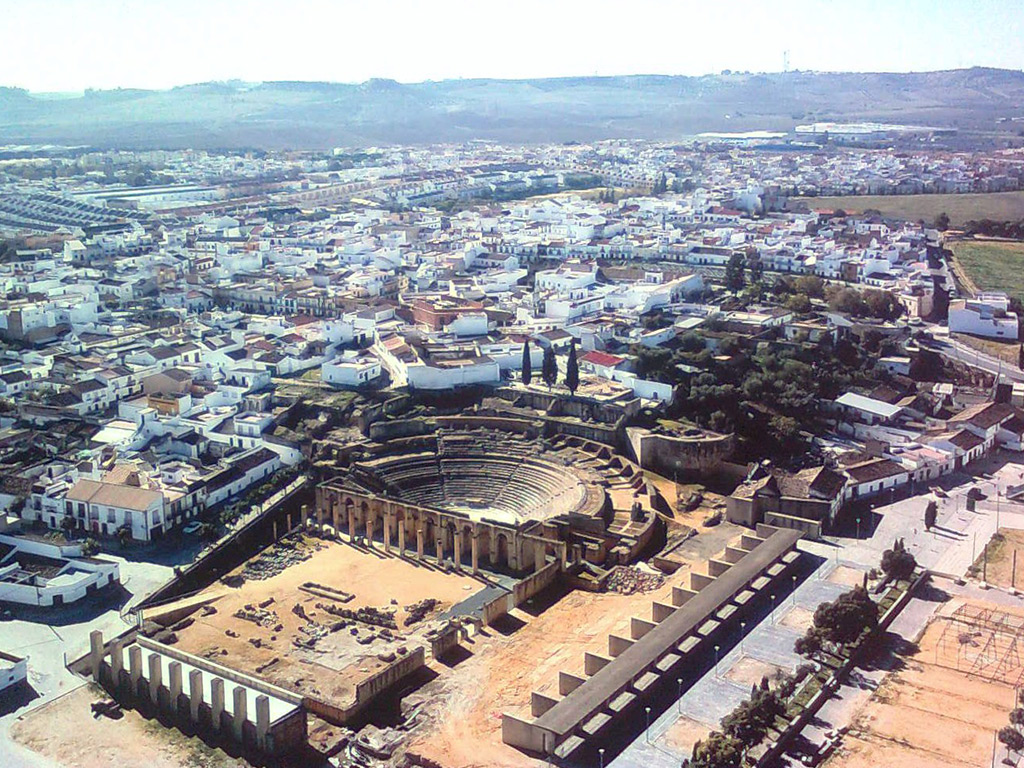
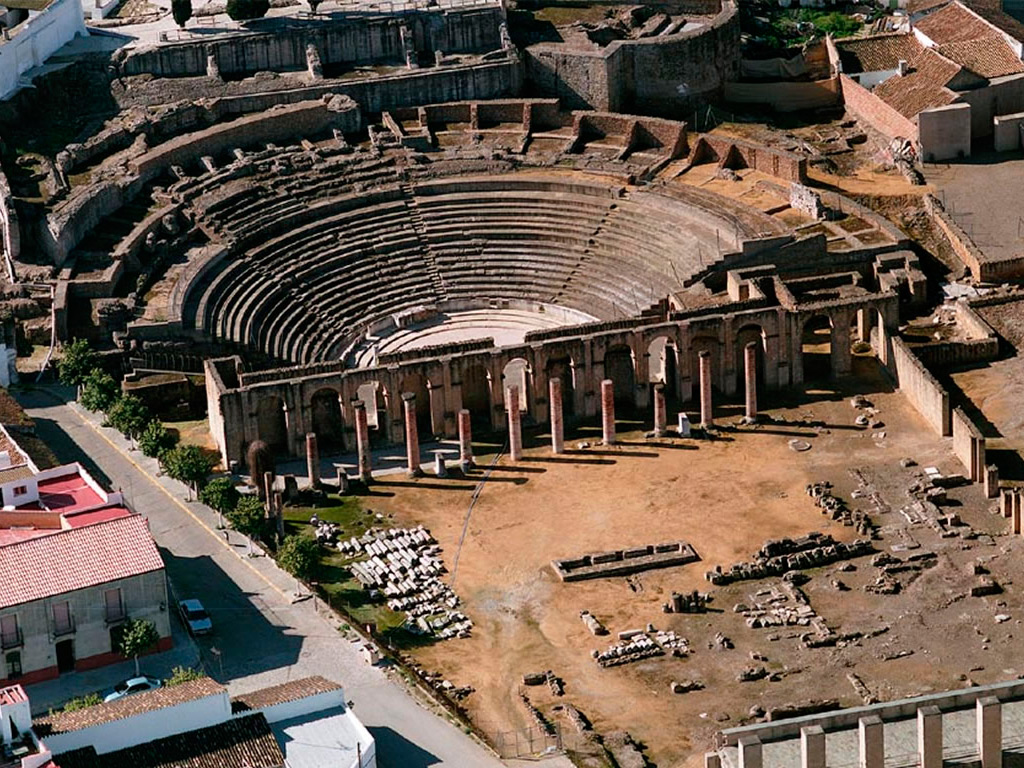
Only the theatre can be visited.
Know more
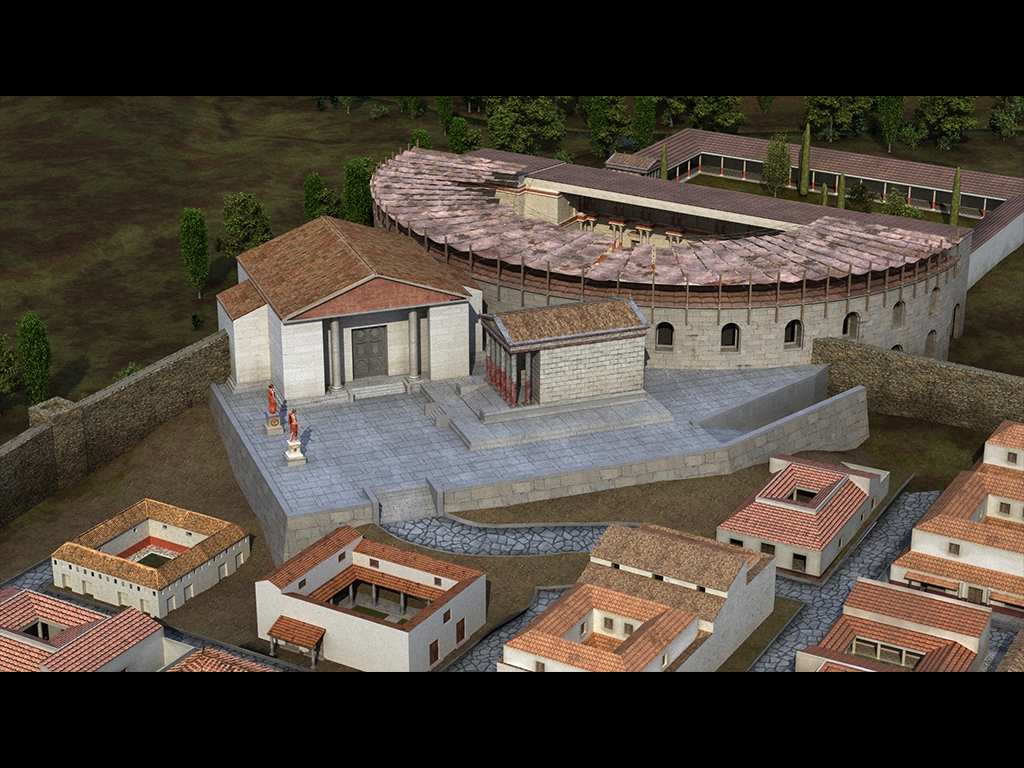
In the Sevillian municipality of Santiponce is the Archaeological Site of Cultural Interest Zona Arqueológica Itálica. It is a Roman settlement from the 3rd century BC divided into two areas: the Vetus Urbs (located under the town of Santiponce) and the Nova Urbs (the visitable area of the site). The former is the so-called ancient city, the original and foundational Roman nucleus. The second corresponds to the extension carried out by the emperors Trajan and Hadrian.
The origin of Italica must be seen in the context of the Second Punic War in which Rome and Carthage fought for control of the Mediterranean. Following the victory of the Roman legions over the Carthaginian army at the Battle of Ilipa (206 BC), the general Publius Cornelius Scipio, nicknamed the African, decided to establish the victorious legionaries in a Turdetan settlement that had already existed since the end of the 5th or beginning of the 4th century BC. The site was a hill located at the mouth of the river Betis (Guadalquivir).
This population centre was the first permanent Roman settlement on the Iberian Peninsula and, from a privileged position, played a decisive role in the Romanisation of the Guadalquivir valley. A few years after its foundation, the colony was christened COLONIA AELIA AUGUSTAE ITALICENSIUM, in memory and honour of those victorious veteran soldiers from the Italic Peninsula.
As time went by, the city evolved. In the second half of the 1st century BC, Italica acquired the prestigious status of Municipium Civium Romanorum.
Set on a terrain with several hills, as in Rome, some of them were given a sacred character, such as the hill of San Antonio. The urban structure was typical Roman, gridded and based on military encampments: walled; with two main roads that intersected in the forum; with secondary streets that formed blocks occupied by houses, temples and public buildings. It was during the Augustan period (27 BC - 14 AD) when Italica underwent important urban improvements, such as the construction of the theatre, which can still be visited today. The remains of both sumptuous domus and monumental buildings can also be seen today.
Italica was the birthplace of the first non-Italian emperor, Trajan. It was during his empire and, especially, during the reign of Hadrian, whose family was close to Italica, that the city acquired its greatest splendour as a result of major urban development work. The original city was enlarged (Nova Urbs) with a huge new residential quarter with a temple and public buildings, such as the amphitheatre, one of the largest in the whole Empire. During this same period, Italica was granted the status of colony, putting it on an administrative par with the metropolis.
However, the decline of Italica began with the decline of the Antonine dynasty. From the 3rd century onwards, the Nova Urbs began to be progressively abandoned, leaving only the original nucleus, the Vetus Urbs, on which the present-day Santiponce was built.
3D Objects
Videos
Vetus Urbs
Bibliography
Amores Carredano, F. (2012). Itálica 1912-2012. Fundación Itálica de Estudios Clásicos.
Beltrán Fortes, J. y Escacena Carrasco, J.L. (2022). Itálica. Investigaciones arqueológicas en la Vetus Urbs, Universidad de Sevilla.
Jiménez, A., Rodríguez, O. e Izquierdo, R. (). Novedades arqueológicas adrianeas en el Teatro de Itálica y su entorno. En Hidalgo, R. y León, P. (Ed.), Roma, Tibur, Baetica. Investigaciones Adrianeas (271-293). Universidad de Sevilla.
Jiménez Sancho, A. (2020) The Iseum of Italica. A sanctuary in the theater's porticus. En Bibliotheca Isiaca, IV, (45-51)
Rodríguez Gutiérrez, O. (2008). El proceso de edificación del teatro romano de Itálica a través del análisis arqueológico de sus diferentes etapas constructivas. En Camporeale, S., Dessales, H. y Pizzo, A. (Eds.), Arqueología de la construcción, I. Los procesos constructivos en el mundo romano: Italia y las provincias occidentales. Anejos de Archivo Español de Arqueología, 209-228.