
- Home
- Interest points
- Dolmen of the Pastora
Info
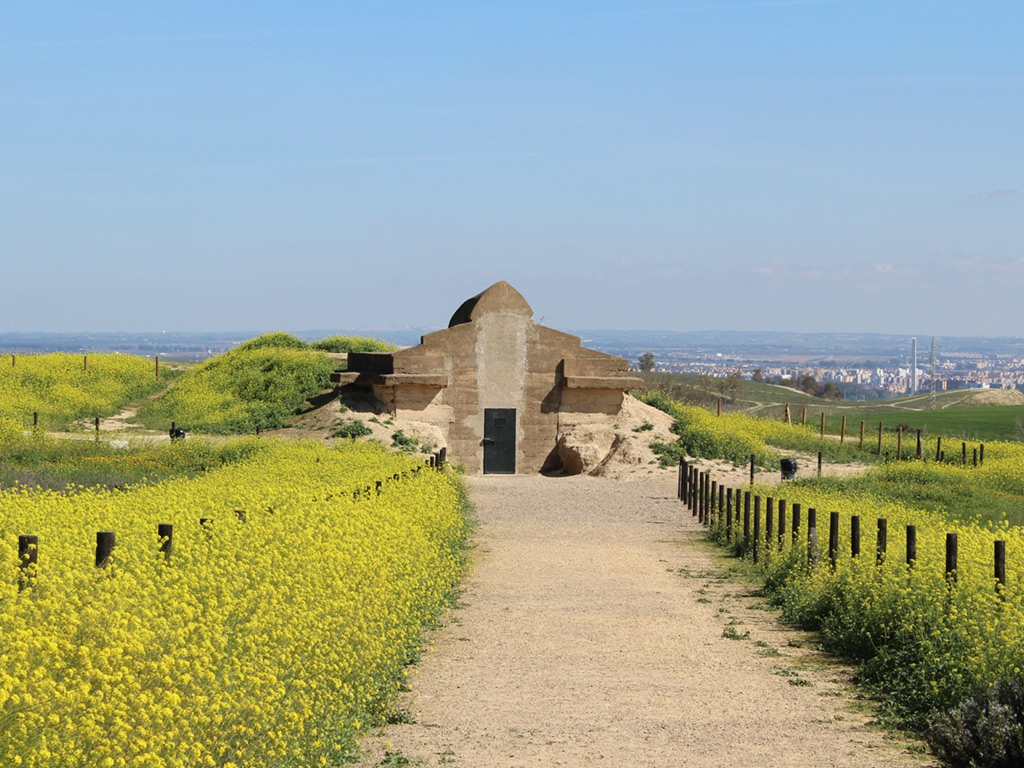
The dolmen of La Pastora is the most important construction in the Chalcolithic archaeological site of Valencia de la Concepción.
Accessible to anyone.
Know more
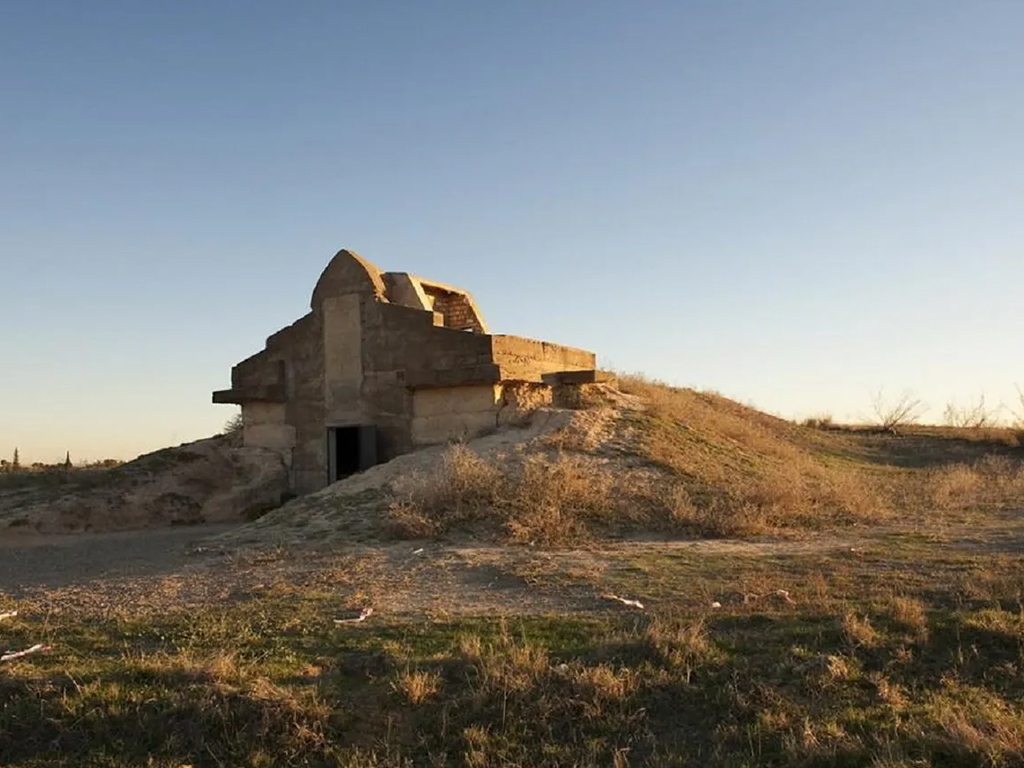
The dolmen of La Pastora is the most important construction in the Chalcolithic archaeological site of Valencia de la Concepción (Seville). It is one of the most spectacular funerary monuments in southern Europe, although its burial mound is unexplored. Its uniqueness is due not only to its structure and dimensions, but also to the use of different types of rock for its construction. It was the first megalithic, prehistoric and funerary monument discovered in the province of Seville and one of the first in Andalusia. This event took place on 5th December 1860 during the planting of a vineyard. It was declared a Historic and Artistic Monument by the Decree of 3 June 1931.
The age of the construction is still a matter of scientific debate, although everything seems to indicate that La Pastora is already 5000 years old, as it seems likely that it was built in the first third of the 3rd millennium BC.
This monument was erected in such a uniform way that there are no distinguishable construction phases. It is the only megalithic monument in the area whose entrance is oriented towards the setting sun, which is why the star Sirius has been proposed as its orientation.
The beginning of the construction preserved a capping or seal made of the same material as the lateral walls, so that it has been interpreted that the closure of the megalith must have taken place at a time not too distant from its use. This type of episode of sealing and closure of megalithic chambers has been related to certain upheavals and changes in beliefs, perhaps connected with processes of social and political transformation.
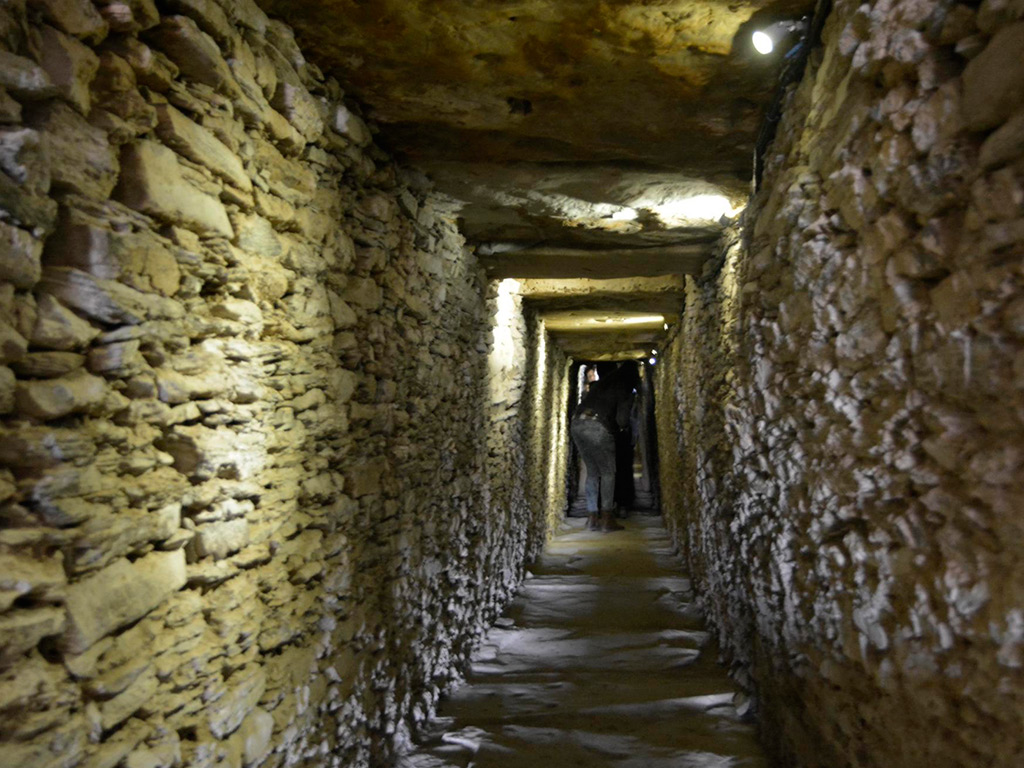
Access to the interior of the chamber is through a corridor 44'36 m long with a width varying between 1'04 and 0'76 m, and a height that increases from 1'38 m to 1'81 m. The roof of the corridor is made of sandstone and granite slabs that are arranged horizontally, while the floor slabs are arranged on an inclined plane forming a slope towards the interior of the monument. The roof of the corridor is made of sandstone and granite slabs that are laid horizontally, while the floor slabs are laid on an inclined plane forming a slope towards the interior of the monument. The walls are made of masonry and mud. It is divided into three sections marked by protruding sandstone slabs which, like doors, compartmentalise its route, with a doorjamb and lintel preserved in the second and third sections, and also with a threshold in the one leading to the chamber. The final section (14 m) gives access to the chamber, the intermediate section is the central one (13.80 m) and, finally, the initial section (14.50 m) is the one that leads to the outer façade of the monument. The only burial in the dolmen was found in the final section of the corridor.
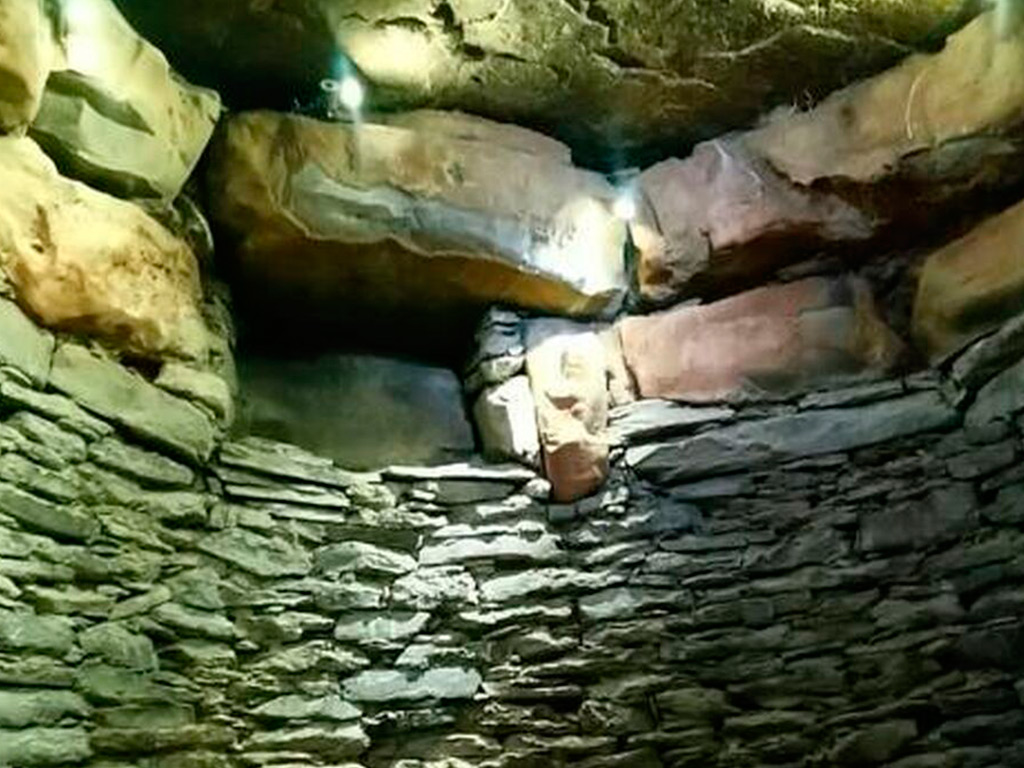
The chamber is 2.60 m in diameter and 2.42 m high. It is the main area of the entire construction, and its design, the materials used and the type of construction are particularly unique. The walls are made of slate slabs arranged in some 40 layers. The roof is made of a large monolithic block of granite, the weight of which is distributed more evenly by the gradual approximation of the courses of masonry. Opposite the corridor and in the upper part there is a niche which to this day has no clear interpretation. It is believed that this chamber was not a burial space, but rather a place of worship.
In the tumulus that covered the structure and as a continuation of the façade line, a wall has been detected with a certain orientation towards the east, which suggests a possible perimeter ring of earth containment. At the time of its discovery, the earthen mound rose about 2 m above the chamber and its surface area is estimated to be about 2,300 m2.
Between the first door of the corridor and the seal there is a small space of 0.75 m in length which is interpreted as a vestibule. Next, the tomb or seal capping shows courses of slate masonry and a level of compact red clay in the lower part. Finally, on the outside, the façade is documented as a continuation at an angle of the lateral walls, although with the presence of a vertical slab covering, on which a conglomerate of masonry blocks later rests for the final concealment of the structure.
Nothing is known about the exact position or associations of human remains or offerings in the archaeological deposit at La Pastora. Among the grave goods that could be recovered and identified are objects common in megalithic burials, such as flint arrowheads, gold plates, ceramic vessels and rare stone beads.
3D Objects
Videos
Dolmen de la Pastora
Bibliography
Cáceres, L.M., Vargas, J.M., Donaire, T., Muñiz, F. y Rodríguez-Vidal, J. (2016). Avance del estudio petrográfico de los tholoi de La Pastora y Matarrubilla, Valencina de la Concepción (Sevilla). Geotemas, 16, 367-370.
García Sanjuán, L., Vargas Jiménez, J.M., Hurtado Pérez, V., Ruiz Moreno, T. y Cruz-Auñón Briones, R. (eds.) (2013). El Asentamiento Prehistórico de Valencina de la Concepción (Sevilla). Investigación y Tutela en el 150 aniversario del descubrimiento de La Pastora. Universidad de Sevilla.
Vargas Jiménez, J.M.. (2004). Carta arqueológica municipal de Valencina de la Concepción. Junta de Andalucía, Consejería de Cultura.
Vargas Jiménez, J.M., Cáceres Puro, L.M. y Odriozola, C. P. (2019). El tholos de La Pastora, una nueva perspectiva a partir del análisis arqueológico de su construcción. Spal 28.2, Universidad de Sevilla, 113-141.