
- Home
- Interest points
- Área adyacente de la Pastora
Info
The area adjacent to the dolmen of La Pastora is one of the main focal points of megalithism on the Iberian Peninsula due to the constructions of the primitive settlement and the monumental funerary constructions.
Know more
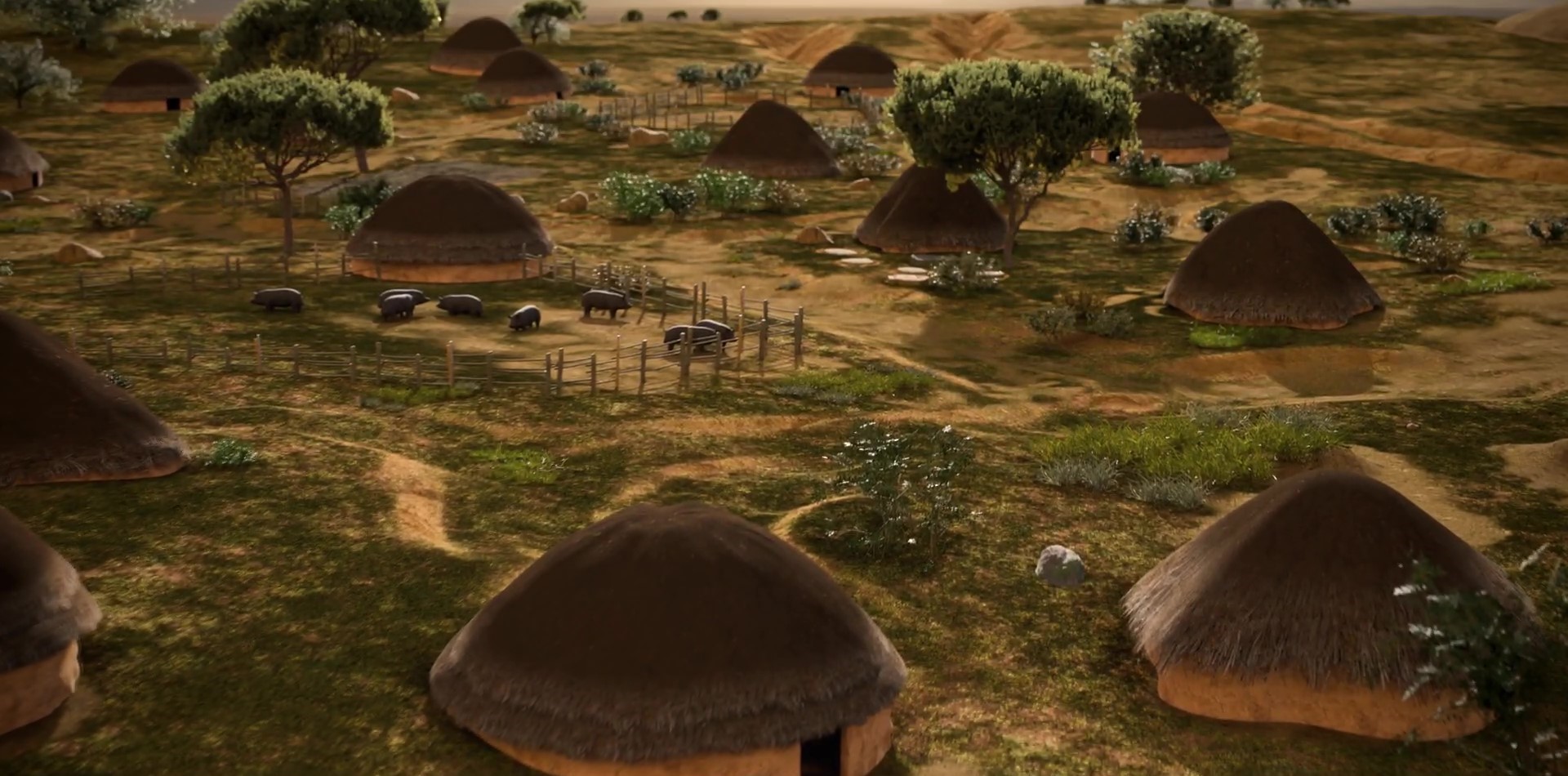
A settlement developed in this area that can be considered one of the oldest cities in the West, of which numerous remains of huts, ditches, silos, water wells and a large number of dolmens have been found. At the height of its splendour it reached an area of 200 ha.
The huts allow us to date the site to between the Final Neolithic (around the 4th Millennium BC) and the end of the Chalcolithic (around 2250 BC).
The prehistoric settlement of Valencina de la Concepción was probably organised into two large areas. The northern area would have been dedicated to the domestic and productive sphere, while the southern area would have been the burial area around the settlement.
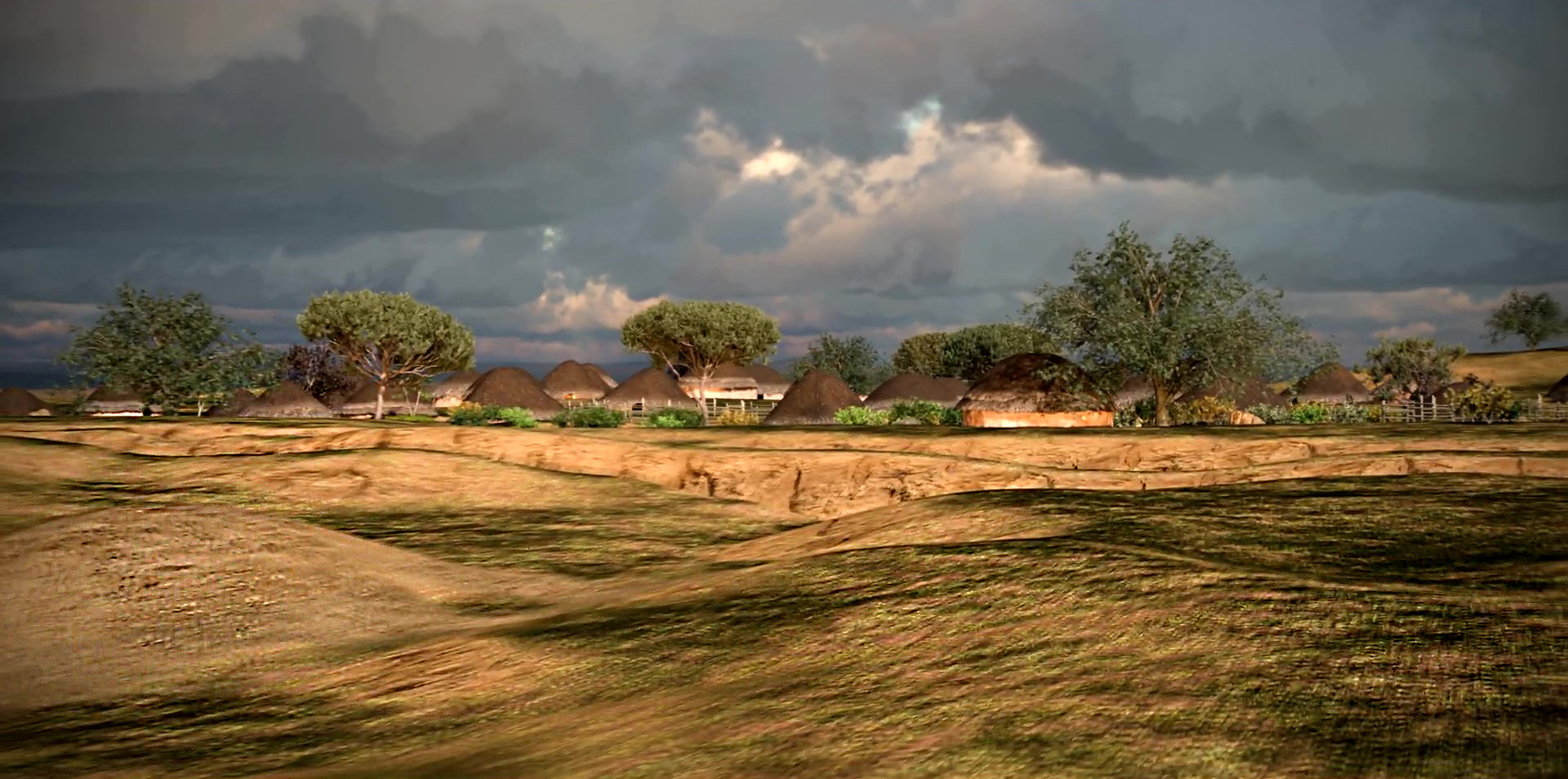
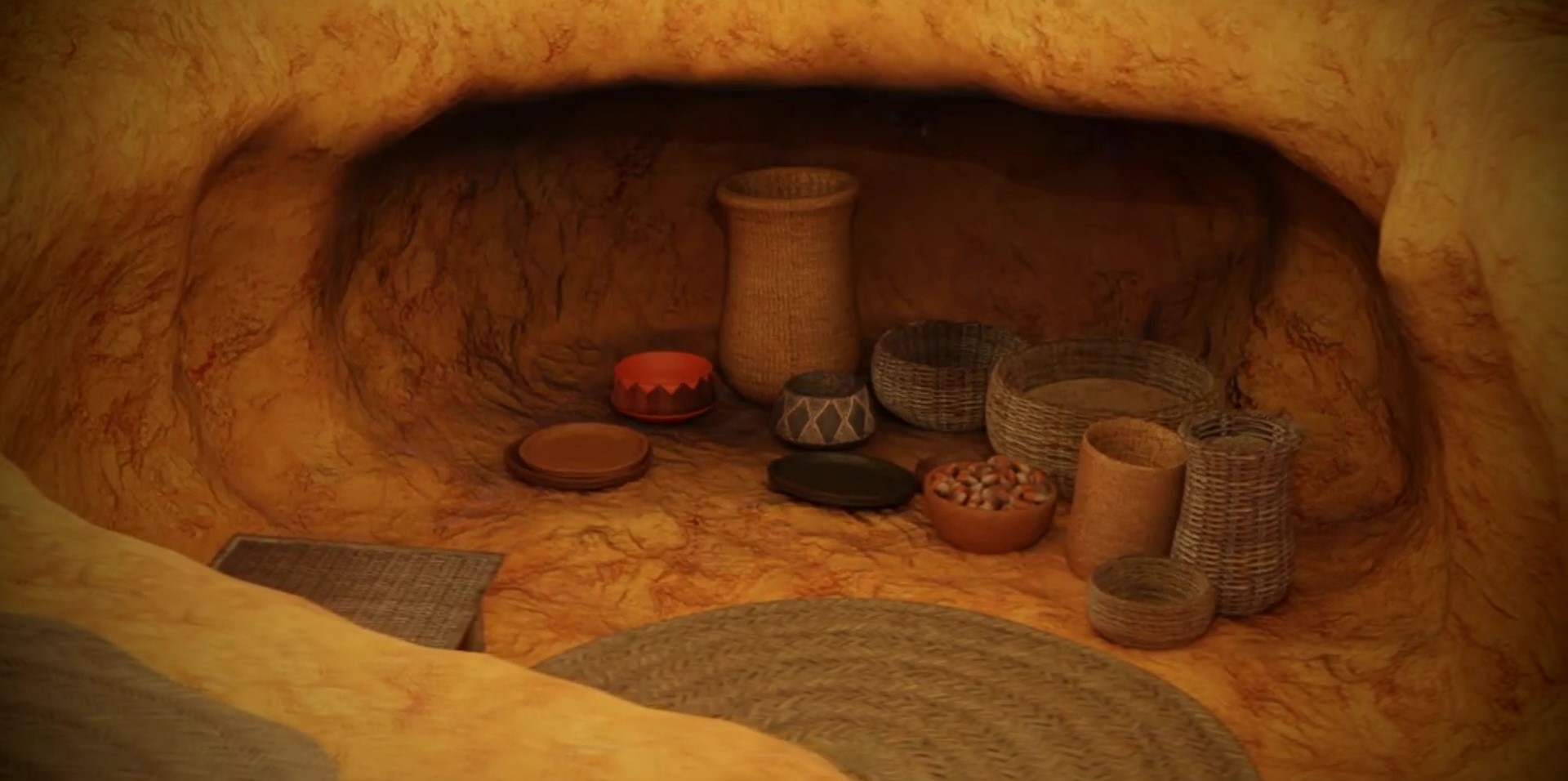
The settlement would have consisted of an undetermined number of huts. Few of them have been investigated in their entirety, so there are not many examples available for reconstruction. In general, they have circular or alveolar floor plans, are semi-subterranean or even underground. In some cases, the floor has been treated to make it more durable. The walls and roof are made of branches and especially reeds, which are then covered with mud plaster. This, when dried in the sun, has given rise to a large quantity of adobe remains that conserve these vegetable imprints. But the real life of the village was carried out from the outside. It was at the entrance to these huts that the hearth was located, where people gathered to prepare food or warm themselves, while the interior was used for resting.
The population was dedicated to high intensity agricultural production, with spaces dedicated to the storage of surpluses that would have exceeded the consumption needs of the inhabitants. This is evident in the large number of structures identified as silos. These silos serve as the basis for the hypothesis that Valencina was a centre of power that centralised the production and distribution of agricultural products in the Guadalquivir Valley. It has even been claimed that the agricultural surplus that was stored was tribute from nearby towns.
However, the economy of Valencina was not only based on agriculture; there is also evidence of an incipient dehesa economy as a result of numerous indications. These show the use of cattle for ploughing or loading; the many representations of pigs and acorns also suggest that the possession and consumption of these animals was an economic, social and political resource. There are also representations of bulls and horses, and the bones of different types of animals were used as a support for making idols.
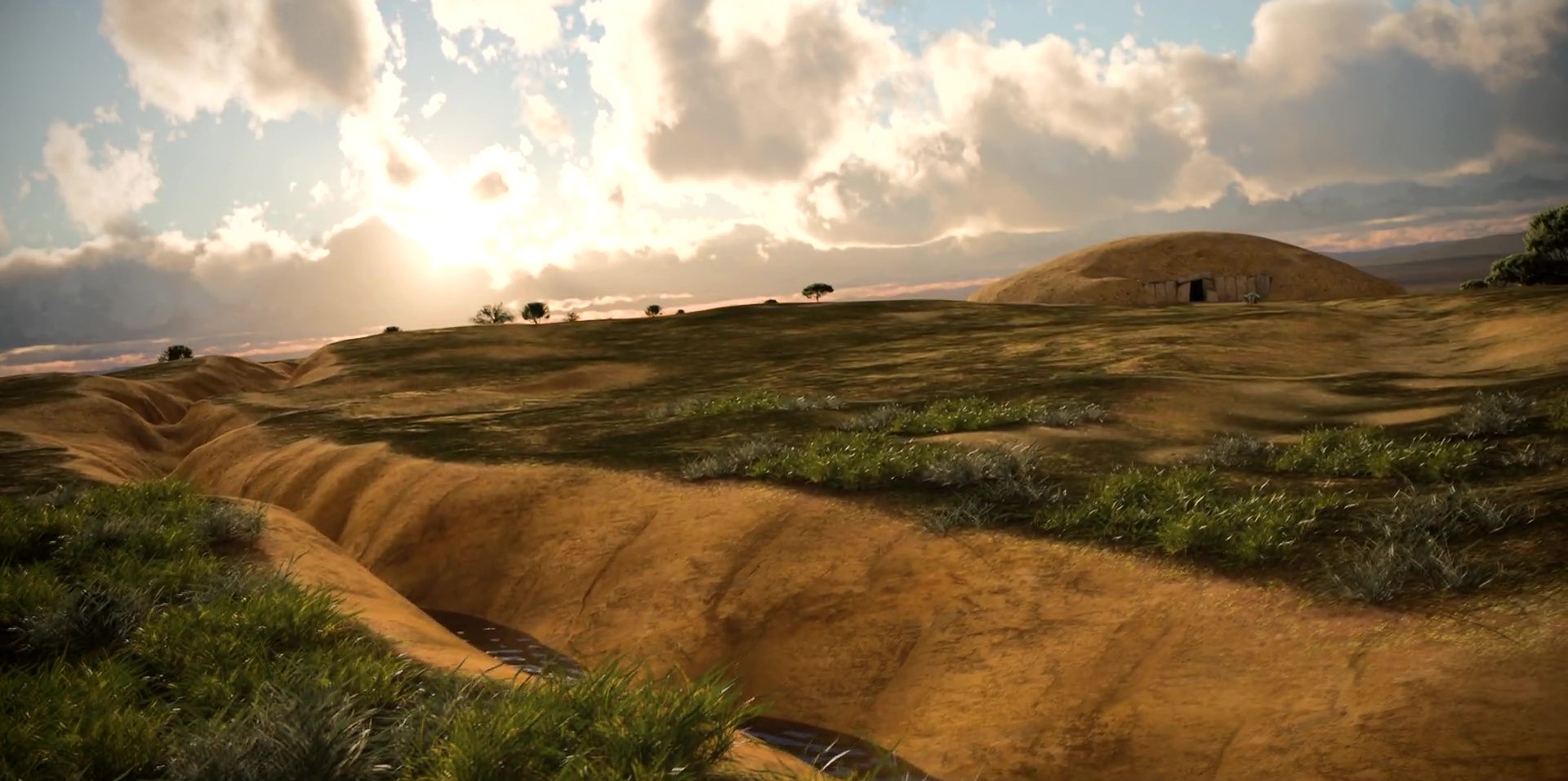
In the settlement there are also long ditches distributed throughout the settlement, with kilometre-long stretches, widths of up to six or seven metres and depths of up to 10 metres. These ditches have been located in different parts of the site, in small sections, so that until the complete layout is drawn we will not be able to know their exact plan. In any case, they have been interpreted as defensive elements, as a separation between different enclosures and also as devices for channelling water. On one side of the moat, the settlement, the world of the living, and on the other, the world of the dead. An extension of land where the burial sites were located, a field of burial mounds of varying sizes.
The Chalcolithic Valencina was a centre, that is, the seat of a state, capable of dominating and exploiting the communities settled in its periphery.
Videos
Hypothetical reconstruction of the settlement.
Bibliography
García Sanjuán, L., Vargas Jiménez, J.M., Hurtado Pérez, V., Ruiz Moreno, T. y Cruz-Auñón Briones, R. (eds.) (2013). El Asentamiento Prehistórico de Valencina de la Concepción (Sevilla). Investigación y Tutela en el 150 aniversario del descubrimiento de La Pastora. Universidad de Sevilla.
Vargas Jiménez, J.M.. (2004). Carta arqueológica municipal de Valencina de la Concepción. Junta de Andalucía, Consejería de Cultura.