
- Home
- Interest points
- Tesoro de El Carambolo
Info
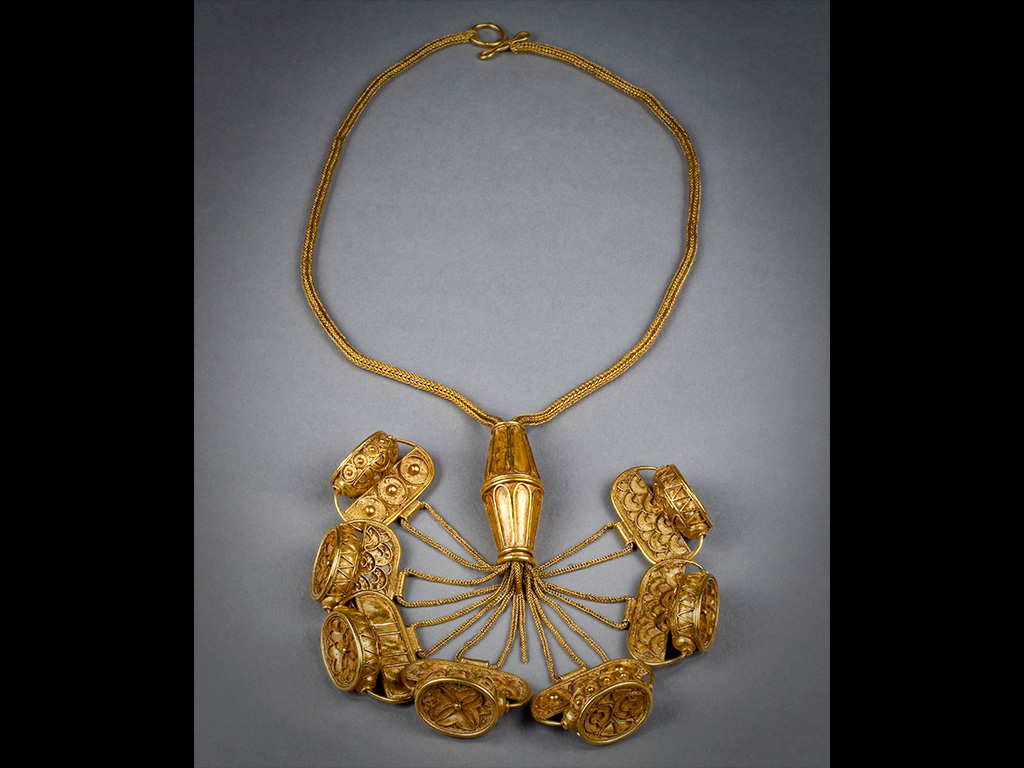
A set of 21 pieces of protohistoric jewellery found inside a large ceramic vessel at Cerro de El Carambolo.
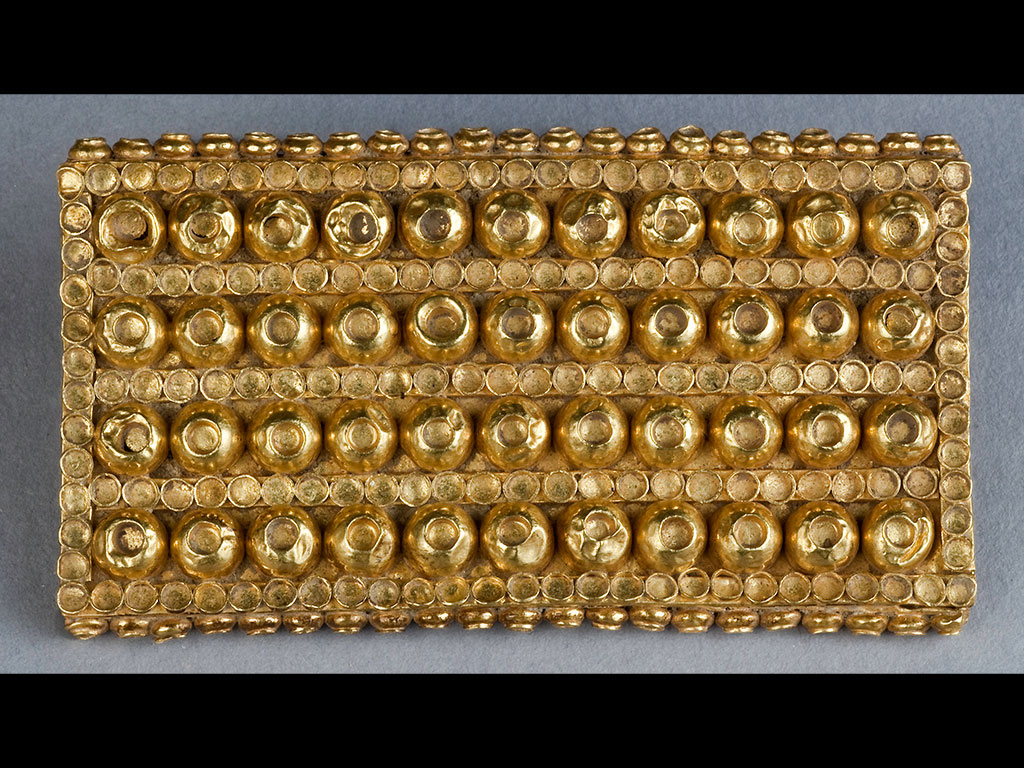
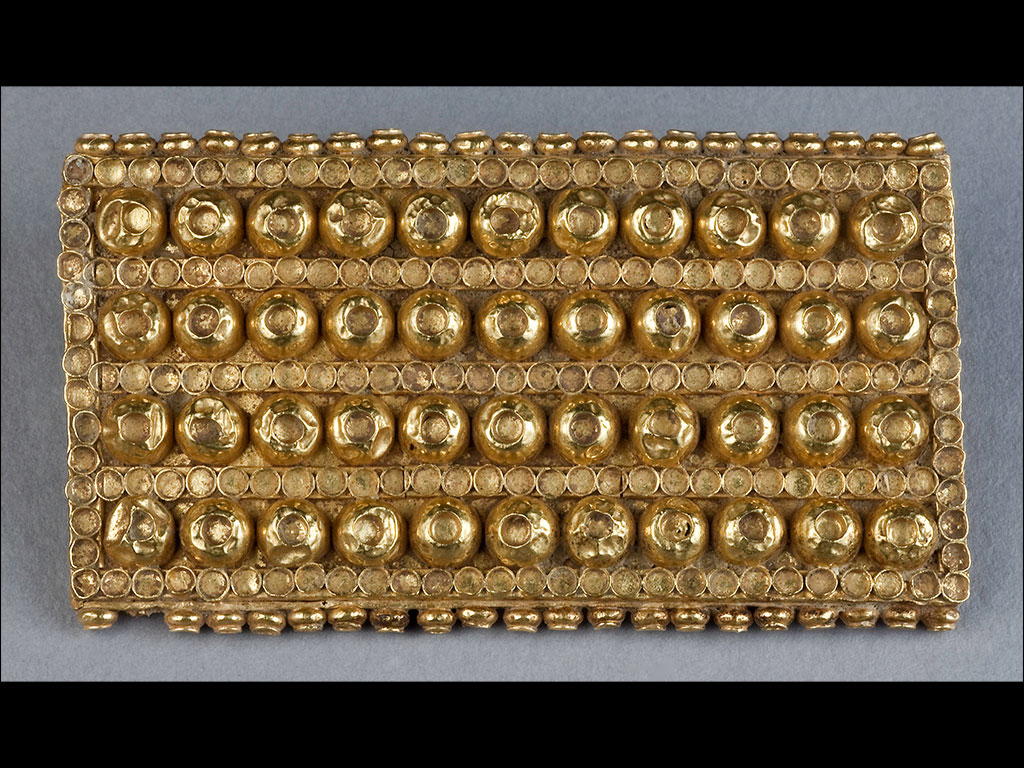
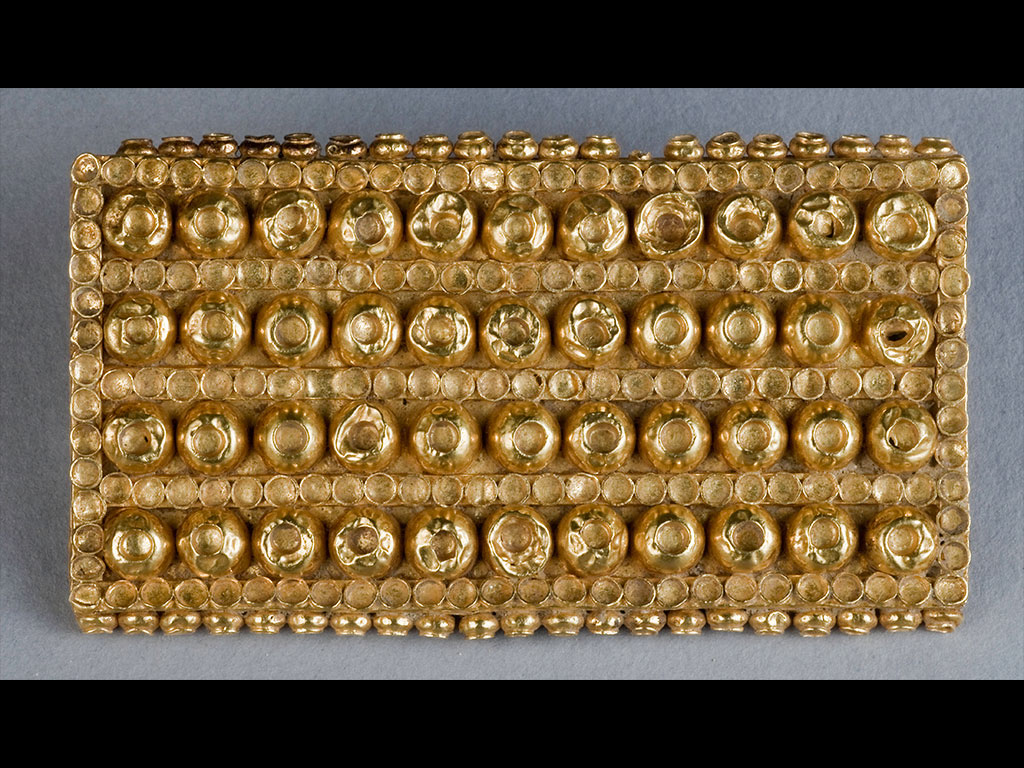
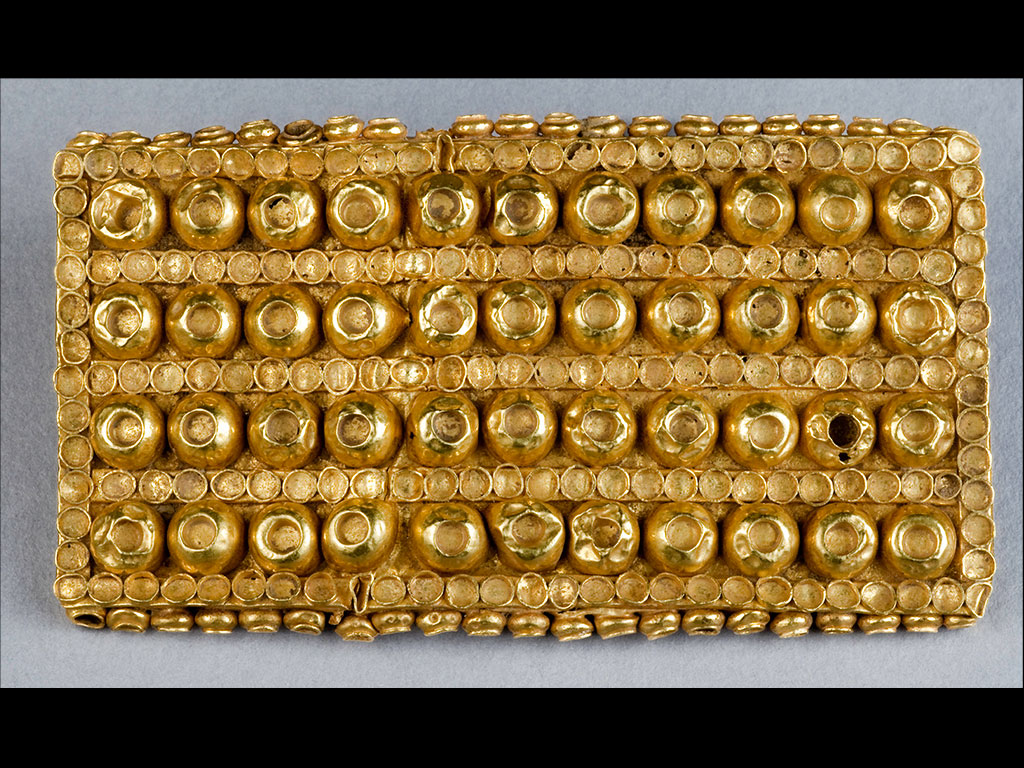
Know more
On 30 September 1958, during construction work in the so-called Tiro de Pichón, on the Carambolo hill, a set of jewellery was found inside a large ceramic vase known as The Carambolo Treasure. At first, the pieces were distributed among the workers who found them, but they were soon handed over to the authorities.
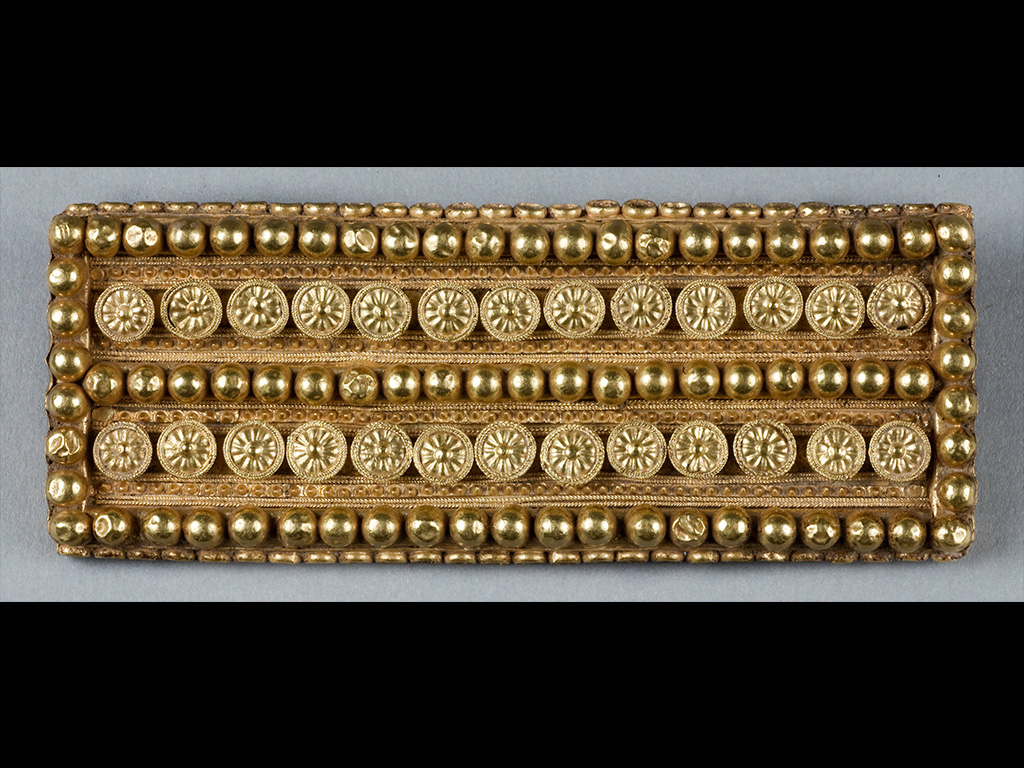
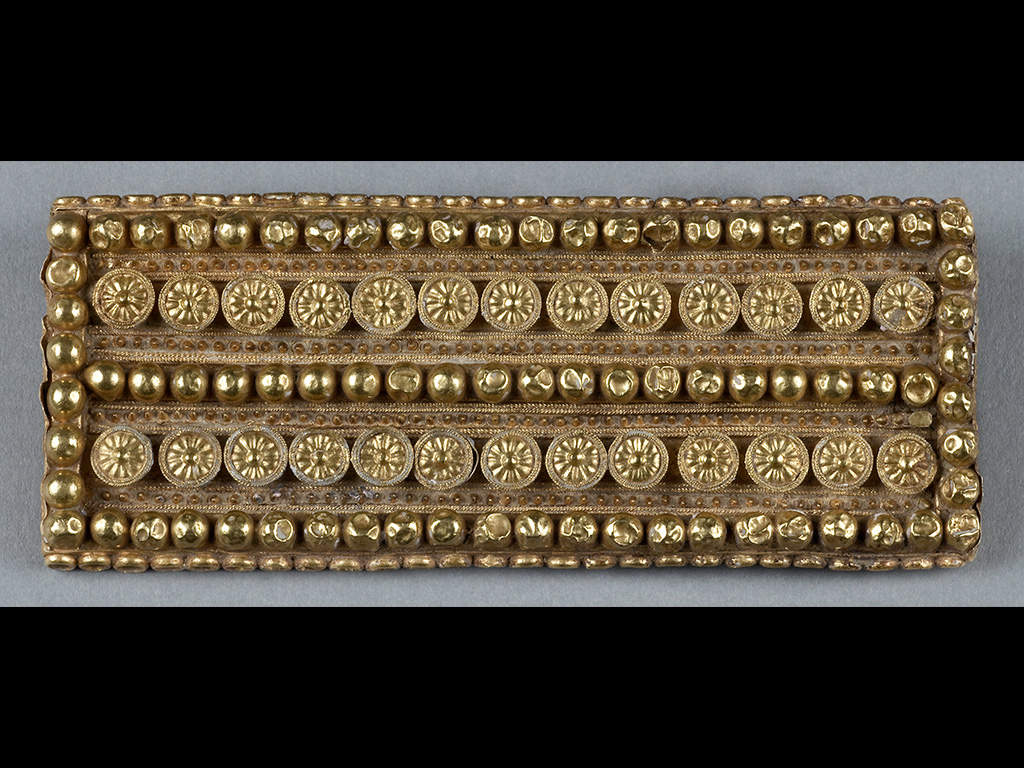
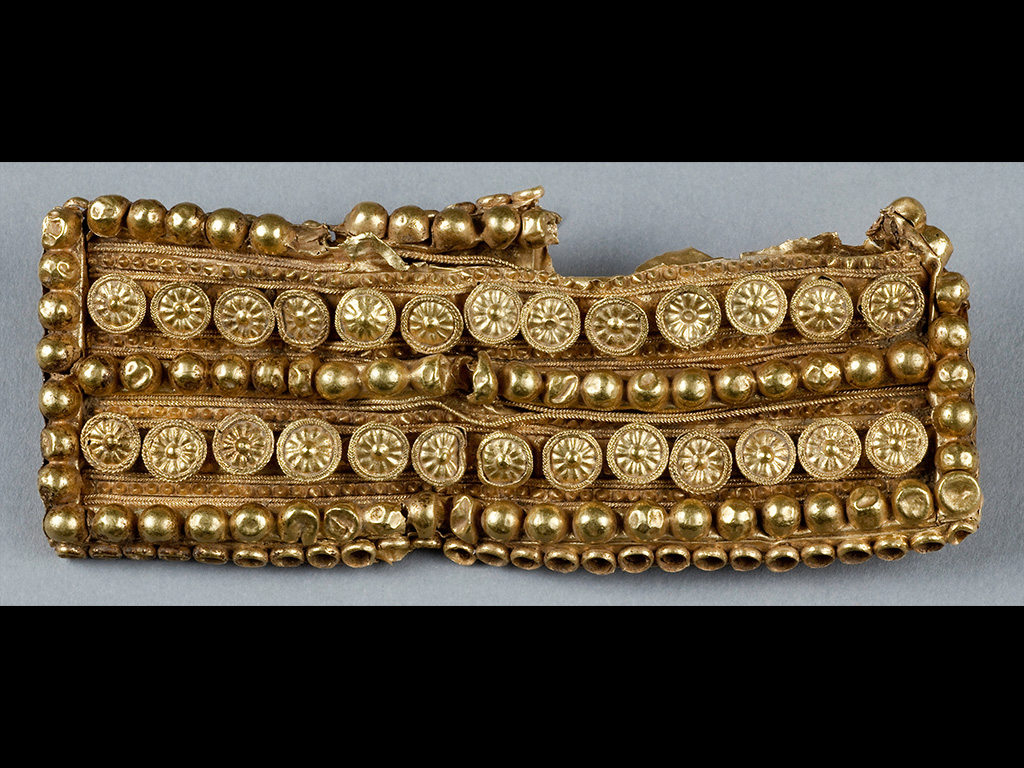
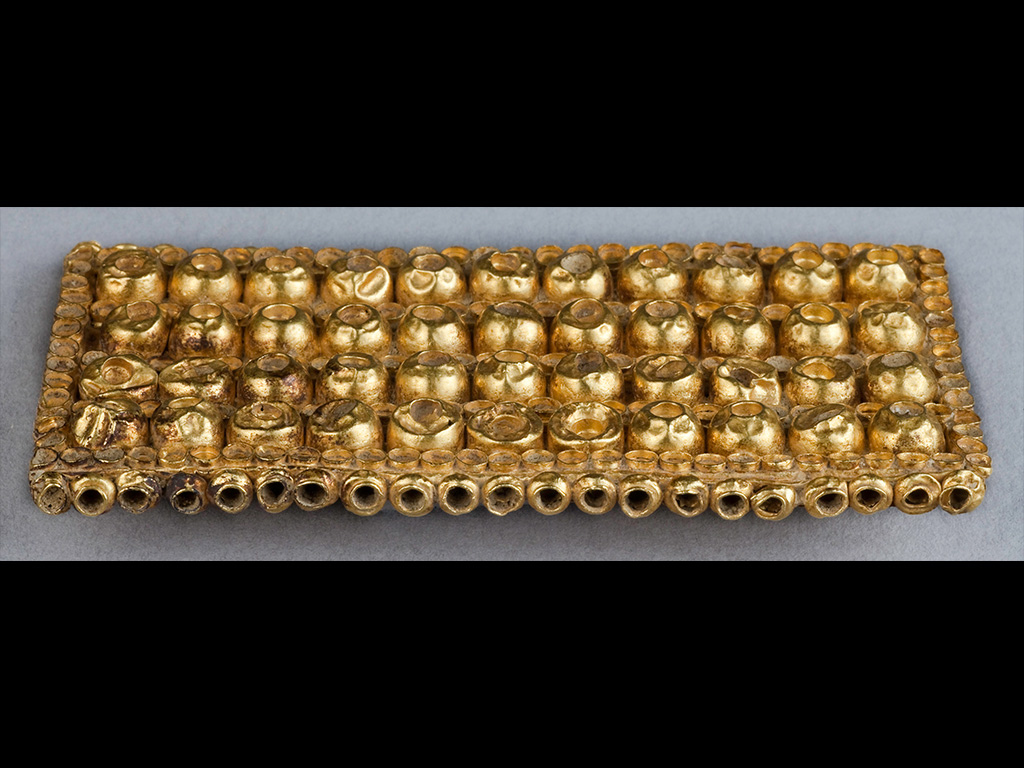
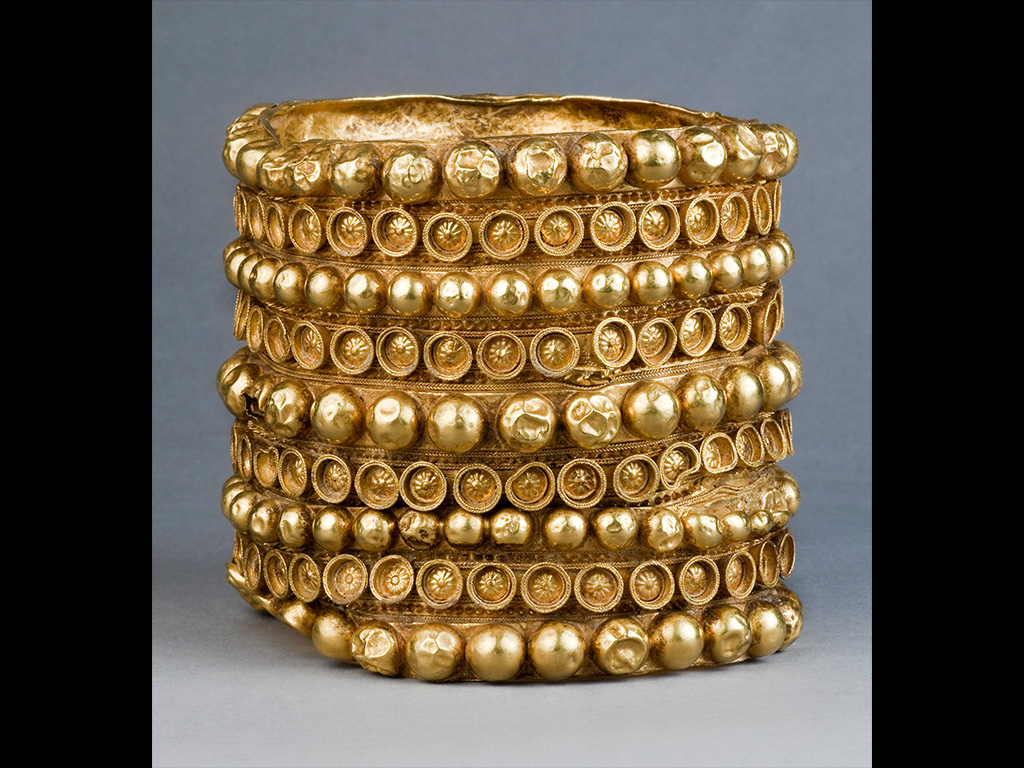
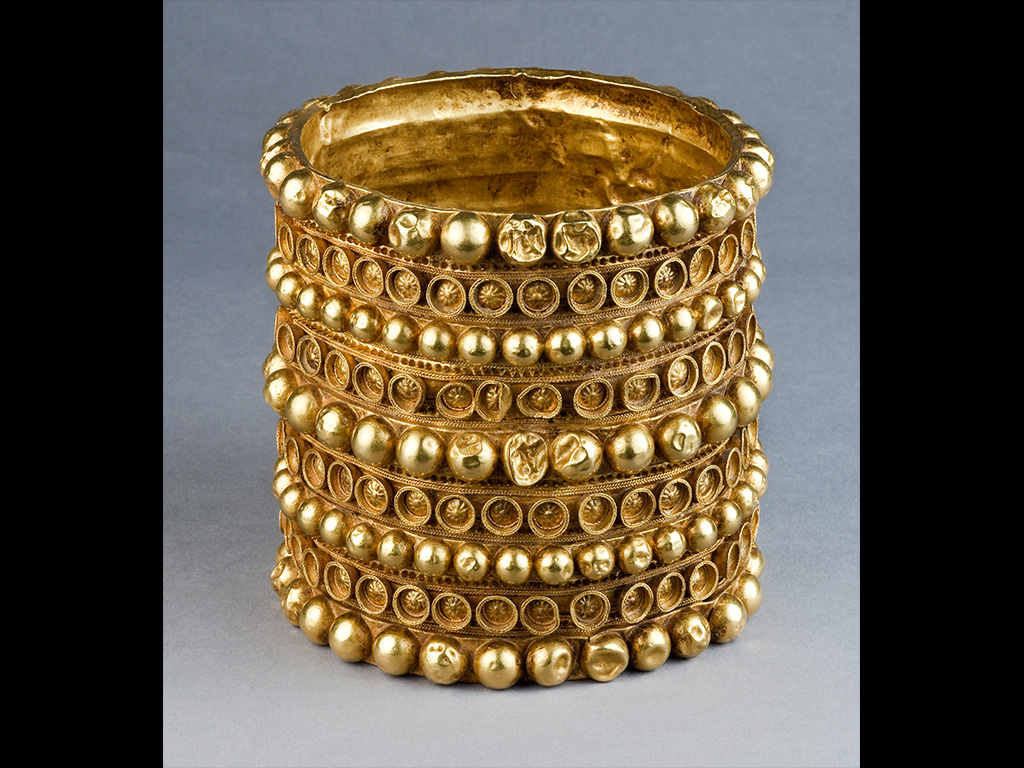
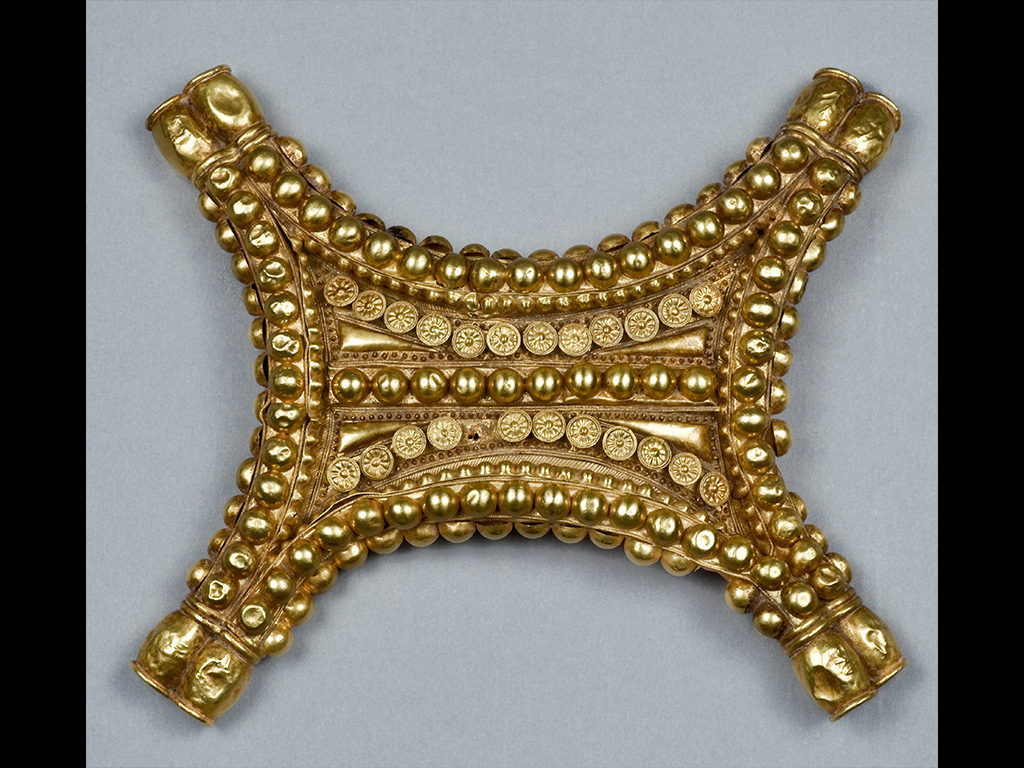
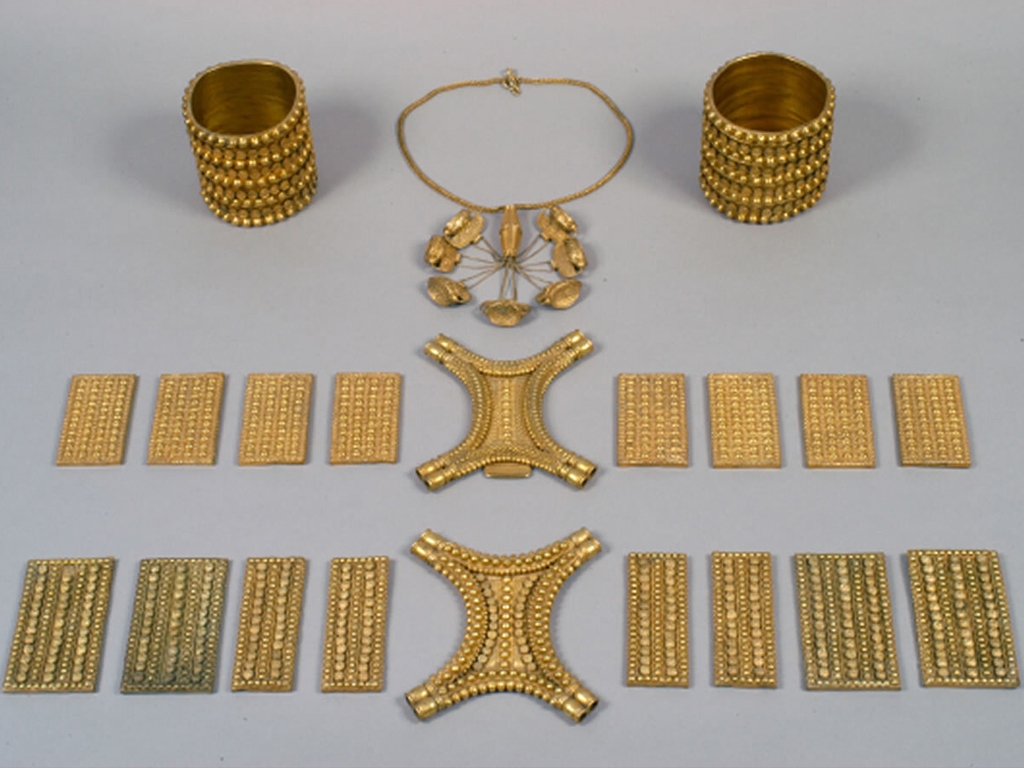
The set consists of 21 gold pieces weighing a total of 2'950 kg: a necklace, two 'bull's skin' pendants, two cylindrical bracelets and sixteen rectangular plaquettes.
- Necklace of pseudo-seal pendants. This consists of a braided chain divided into two strands that are inserted into a pin from which seven oval-based seal pendants are threaded onto thinner chains. The decoration is a combination of floral and geometric motifs characteristic of Eastern cultures.
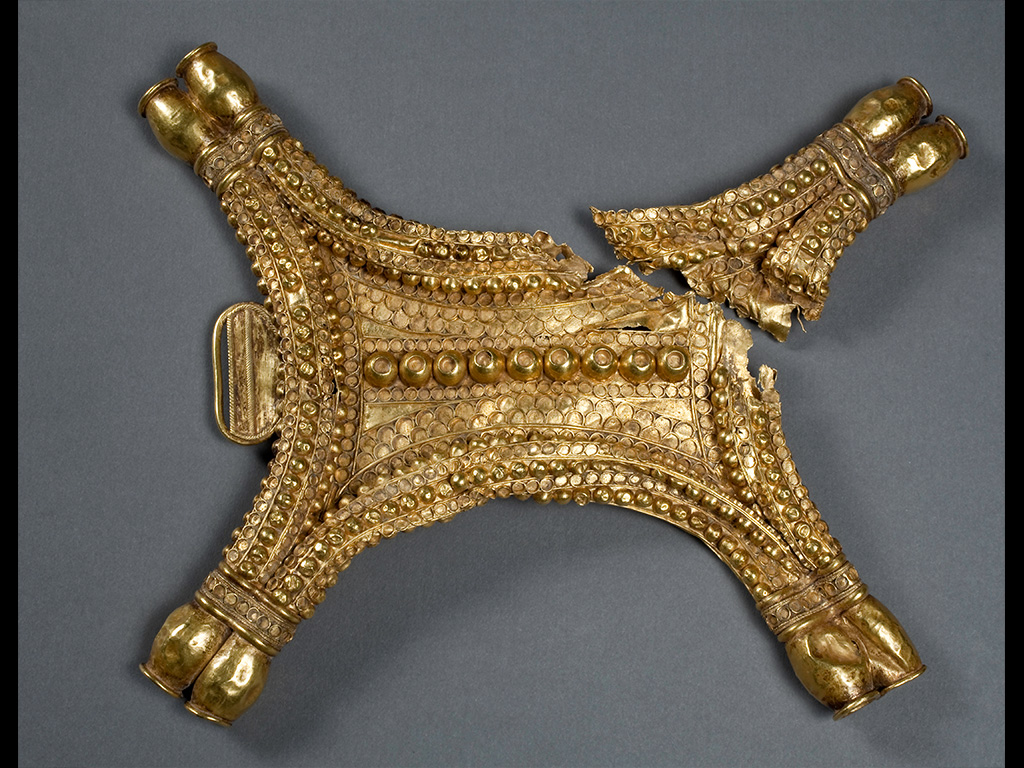
- Bull skin" pendants. These are two pendants that are similar but different in decoration and size. The first has decorative motifs based on rosettes and its measurements are: maximum external height 15.5 cm; minimum internal height 10.2 cm; maximum external width 14 cm; minimum internal width 5.8 cm. The second pendant is decorated with recessed spheres and its measurements are: maximum outer height 16.0 cm, minimum inner height 13.8 cm; maximum outer width 11.0 cm; minimum inner width 11.0 cm; weight 198.32 g.
- Cylindrical bracelets. The decoration of these bracelets consists of horizontal bands of alternating decorative motifs of rosettes and hemispheres. These jewels have no close parallels and are considered to be an indigenous production that evolved from earlier forms from the Atlantic Final Bronze Age. The measurements of these pieces are 10.5 cm. inside diameter and 11.4 cm. high. In the first bracelet; and inner diameter 10.0 cm. and height 10.9 cm. in the second.
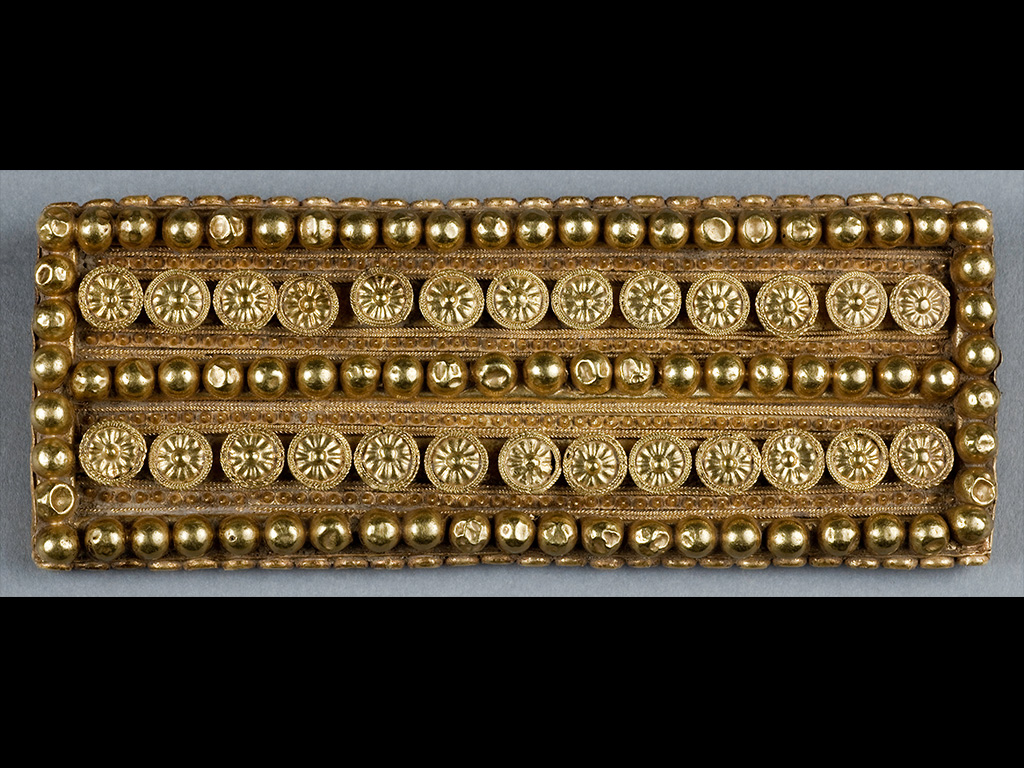
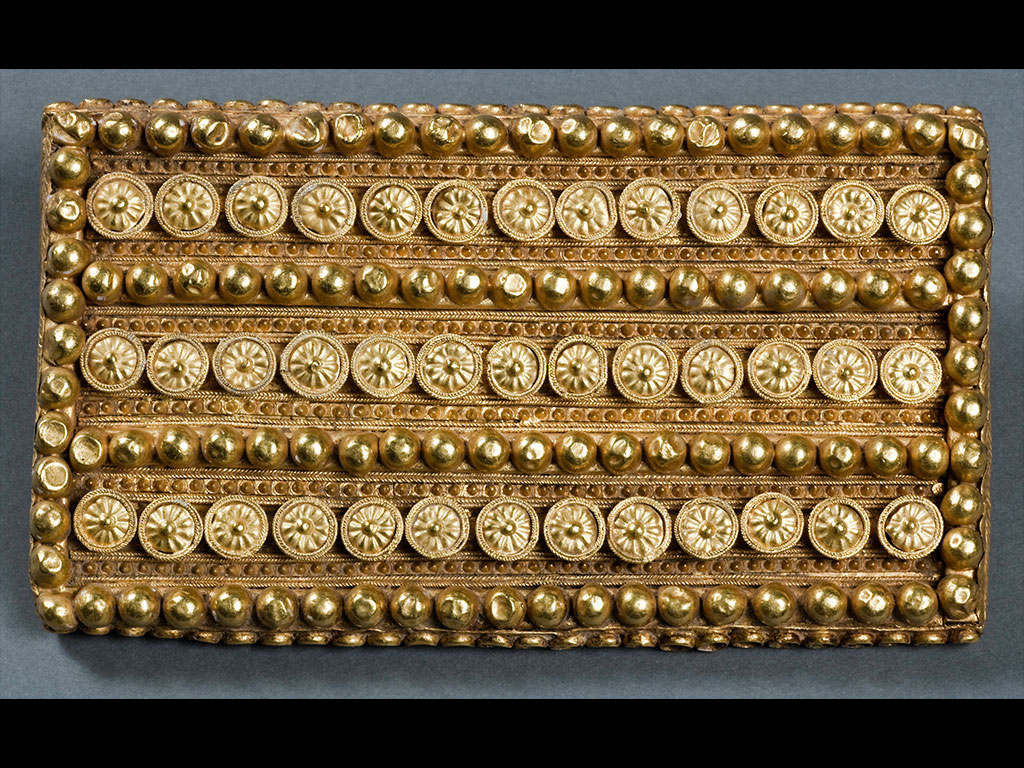
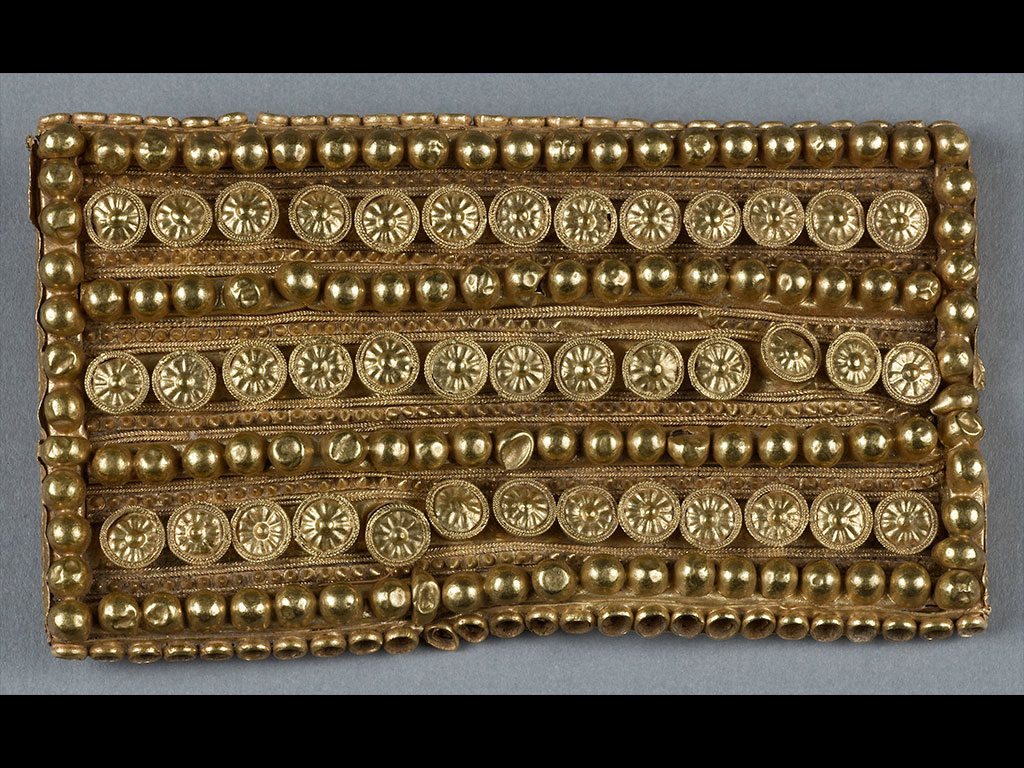
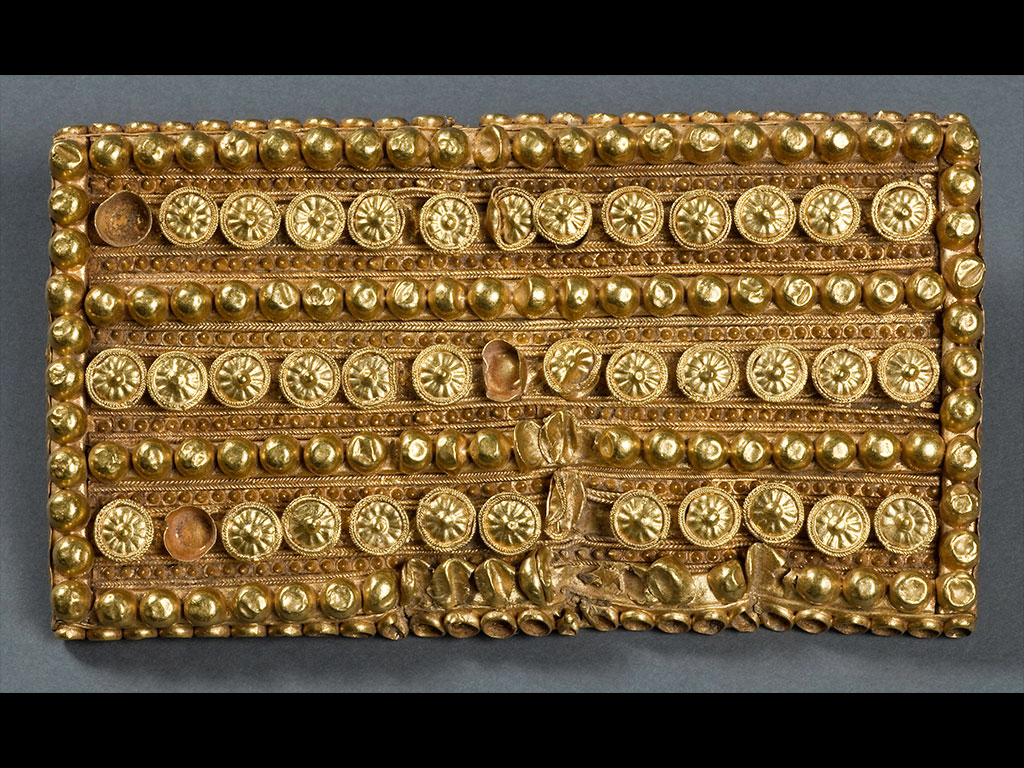
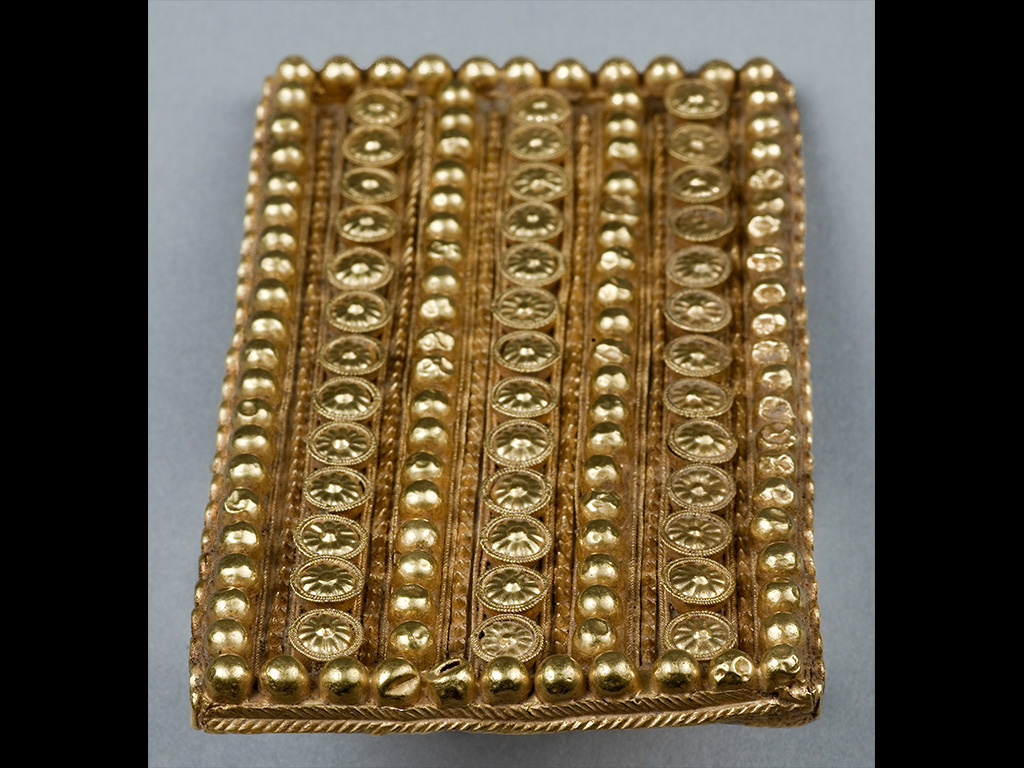
- Plates with rosettes. These make up a set of eight rectangular plates with alternating decoration of hemispheres and eleven-petal rosettes. They have perforations on the long sides for passing cords. They are differentiated into two sets of four by their sizes. Sub-set A measures 11 x 6 cm, while sub-set B measures 11 x 4'4 cm.
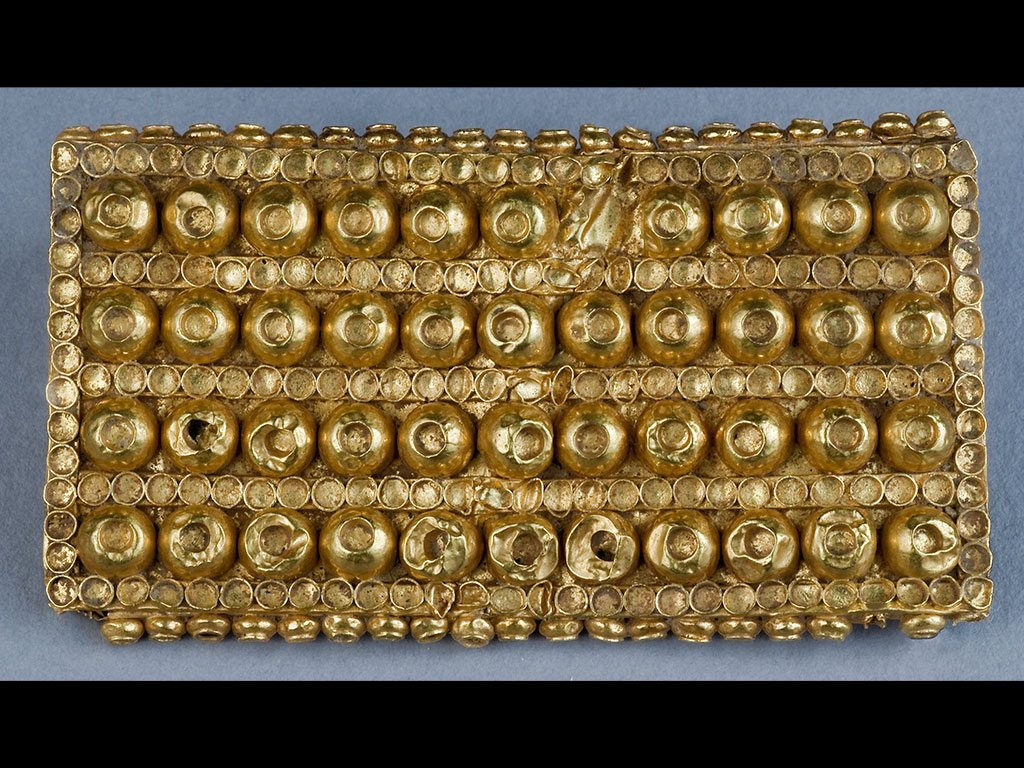
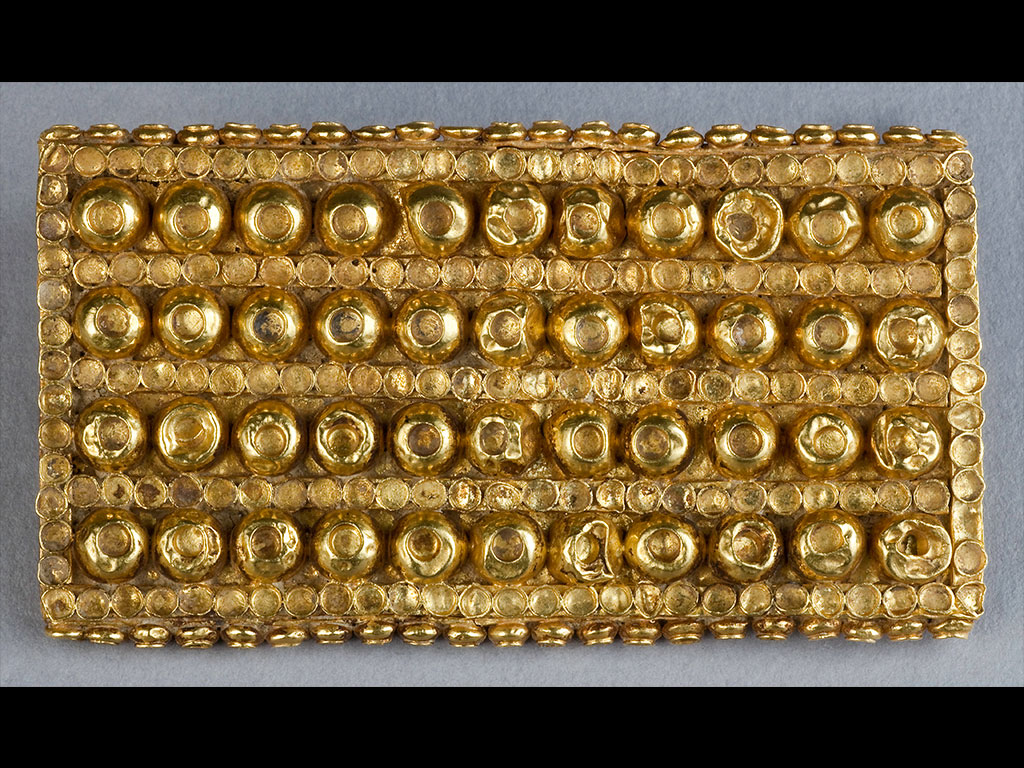
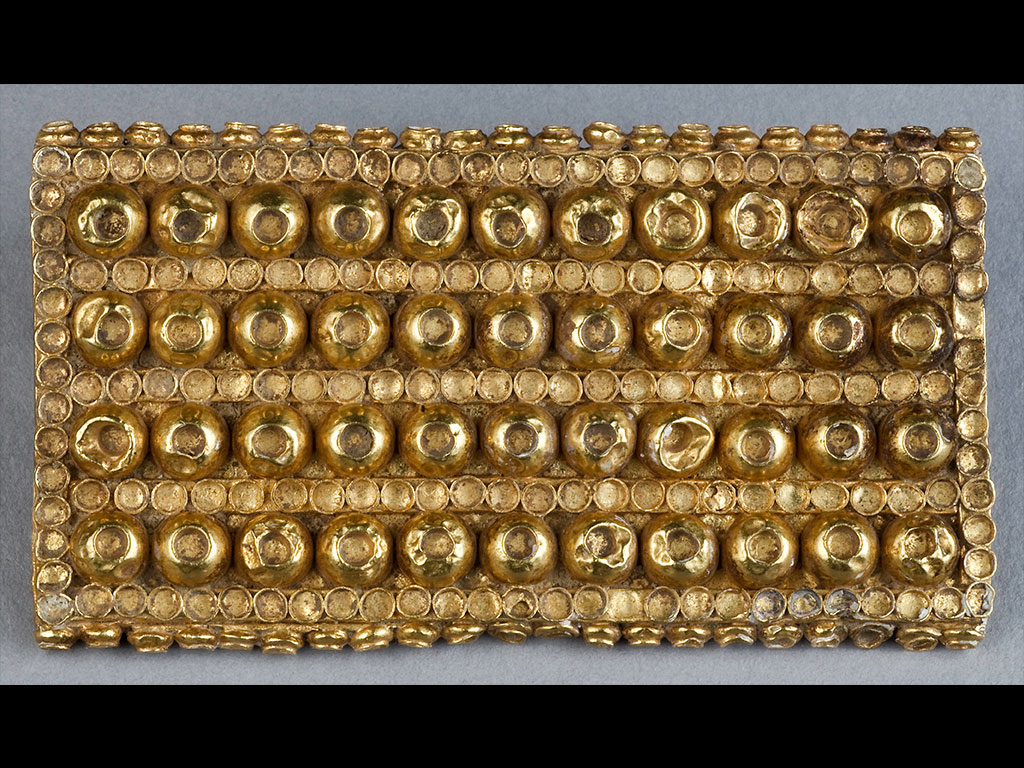
- Plates with a recessed hemisphere. This is a set of eight rectangular plates decorated with rows of recessed hemispheres alternating with rows of small circles. The long sides of the plates have perforations for joining them together with through cords. They all have the same dimensions, which are 9 x 5 cm.
The Carambolo Treasure has had and still has several interpretative hypotheses about its possible use. The first interpretative hypothesis about the functionality of the treasure was that of Professor Carriazo. According to him, the pieces belonged to the trousseau of a Tartessian monarch, where the so-called pectorals would function as such, one set of plates would function as a tiara and another as a belt.
Another interpretative hypothesis is the one put forward by Professors Escacena and Amores, where part of the Treasure is interpreted as liturgical trousseau destined for the pre-sacrificial procession of a bull and a cow immolated for Baal and Astarte. In this case, the so-called pectorals would be frontiles for the adornment of these animals, as would the two sets of plaques, the set adorned with rosettes being destined for Astarte's cow and the one with hemispherical elements for Baal's bull. The remaining pieces of the Treasury, a necklace of seals and bracelets, would consist of the liturgical trousseau of the priest who would carry out the sacrifice.
Another hypothesis to take into account is the one proposed by Professor de la Bandera, who states that the bracelets should be associated with the platelets and the bull skin pectorals, while the necklace should have been part of a different set, unknown today, due to its stylistic difference. This hypothesis highlights the use of pectorals as such, but attached to the torso by means of cords, unlike Carriazo's hypothesis, but does not rule out their possible use as frontiles. On the other hand, in the case of the plaques, it highlights their possible multiple function as belts, diadems and crowns, and even bracelets-bracelets due to the parallels found in the oriental representations.
3D Objects
Bibliography
DE LA BANDERA ROMERO, M. L., GÓMEZ TUBÍO, B., ONTALBA SALAMANCA, M. A., RESPALDIZA, M. A. y ORTEGA FELIU, I. (2010). El Tesoro de El Carambolo: Técnica, simbología y poder. En de la Bandera Romero, M. L., Ferrer Albelda E., El Carambolo. 50 años de un tesoro. Universidad de Sevilla, 297-334.
ESCACENA CARRASCO, J. L. Diis Tauris Sacrum. Las joyas del Carambolos como atuendo litúrgico (2017). En RODRÍGUEZ DÍAZ, A., PAVÓN SOLDEVILA, I. y DUQUE ESPINO, D.M. (Eds.), Historias de Tesoros. Tesoros con Historia. Universidad de Extremadura, 201-240.
ESCACENA CARRASCO, J. L. y AMORES CARREDANO, F. (2011). Revestidos como Dios manda. El tesoro del Carambolo como ajuar de consagración. Spal, 20, Universidad de Sevilla, 107-141.
Credits
Third-party video or image resources:
Copyright: JUNTA DE ANDALUCÍA. Department of Tourism, Culture and Sport. Belonging to the collection of the Archaeological Museum of Seville.
Ownership: Junta de Andalucía.
Author: Pepe Morón.