
- Home
- Interest points
- Purísima Concepción Parish Church
Info
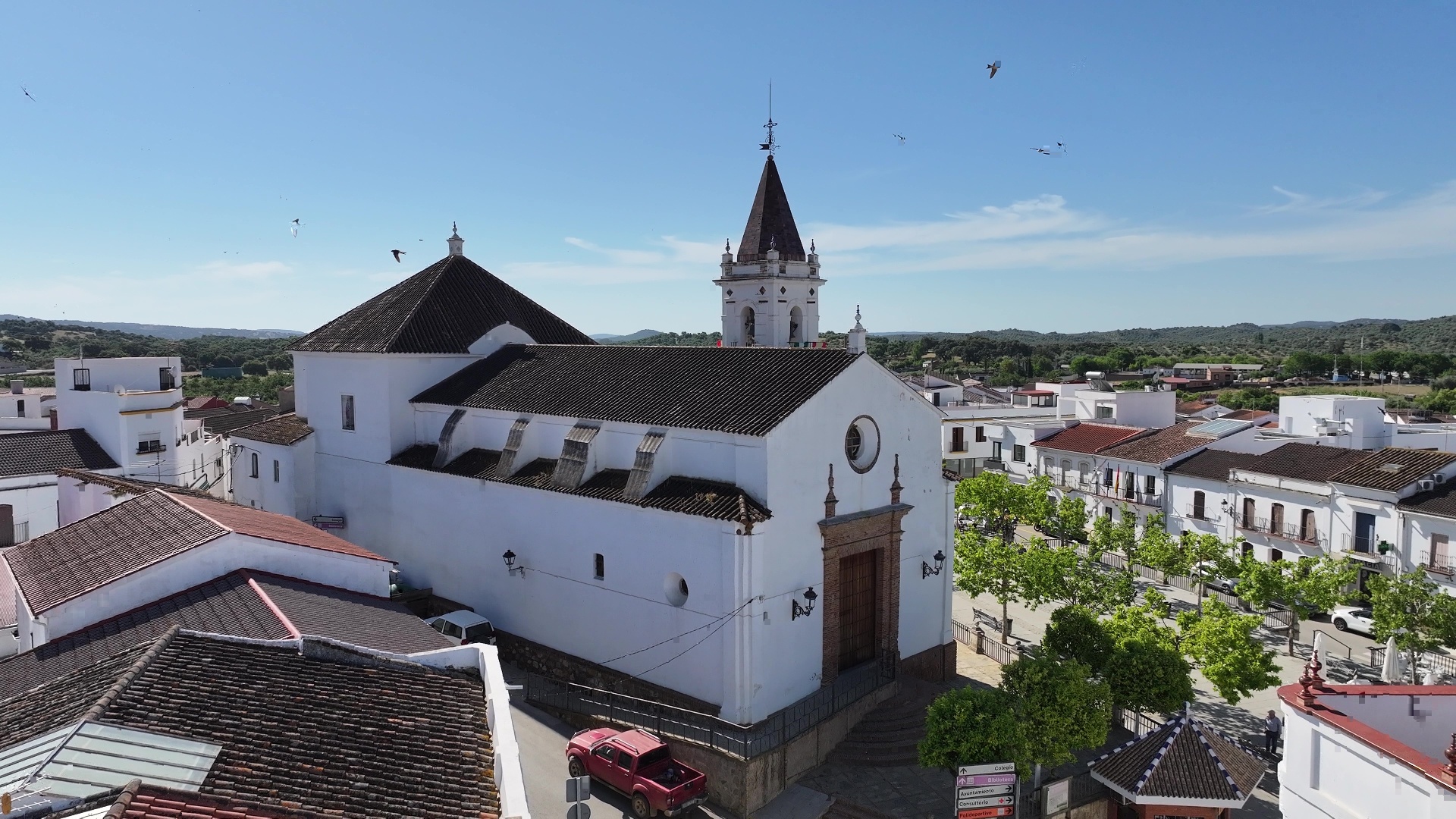
The Parish Church of the Immaculate Conception is the most iconic building in Las Navas de la Concepción. Built between 1717 and 1764 to a design by the architect Diego Antonio Díaz, it follows the Baroque architectural style promoted by the Archdiocese of Seville in the 18th century. Inside, it houses a remarkable collection of artistic treasures, enriched by works from the former Basilian monastery of San Antonio del Valle, which reflects the town’s historical and religious development.
Know more
The origins of the Parish Church of the Immaculate Conception date back to 1717, when the local residents petitioned the Archbishopric of Seville to build a church to avoid having to travel to Constantina or to the Basilian monastery of San Antonio del Valle, which was near the village and no longer exists.
The project was entrusted to Diego Antonio Díaz, Chief Architect of the Archdiocese of Seville, who chose the site of the present-day Plaza de España. The construction was carried out thanks to the involvement of the residents themselves, who provided materials, transport and labour, with the work being completed in 1764.
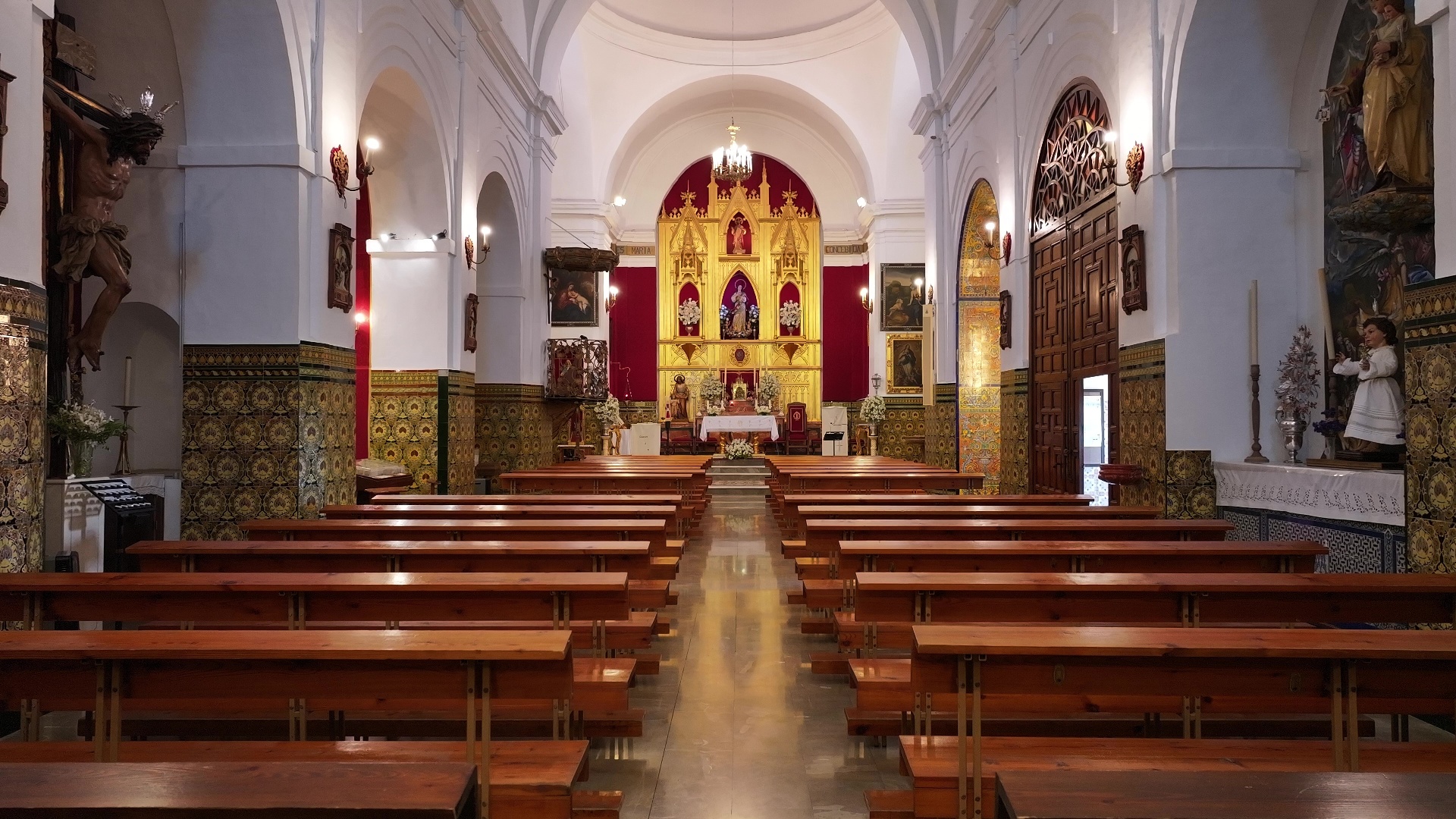
Its architecture follows the models promoted by the Archdiocese of Seville during the 18th century, and features a basilica-style plan with a single nave divided into five bays, with niche-like chapels between buttresses, a transept and a flat apse, creating a space of great spaciousness and balance.
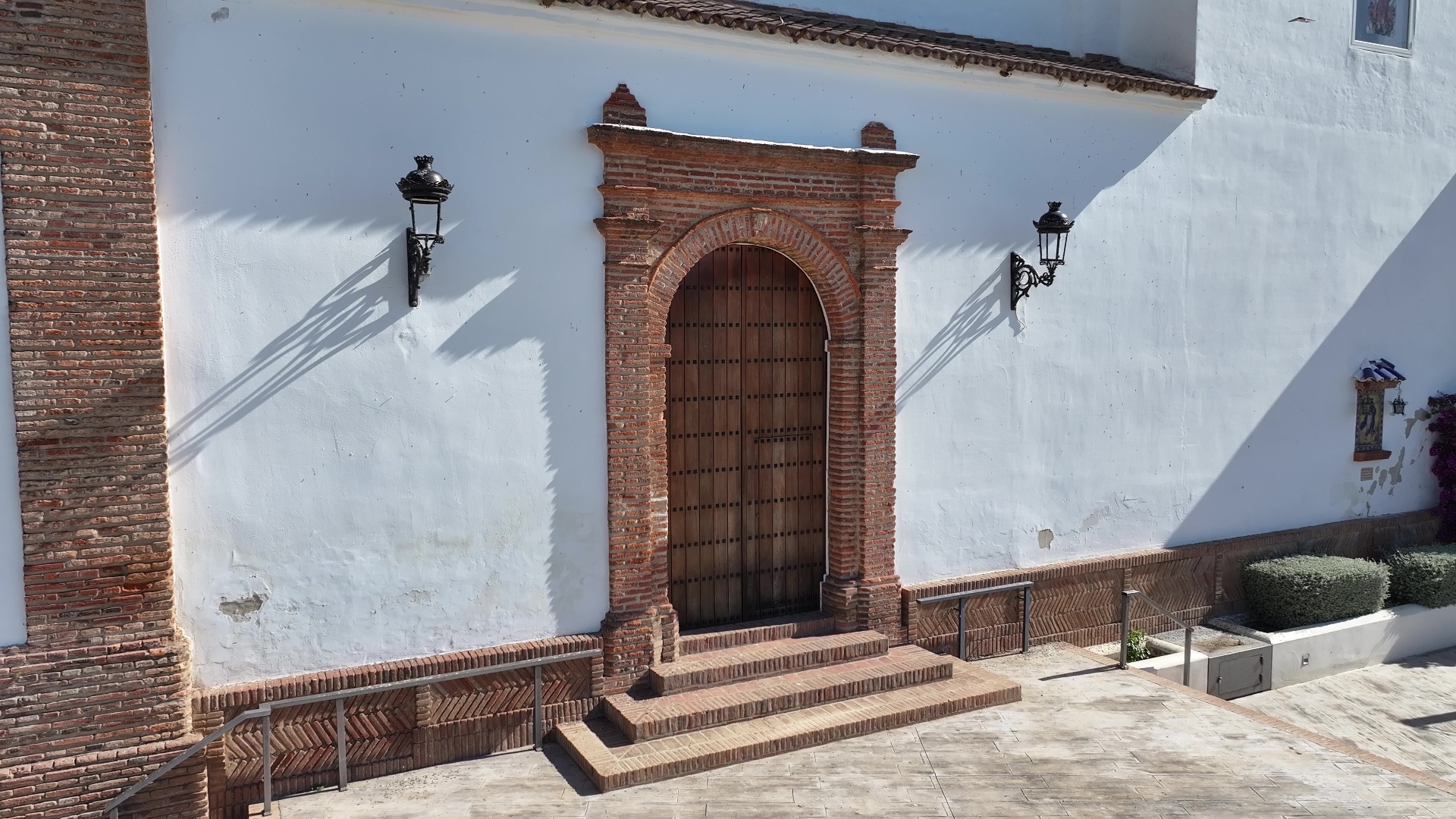
On the exterior, the two exposed-brick façades stand out. The one at the foot of the building features a simple design, with a linteled opening and side finials, whilst the one opening onto the square is formed by a semicircular arch flanked by Doric pilasters and crowned by a classical entablature.
Next to it stands the bell tower, some twenty metres high, divided into two sections and topped with an octagonal spire; it is one of the most recognisable features of the town centre.
Inside, the nave is structured by Doric pilasters, upon which rests a continuous entablature that visually unifies the whole. The roofs are typical of the late Andalusian Baroque style: the nave and the chancel are covered with barrel vaults with lunettes, whilst the transept features a semi-spherical vault that emphasises the liturgical space.
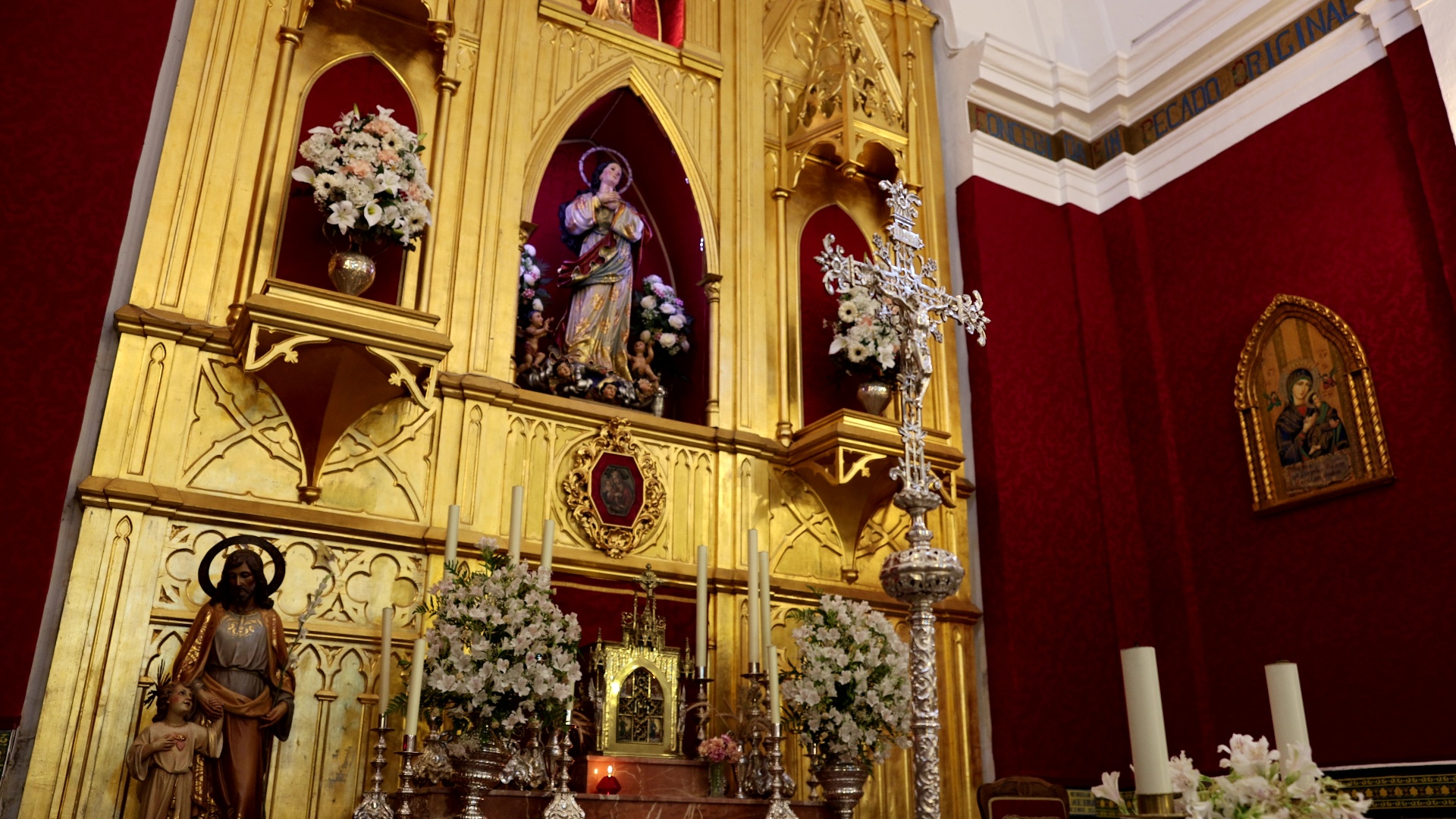
The chancel is dominated by the high altarpiece, in the Neo-Gothic style and dating from 1953, which houses the image of the Immaculate Conception, to whom the church has been dedicated since its foundation.
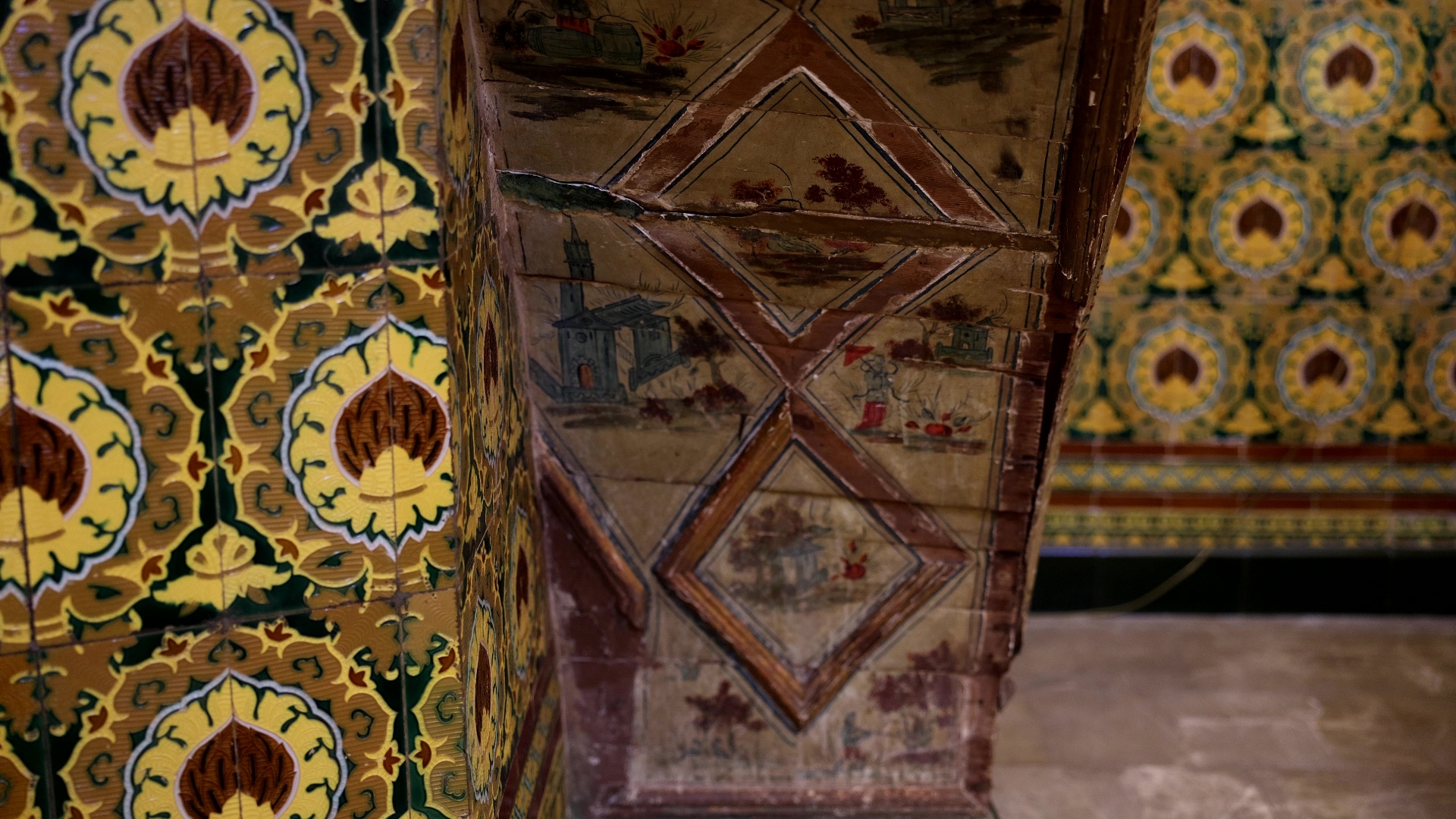
One of its most distinctive features is the pulpit, an elegant late 18th-century Rococo piece crafted from wrought iron, featuring a sounding board and a polychrome wooden staircase, adorned on its underside with triangular and rhomboidal panels depicting Chinese-inspired motifs.
Following the closure of the Basilian monastery of San Antonio del Valle in the late 19th century, numerous works of art from this monastery and other buildings belonging to the Basilian community were transferred to the parish church, where they are preserved today.
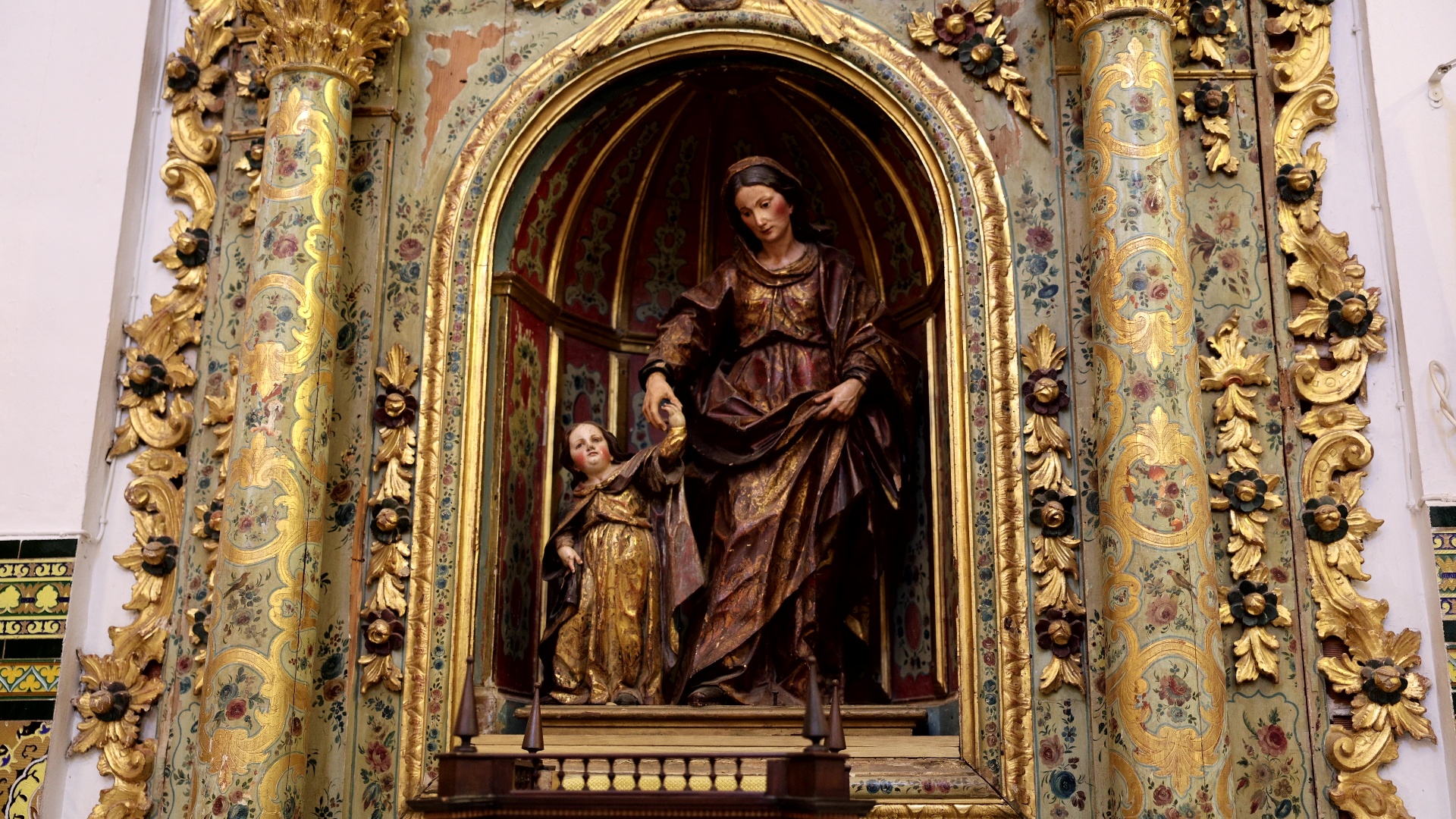
Among them is a Baroque altarpiece from the former Basilian chapel of El Lagar. The central niche, flanked by Ionic columns, is richly adorned with polychrome and gilded decoration, notably the rocaille motifs running along the sides and the cornice; above it, three cherubs complete the composition. The ensemble houses the sculptural group of Saint Anne and the Virgin as a Child, dating from the late 17th century.
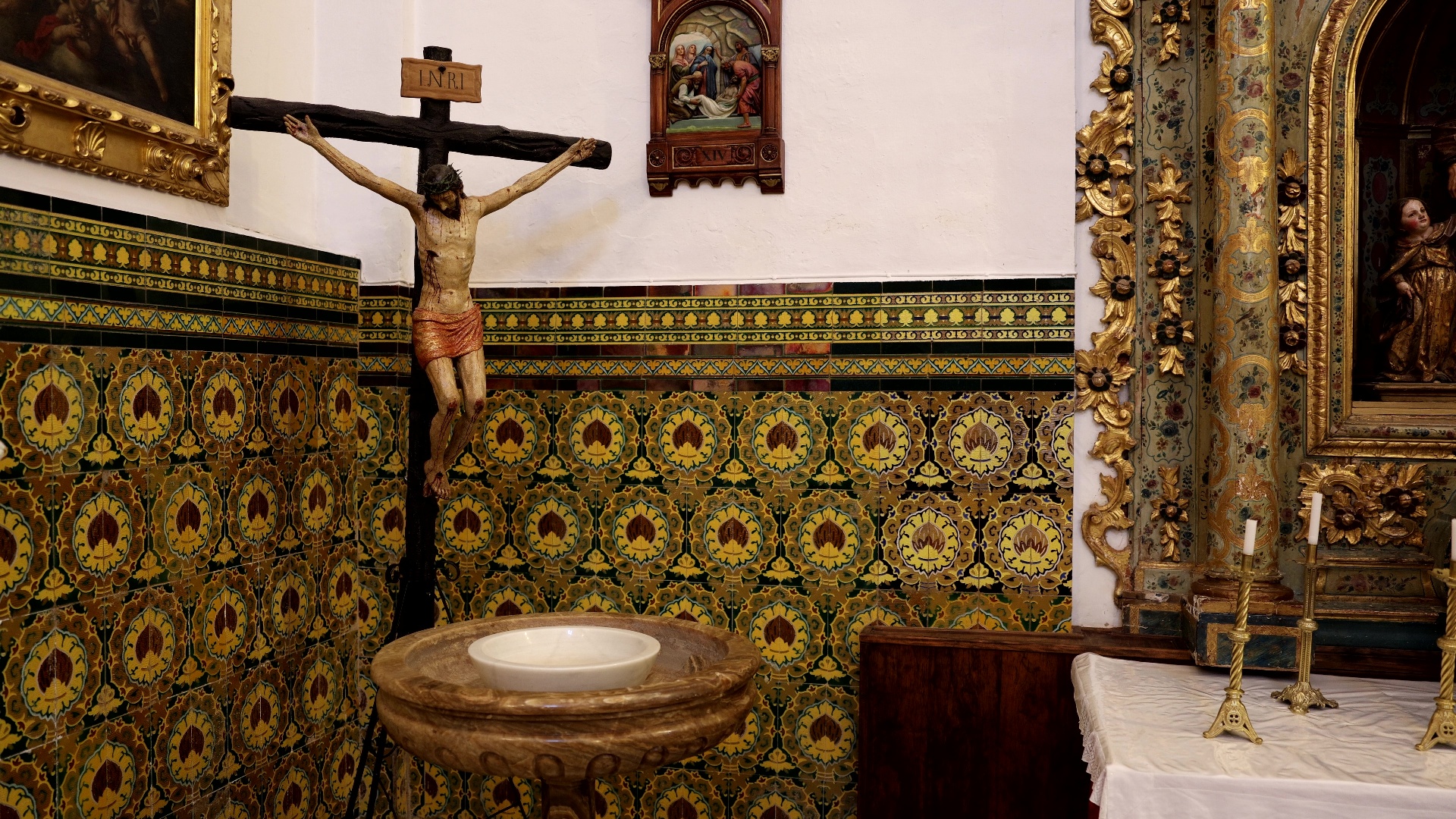
The marble baptismal font, dating from the 15th century, is one of the oldest pieces in the parish church. It consists of a large basin decorated with scrollwork carved in relief, resting on a sturdy, faceted stem. Above the font stands a carving of Christ on the cross, dating from the late 16th century and in the Mannerist style, which features stylised anatomy and a serene expressiveness.
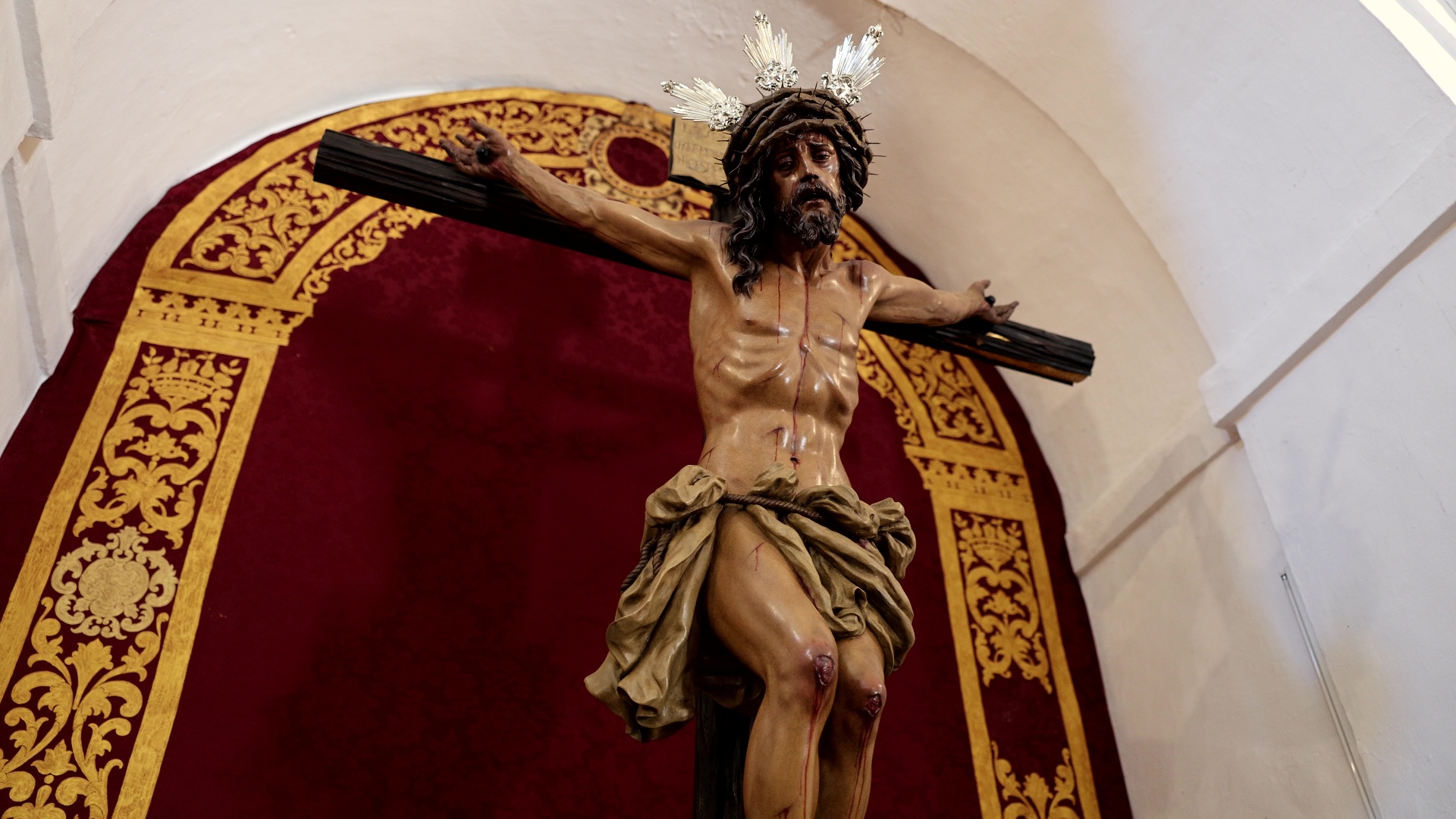
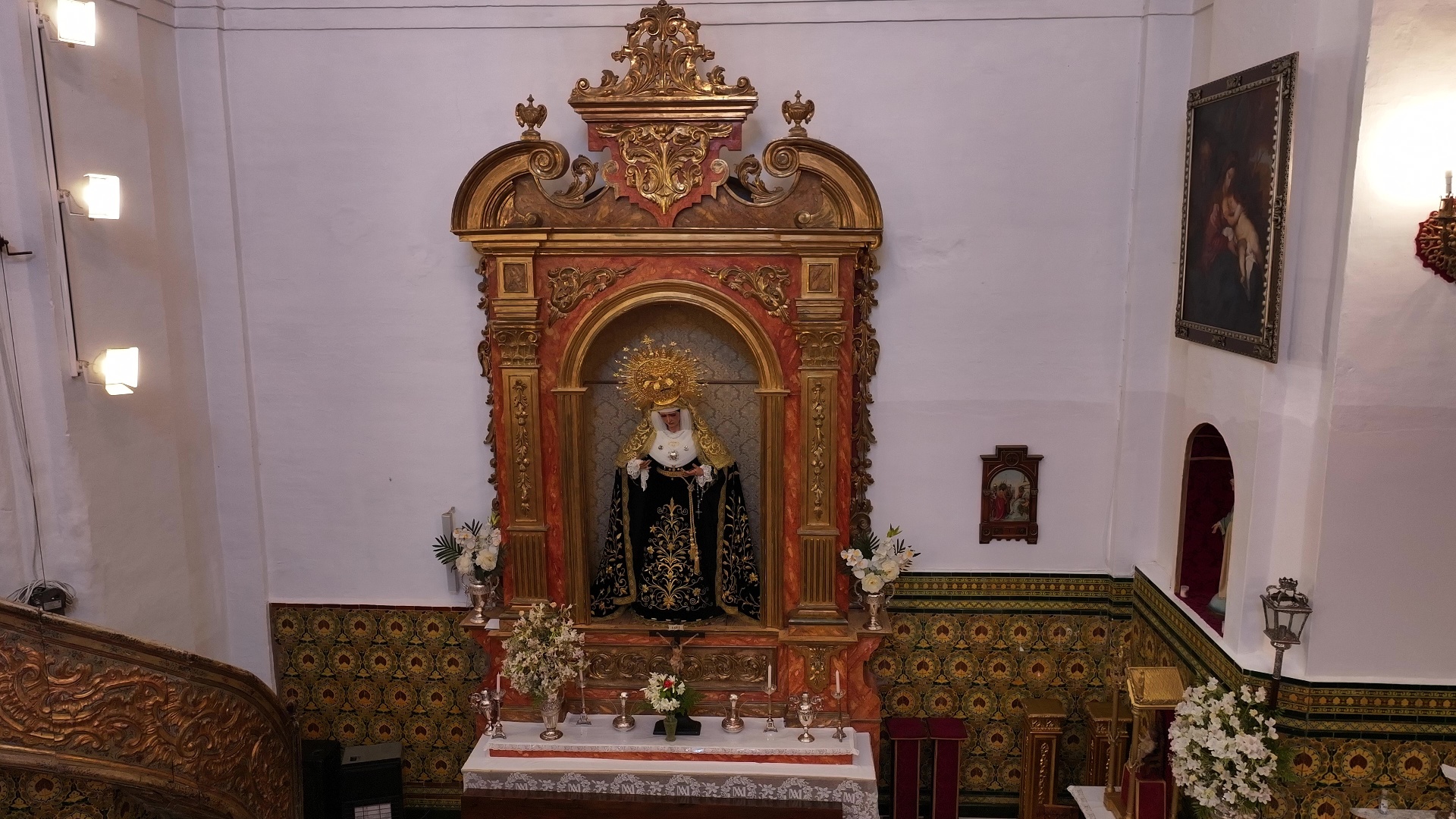
The penitential processional imagery is represented by two works attributed to Antonio Castillo Lastrucci: Nuestro Padre Jesús del Gran Poder, which depicts Christ carrying the cross on his way to Calvary, and the figure of María Santísima de los Dolores. The group is completed by the Santísimo Cristo de la Salud y Misericordia, an image of the crucified Christ of remarkable expressive power, created in 2009 by the sculptor Darío Fernández.
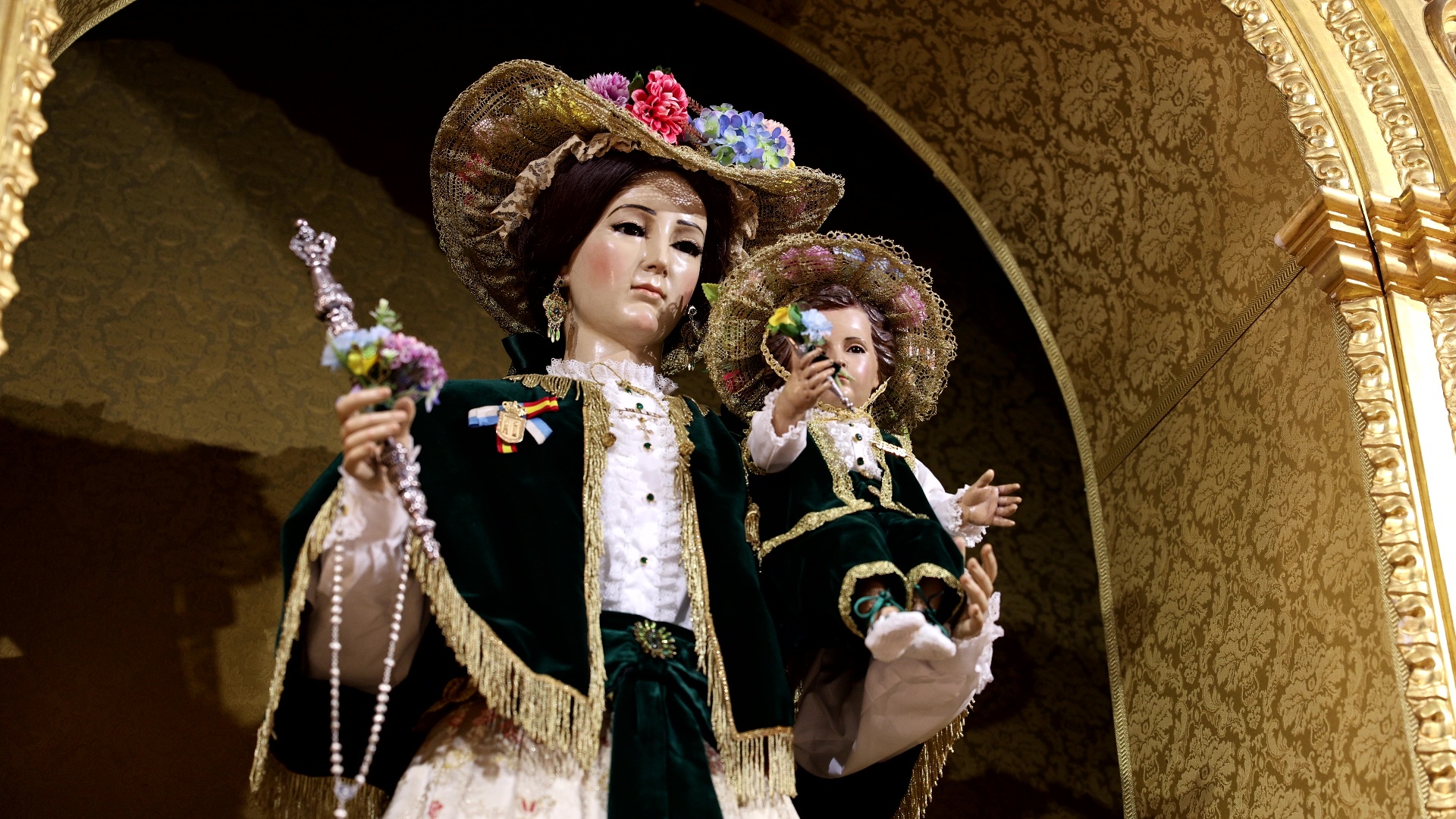
Another sculpture by the master Lastrucci is that of Our Lady of Bethlehem, patron saint of Las Navas de la Concepción, which follows the iconographic model of the Virgin and Child. Devotion to this title dates back to the 16th century, when the Basilian monks of San Antonio del Valle built a small chapel near a mill they owned.
Alongside this rich heritage, the church houses an interesting collection of liturgical silverwork, the highlights of which include a gilded silver ciborium dating from the second half of the 18th century and a monstrance from the same period, decorated with Eucharistic motifs and ornamental elements typical of the Rococo style.
Videos
Purísima Concepción Parish Church
Purísima Concepción Parish Church Subtitled
Bibliography
MORALES, Alfredo J.; SANZ, María Jesús; SERRA, Juan Miguel y VALDIVIESO, Enrique (1981): Guía artística de Sevilla y su provincia. Sevilla: Diputación Provincial de Sevilla
TORIBIO GARCÍA J.J. (2025). El origen de la Iglesia parroquial de Las Navas de la Concepción. Revista de feria y fiestas de San Pedro. Las Navas de la Concepción
Guía digital del patrimonio cultural de Andalucía. Instituto Andaluz de Patrimonio Histórico. Consejería de Cultura y Deporte: