
- Home
- Interest points
- Arquillo de la Pescadería – Municipal Granary – Mosaic
Info
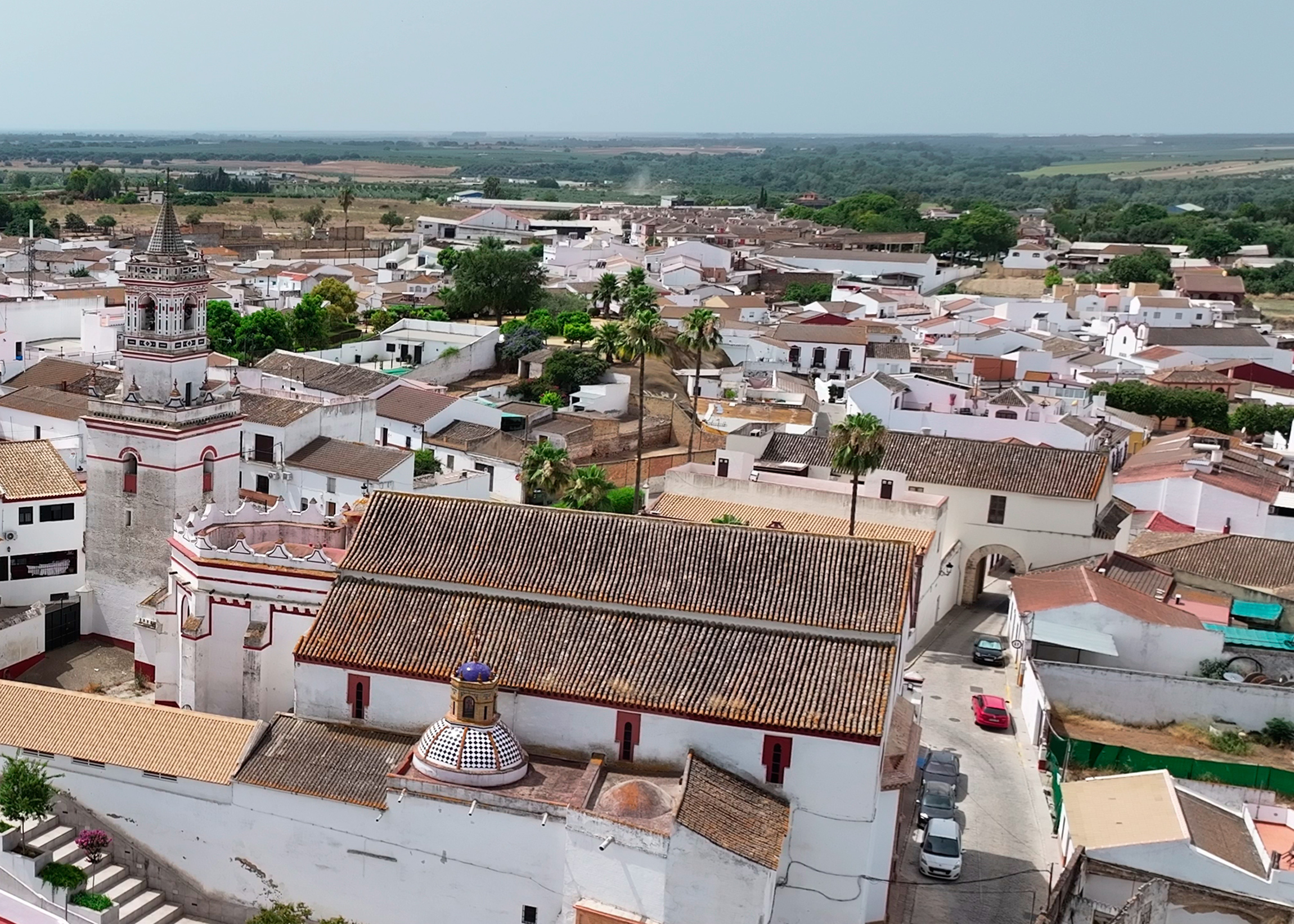
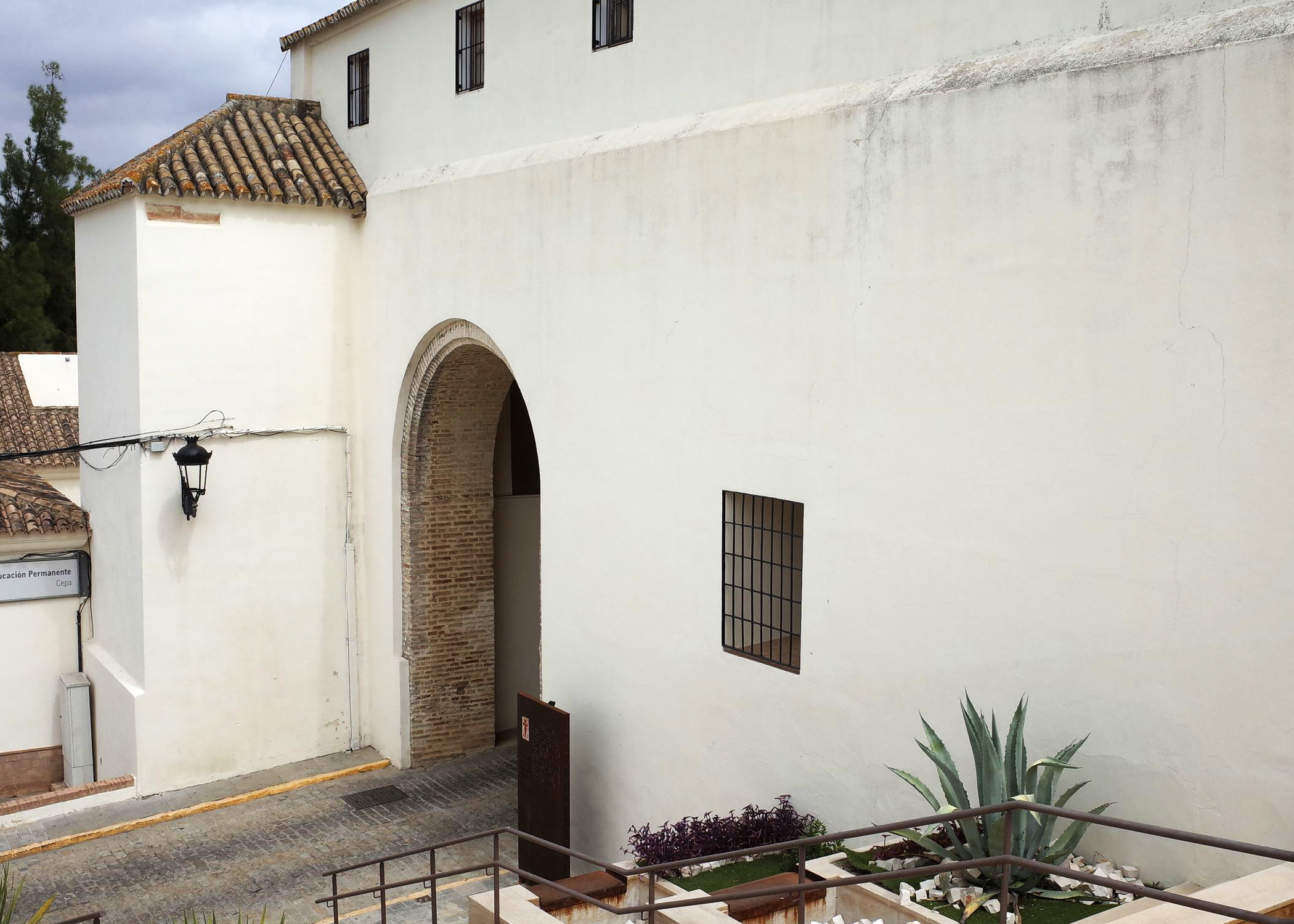
The complex comprising the Arquillo de la Pescadería and the Pósito is one of Aznalcázar’s most iconic monuments. The Almohad gate, a remnant of the medieval fortified enclosure, its subsequent transformation and the construction of the municipal granary during the 18th century reflect how this space has adapted to the town’s changing needs and how it has evolved over the centuries.
Know more
The Arquillo de la Pescadería is one of Aznalcázar’s most distinctive monuments and the main surviving remnant of its ancient walled enclosure. Designated a Site of Cultural Interest, the site bears traces of various historical periods, from the Roman occupation to the alterations carried out during the Modern Age. Its long history makes the monument an exceptional testament to more than two thousand years of history.
Archaeological investigations carried out in the vicinity of the Arquillo have unearthed remains dating from the Roman period, thus demonstrating the antiquity of the area in which the gate is situated. These were the remains of a building, situated 3 metres below the current street level, which has been interpreted as a large thermal complex dating from the High Imperial period (1st and 2nd centuries AD), probably of a private nature and linked to a large rural villa or a domus. In this context, two fragments of an interesting mosaic with geometric decoration were unearthed; once restored, these are now on display in the courtyard of the Town Hall.
Centuries later, during the Islamic medieval period, Aznalcázar became an important fortified town, featuring a citadel and a walled enclosure, some sections of whose walls and towers still stand, integrated into the present-day town centre. Its strategic location allowed for visual control over a vast territory stretching from the southern mountains of Seville to the mining area of Aznalcóllar, as well as the crossing over the bridge spanning the River Guadiamar.
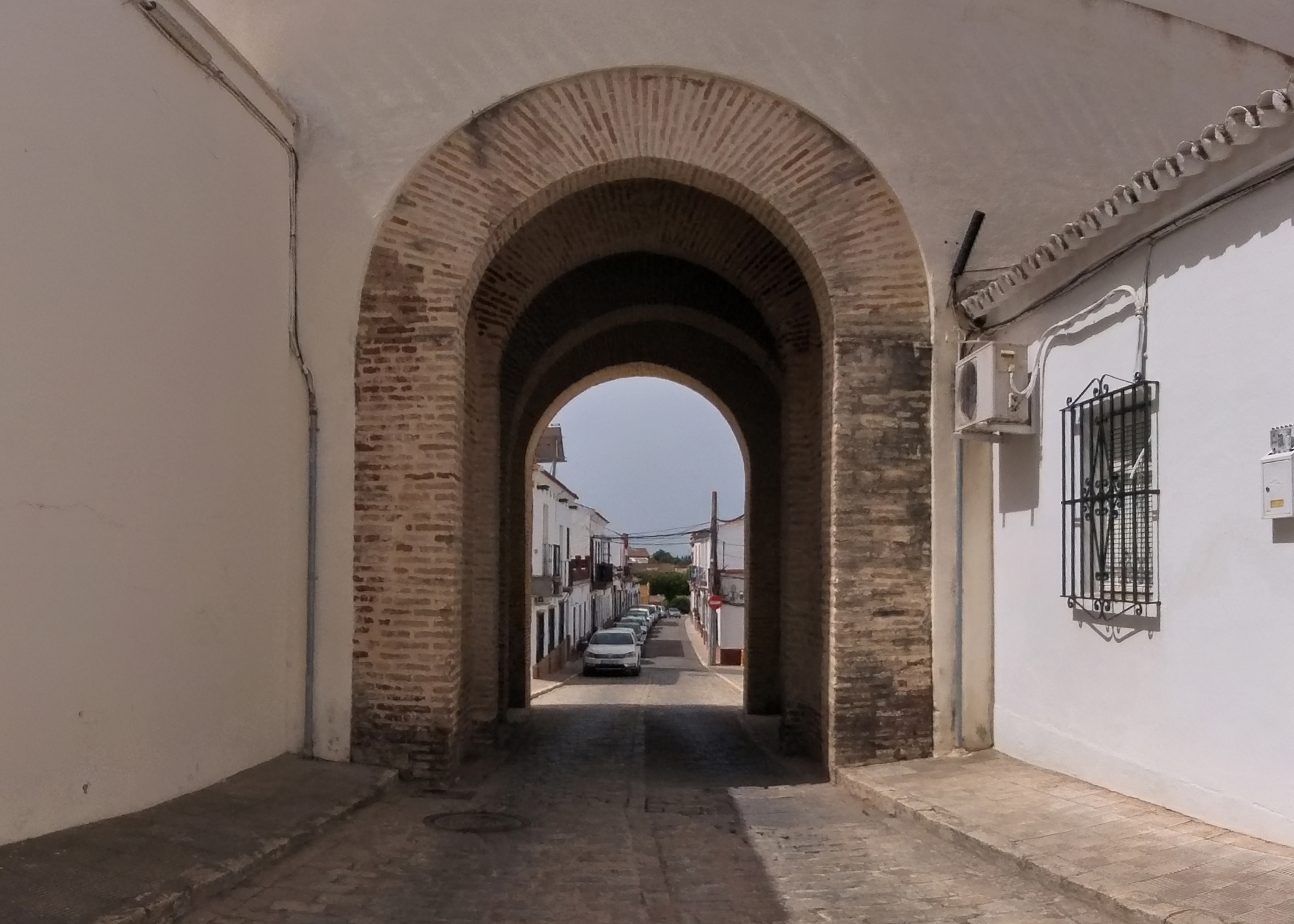
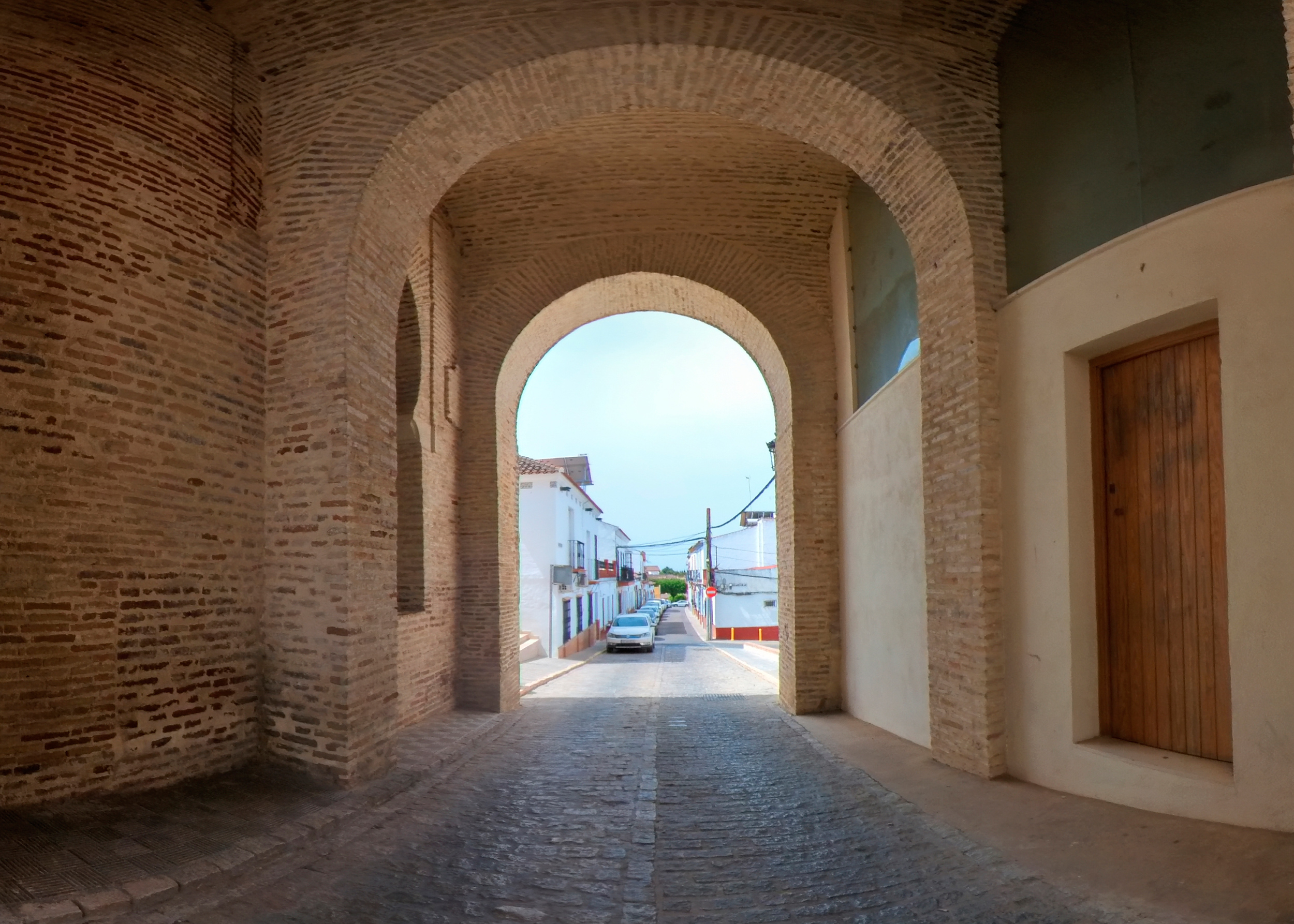
The Puerta del Arquillo, also known as the Puerta de la Pescadería, was built between the 12th and 13th centuries, during the Almohad period, and is the best-preserved remnant of the medieval enclosure.
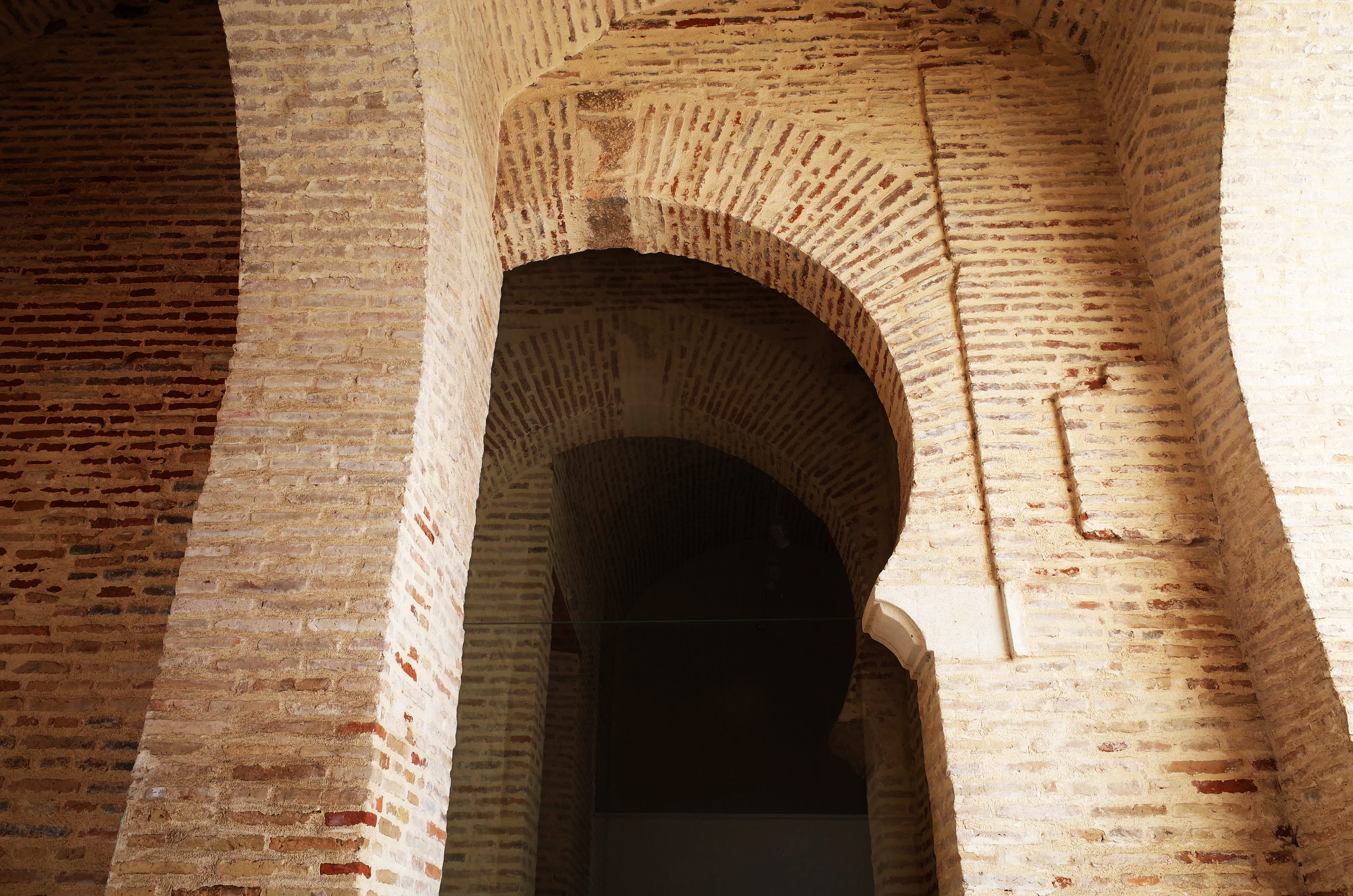
Archaeological excavations carried out between 2004 and 2008 confirmed that it was a defensive gate-tower, a type characteristic of Al-Andalus military architecture. The structure was built with sturdy rammed-earth walls over two metres thick and featured two entrances connected by a winding passageway that required several changes of direction before reaching the entrance – an ingenious system designed to thwart any attempt at assault.
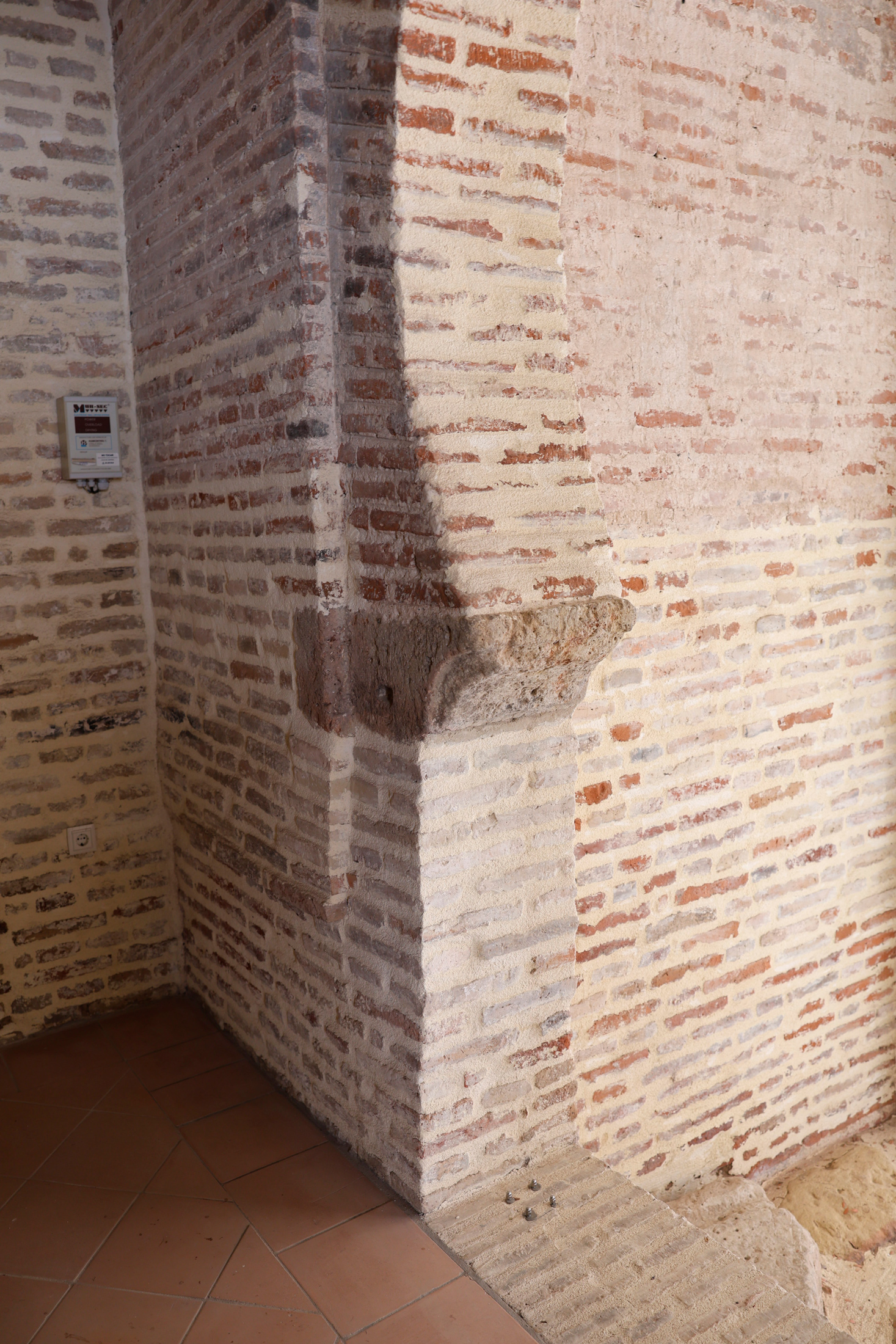
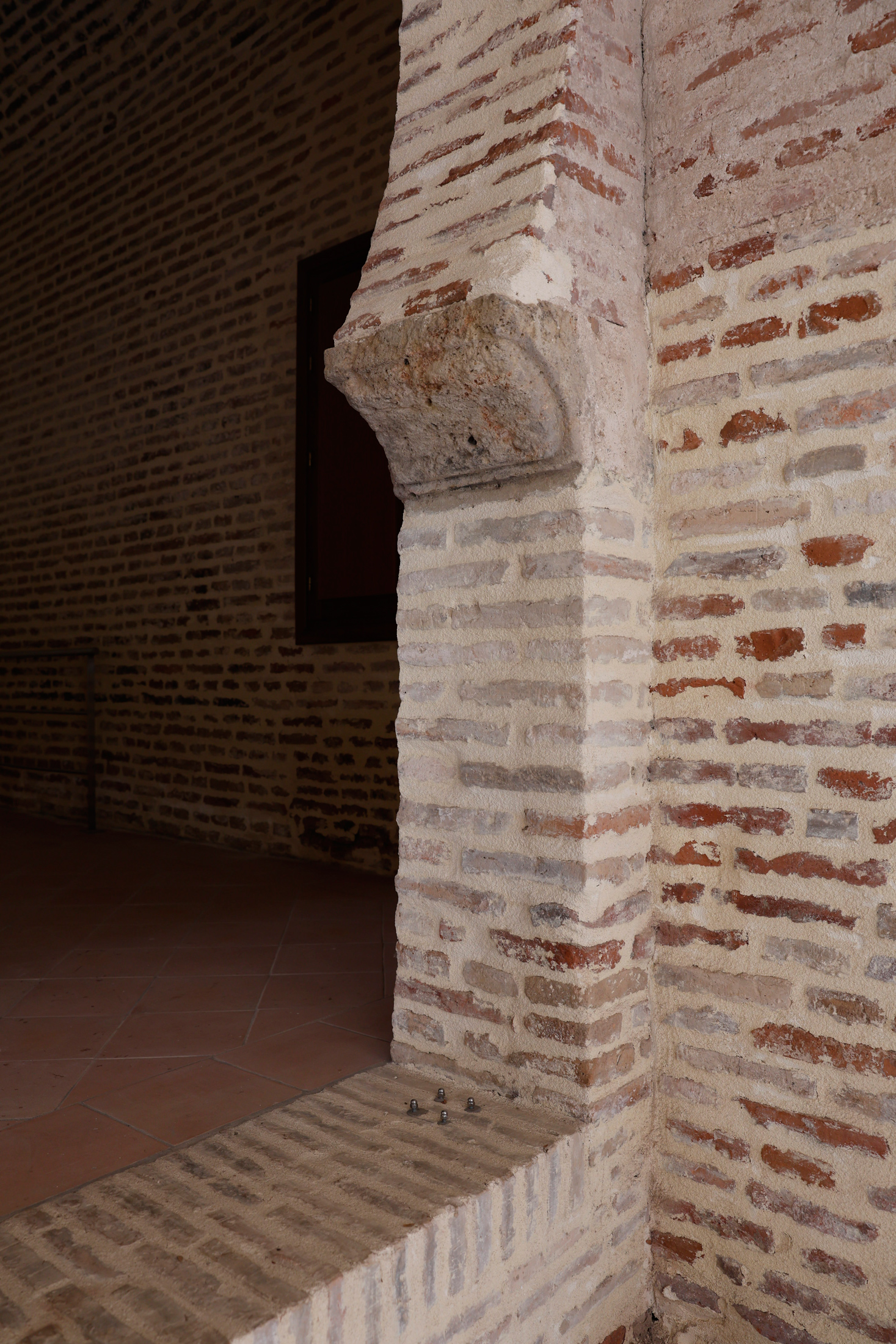
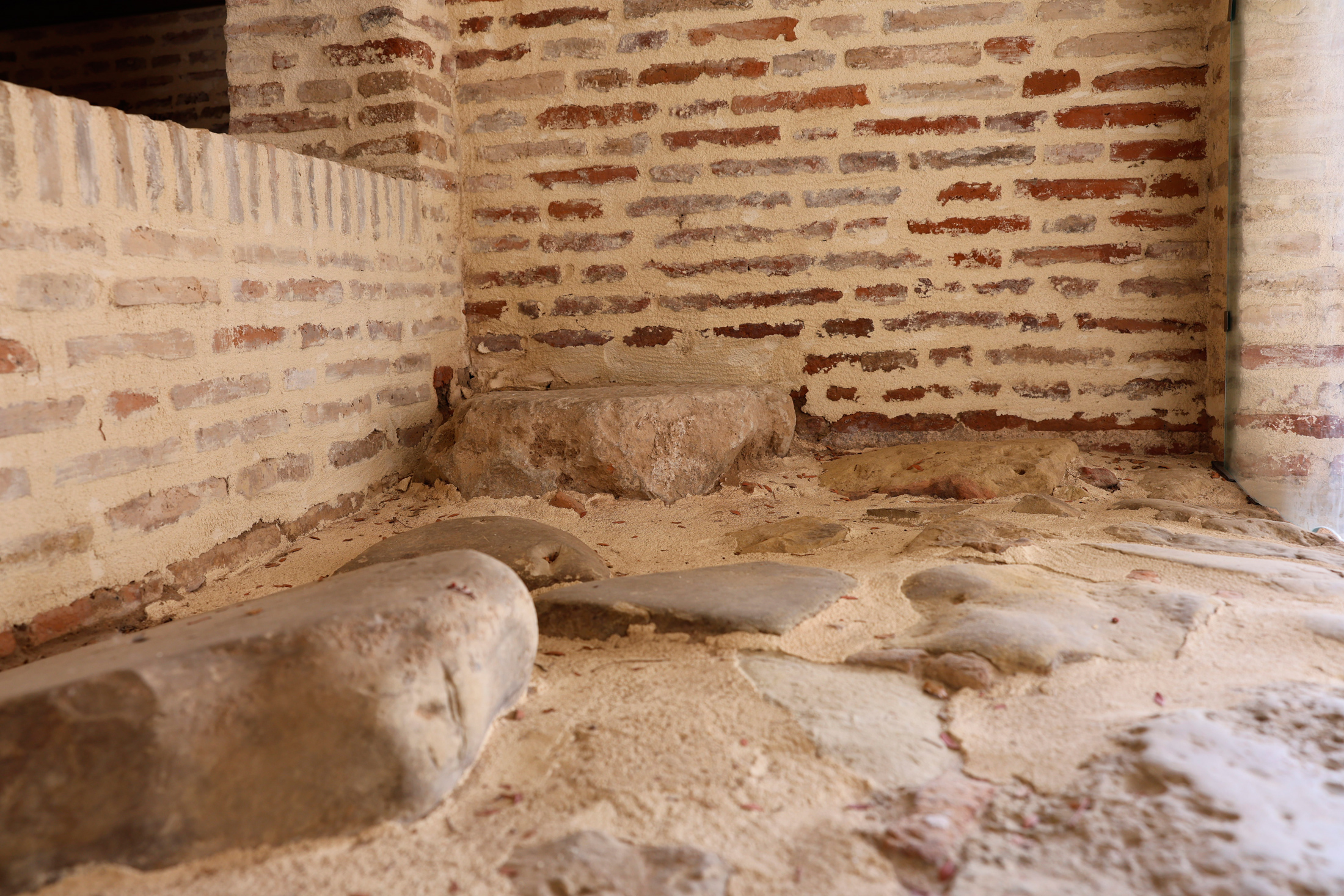
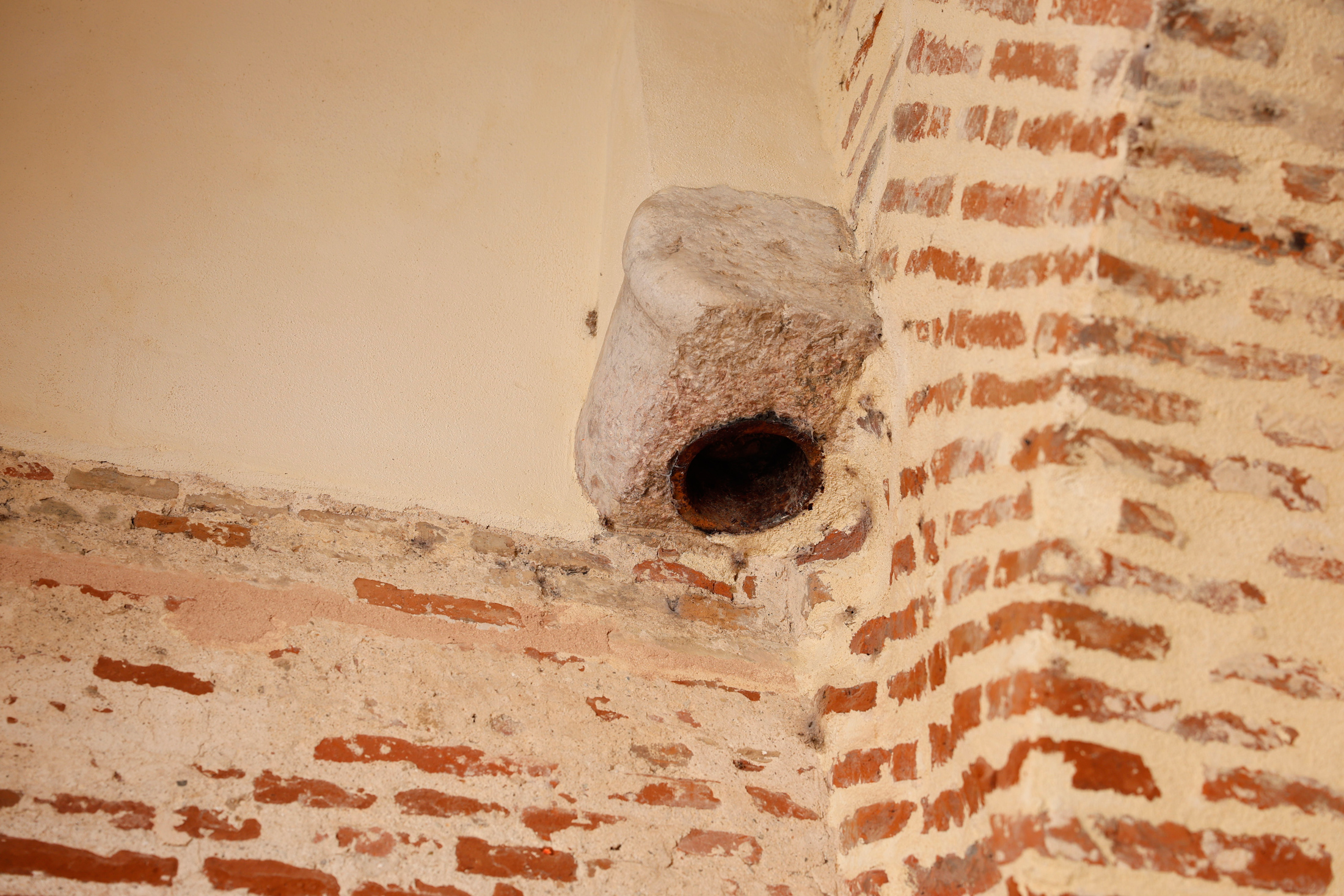
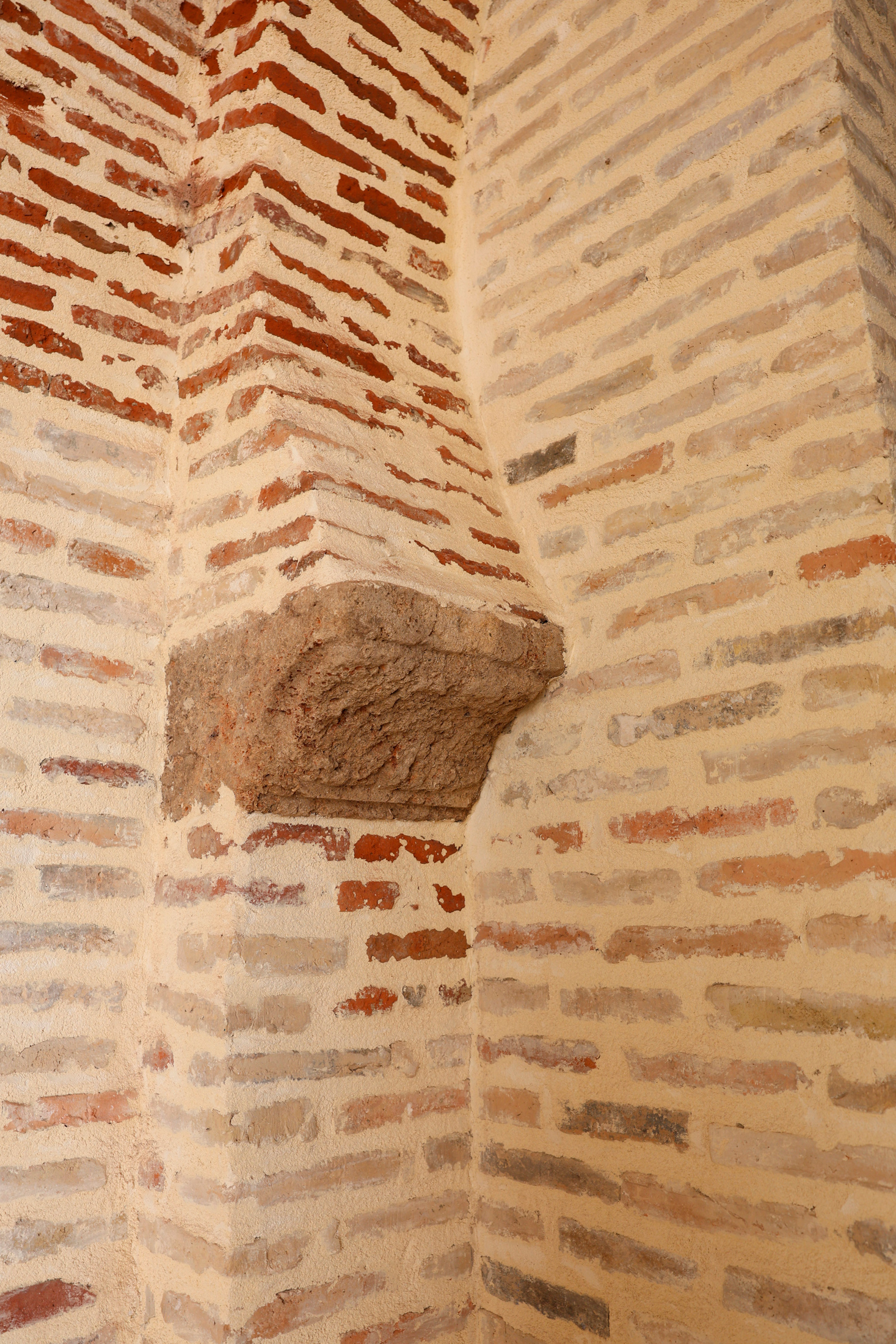
Among the original features that have survived to the present day, the two horseshoe arches that formed the entrance stand out; these were built mainly of brick with stone keystones and imposts, and framed by a simple alfiz. The hinge sockets of the old wooden gate and part of the original paving have also been preserved, providing evidence that helps us understand how this fortified entrance functioned.
Following the Castilian conquest of Seville in 1248, Aznalcázar became one of the four main towns of the Aljarafe region, alongside Sanlúcar la Mayor, Aznalfarache and Tejada, with its castle falling under the jurisdiction of the Seville council. Over time, the ancient defensive structures gradually lost their military function, although the gate continued to be used as one of the main entrances to the town.
The building’s most significant transformation took place during the 18th century and served a dual purpose: on the one hand, the system of access to the town was completely overhauled to facilitate movement; on the other, a municipal granary was built on top of the old gate tower, intended for the storage of grain – one of the most important pieces of infrastructure for ensuring the town’s food supply.
The old winding route was replaced by a straight, direct passageway that facilitated the daily movement of people, animals and goods. To this end, the access system was modified and a new passageway was built, covered by brick vaults.
The granary was built by utilising the solidity of the medieval walls to support the new structure. It was designed as a spacious, gabled-roofed hall, organised internally by two wide aisles separated by an elegant longitudinal arcade comprising five semicircular arches. The spaciousness of the interior, its ventilation and the robustness of the construction met the specific requirements of a building designed to store large quantities of grain.
After ceasing to serve as a granary, the building was put to various uses throughout the 19th and 20th centuries, even serving as barracks for the Civil Guard. Following a major restoration and refurbishment project, the building now houses the El Arquillo Cultural Centre, a space dedicated to cultural activities and the promotion of Aznalcázar’s historical heritage.
Bibliography
- Gavira Berdugo, M.A. (2008). “Intervención Arqueológica Preventiva en la Puerta del Arquillo o de la Pescadería de Aznalcázar. Fase II”. Anuario Arqueológico de Andalucía 2008
- Gavira Berdugo, M.A. (2010). “Intervención Arqueológica de apoyo a la rehabilitación de la Puerta de la Pescadería (Aznalcázar, Sevilla). Primera fase de investigación”. Anuario Arqueológico de Andalucía 2004.2
- Gavira Berdugo, M.A. (2005). “Primeros resultados de la intervención arqueológica en la Puerta del Arquillo, Aznalcázar”. Actas II Jornadas de historia sobre la provincia de Sevilla. Aljarafe-Marismas. Aznalcázar y Villamamrique de la Condesa, 6 y 7 de mayo de 2005.
- Valor Piechotta, M. (2003) "Las fortificaciones medievales en la provincia de Sevilla". Manuscrito inédito.