
- Home
- Interest points
- Nuestra Señora de Belén Hermitage
Info
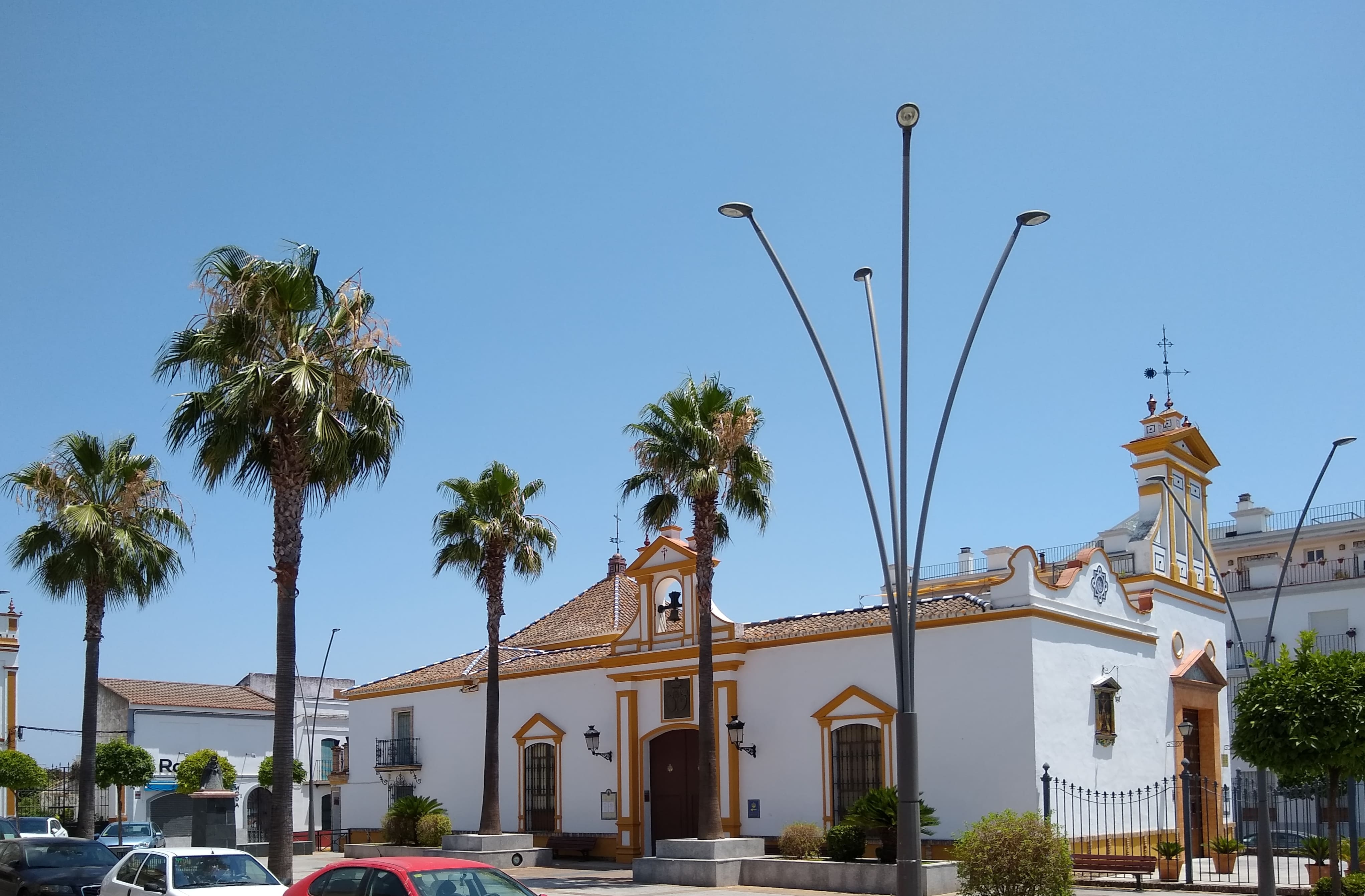
The Chapel of Our Lady of Bethlehem is one of the oldest and most iconic buildings in Pilas, and is considered the original centre around which the town began to develop. Built on the site of a unique 14th-century Gothic-Mudejar building and extended over the centuries, it preserves a remarkable architectural and artistic ensemble, presided over by the image of the town’s patron saint. Its history and the works it houses offer an insight into the evolution of Pilas from its medieval origins to the present day.
Know more
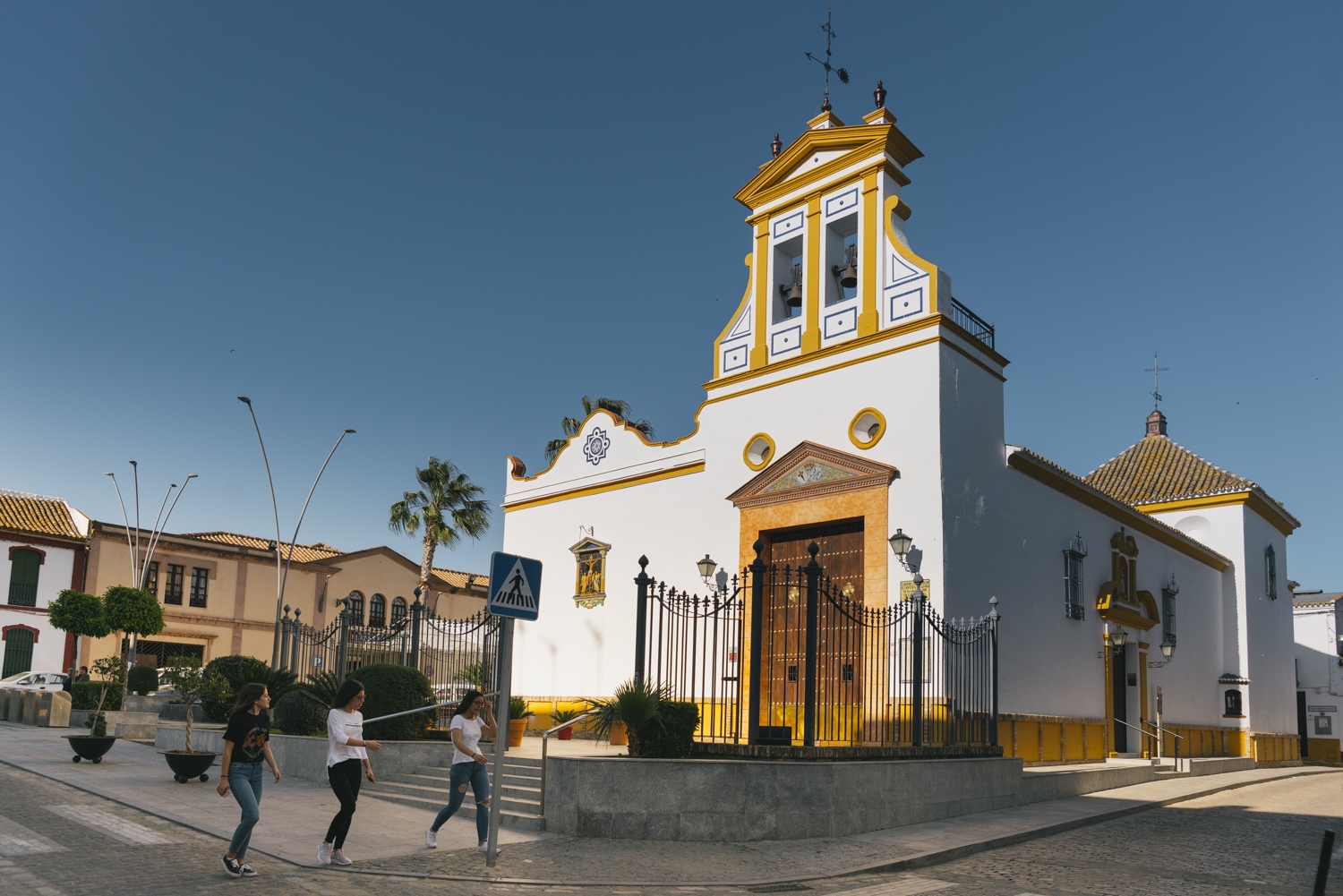
The Chapel of Our Lady of Bethlehem is one of the most iconic historic buildings in Pilas and is regarded as the original nucleus around which the town began to develop. Its history encapsulates much of the town’s evolution from the Late Middle Ages to the present day, and it preserves a remarkable architectural and artistic ensemble.
Tradition holds that this was the site of the town’s first Christian place of worship. It was originally dedicated to St James the Apostle, protector of the territories incorporated into the Castilian Crown following the conquest, and it was during the 15th century that the church came to be consecrated to Our Lady of Bethlehem, a dedication which has remained linked to the town’s religious identity ever since.
Far from being a single, unified structure, the chapel is the result of various extensions carried out over time. The oldest part is the current shrine to the Virgin, a unique Gothic-Mudejar structure built around the mid-14th century, coinciding with the process of Christian reorganisation and repopulation of the territory driven by the military orders and the Cathedral Chapter of Seville. Recent studies have highlighted this space as one of the most significant surviving medieval monuments in the municipality, both for its architectural features and for its value in understanding the origins of Pilas.
The chancel was subsequently added to this original core, built between the late 15th and early 16th centuries, whilst the main nave underwent successive alterations during the Modern Age. Finally, between 1975 and 1976, the Gospel aisle was erected, giving the building its current layout. This complex sequence of construction makes the chapel a genuine historical document, in which each stage reflects the growth of the town and the evolution of its religious architecture.
Externally, its two main entrances are particularly noteworthy. The western entrance, situated at the foot of the church, features simple brickwork crowned by a pediment with a ceramic altarpiece depicting the coat of arms of the Brotherhood of Our Lady of Bethlehem, comprising the Marian anagram and the Cross of St James, with the ensemble topped by a bell gable with two openings. The north façade, which opens onto the Plaza de Belén, forms part of the contemporary extension carried out during the 1970s.
The interior preserves spaces of great architectural interest. The most notable is the Virgin’s chapel, the original core of the building and one of the most unique medieval structures in Seville’s Aljarafe region. It is a square room measuring 5.50 m on each side, built of brick and covered by an octagonal vault resting on ribbed squinches, a structural solution inherited from the Al-Andalus tradition which became widely used during the Sevillian Mudejar period. The combination of these elements with the pointed arches and other architectural details allows the building to be dated to around the mid-14th century, during the consolidation of the new Christian settlement of Pilas.
Adjoining the sacristy is the chancel, which has a square floor plan and is covered by a magnificent wooden coffered ceiling with a hipped roof, lit by windows set into its side walls.
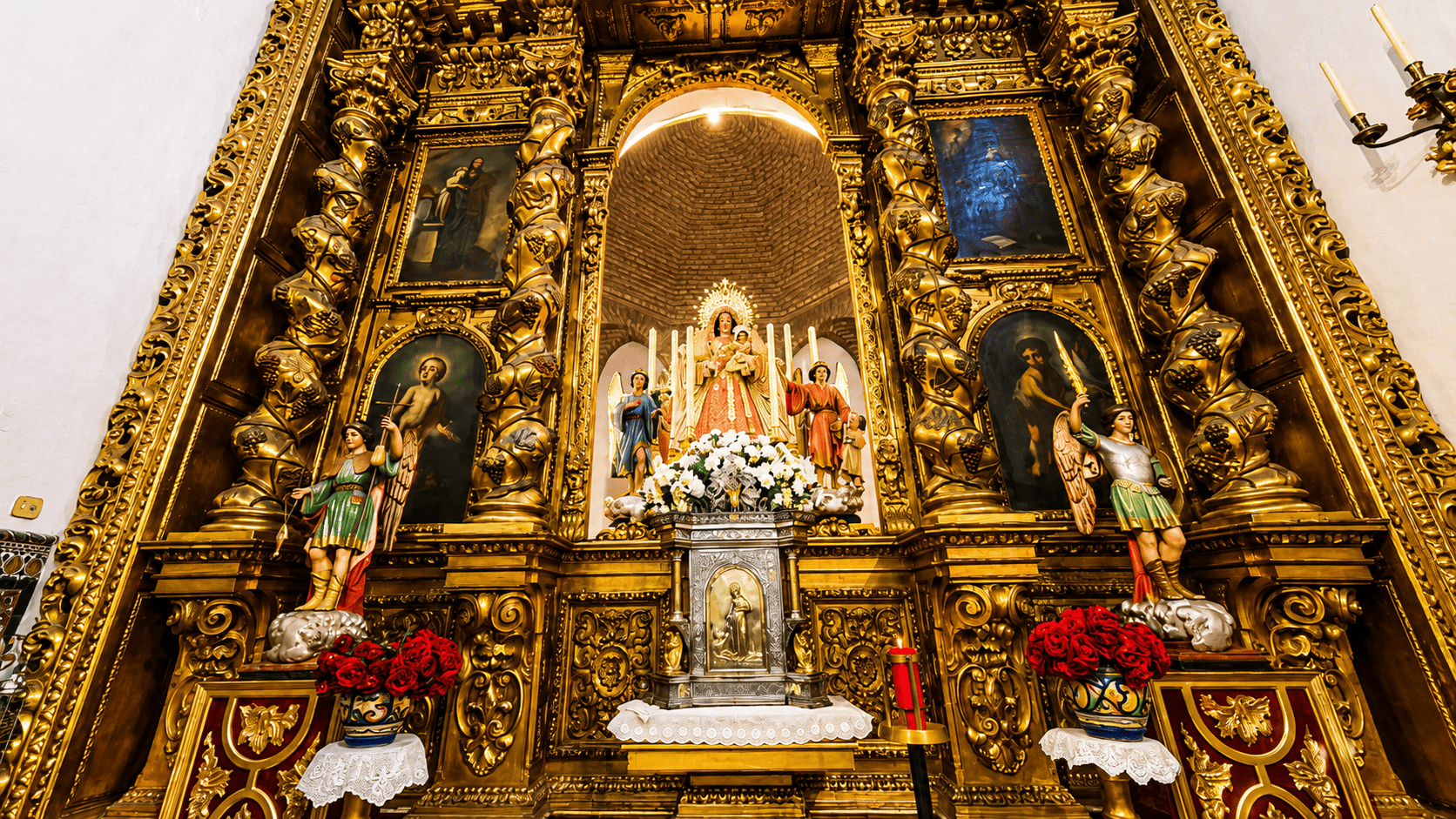
At the chancel end of the church stands the high altarpiece, an outstanding Baroque work crafted from carved and gilded wood, traditionally attributed to the cabinetmaker Francisco Dionisio de Ribas and dated to around the mid-17th century. It originates from the former Convent of the Discalced Mercedarians of the Assumption in Seville, from where it was moved to the chapel following the confiscation of church property in the 19th century. The altarpiece is organised around a base, a main section divided into three sections and a spacious attic. The sections are framed by four imposing Solomonic columns decorated with vine branches and bunches of grapes – Eucharistic symbols which, together with the profuse plant ornamentation of scrolls, acanthus leaves and gilded elements, reflect the decorative richness characteristic of Sevillian Baroque. The central section houses the niche where the image of Our Lady of Bethlehem is venerated, whilst the side sections and the attic preserve several paintings from the 17th and 18th centuries. Among these, the canvases depicting St James at the Battle of Clavijo, St John the Evangelist and St Francis at the Porziuncola stand out, completing a collection of great artistic quality and notable historical value.
Presiding over this altarpiece is the image of Our Lady of Bethlehem, the town’s patron saint and the focus of its principal devotion. It is a polychrome wooden sculpture dating from around the mid-16th century. The Virgin is depicted as a ‘vested’ or ‘candelabra’ statue, holding the Infant Jesus on her left arm whilst clutching a sceptre in her right hand. Its state of preservation is particularly valuable as it has not undergone any major restoration work that might have altered its original form.
The chapel also houses other images of great historical and devotional interest. On the south wall stands a magnificent sculpture of St James the Greater, created during the second half of the 16th century, in which the apostle is depicted as a pilgrim with a staff, a gourd, a cloak and the traditional shells of Santiago de Compostela, recalling the church’s original dedication.
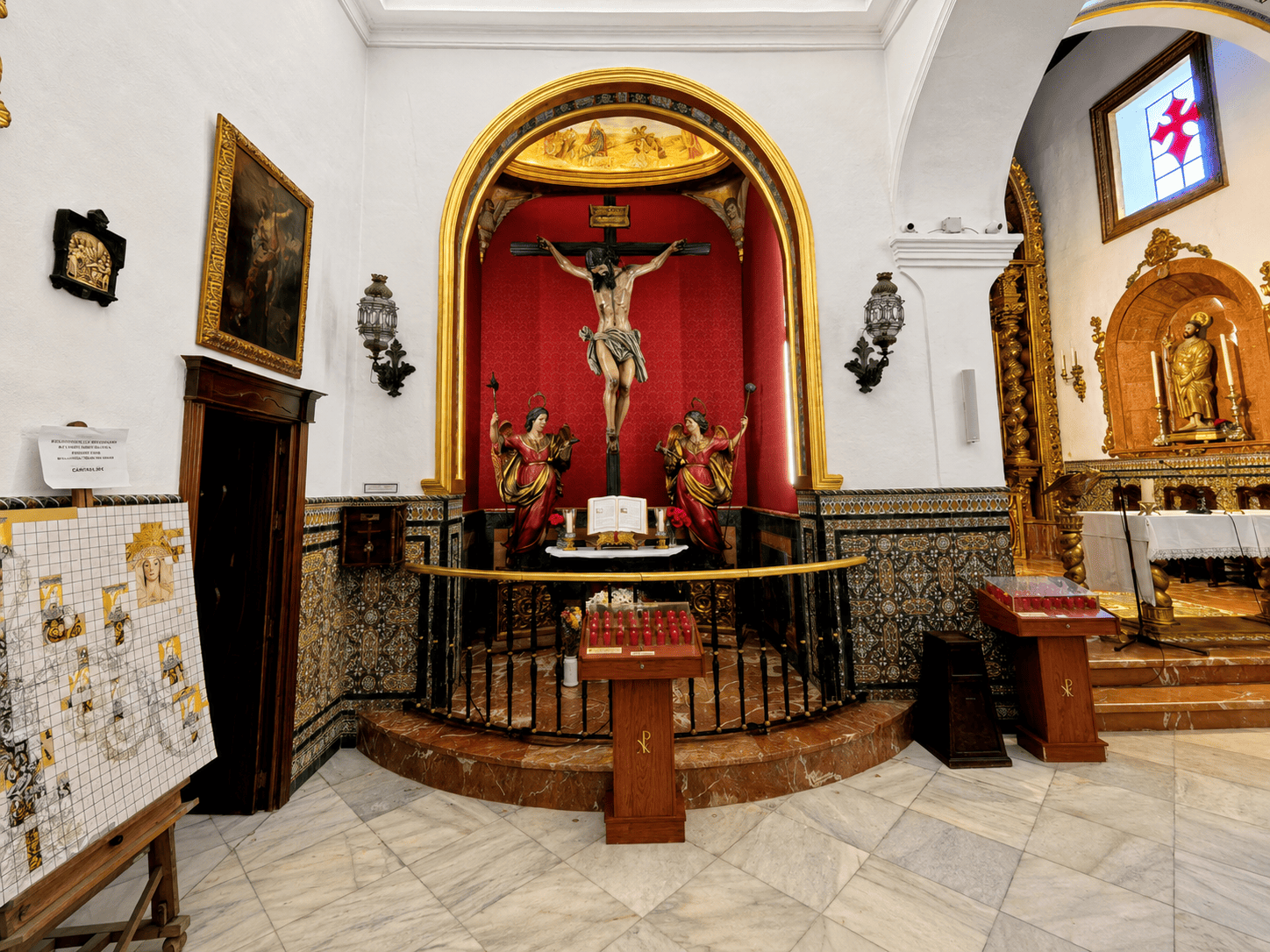
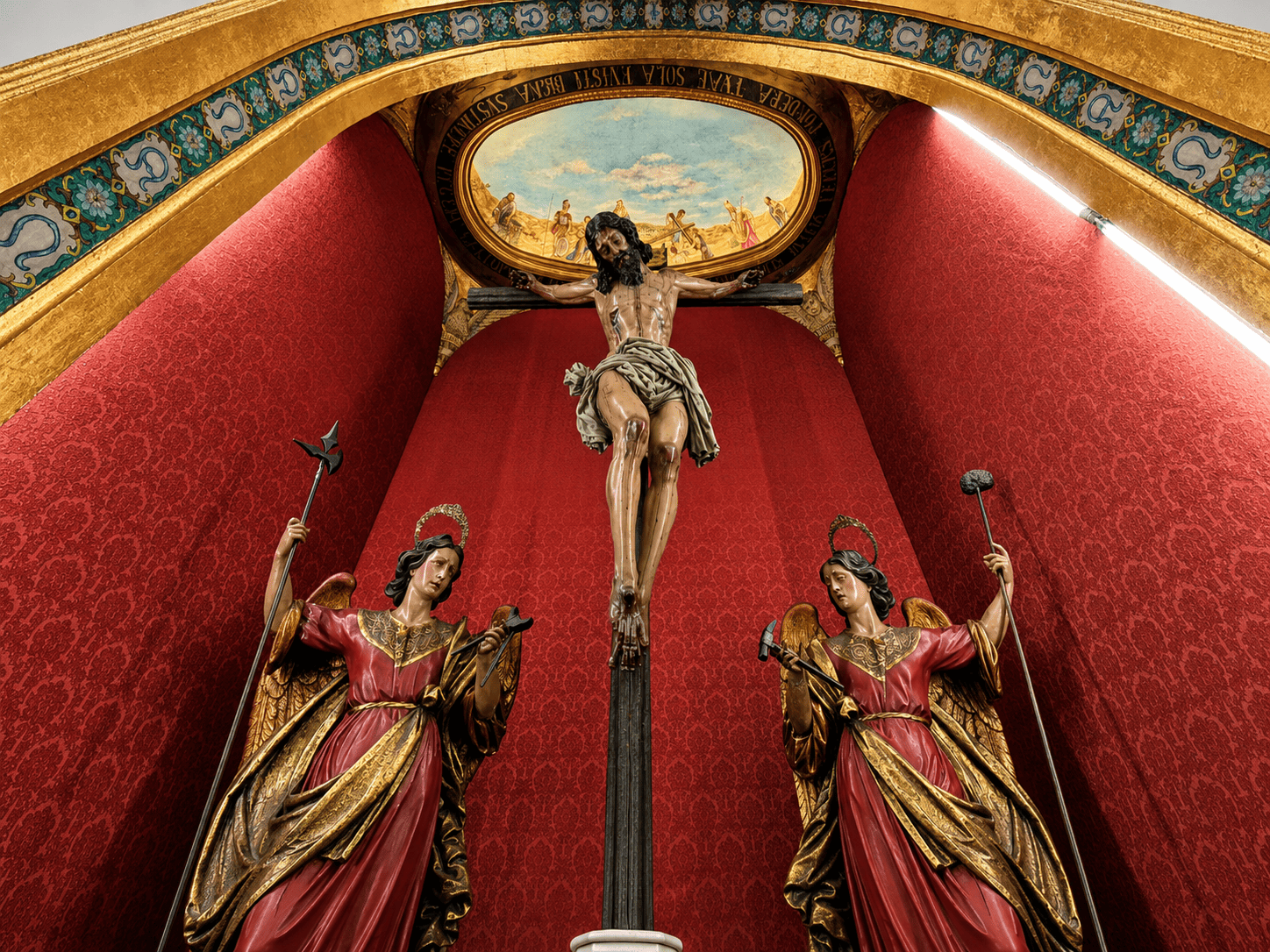
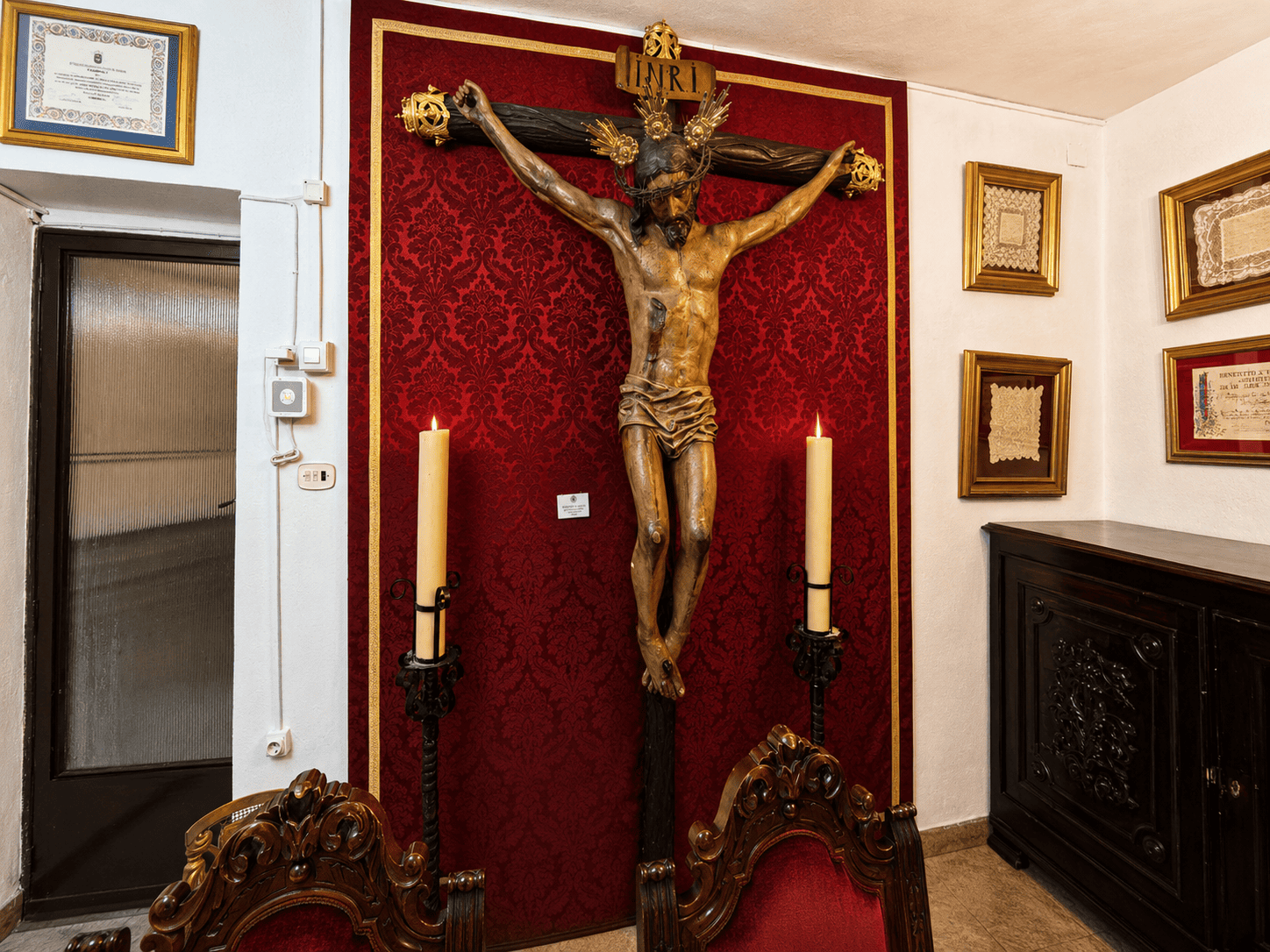
Another of the most revered images is the Santísimo Cristo de la Vera Cruz, a magnificent crucifix created in 1972 by the sculptor Francisco Buiza. The figure forms a ensemble with two 18th-century Passion angels, situated on either side of the cross, who hold the instruments of the Passion — the spear, the pincers, the reed with the sponge and the hammer — and enrich the scene iconographically. This ensemble replaced the original 17th-century Crucifix, made of wood paste, which is now kept in the sacristy due to its fragile condition.
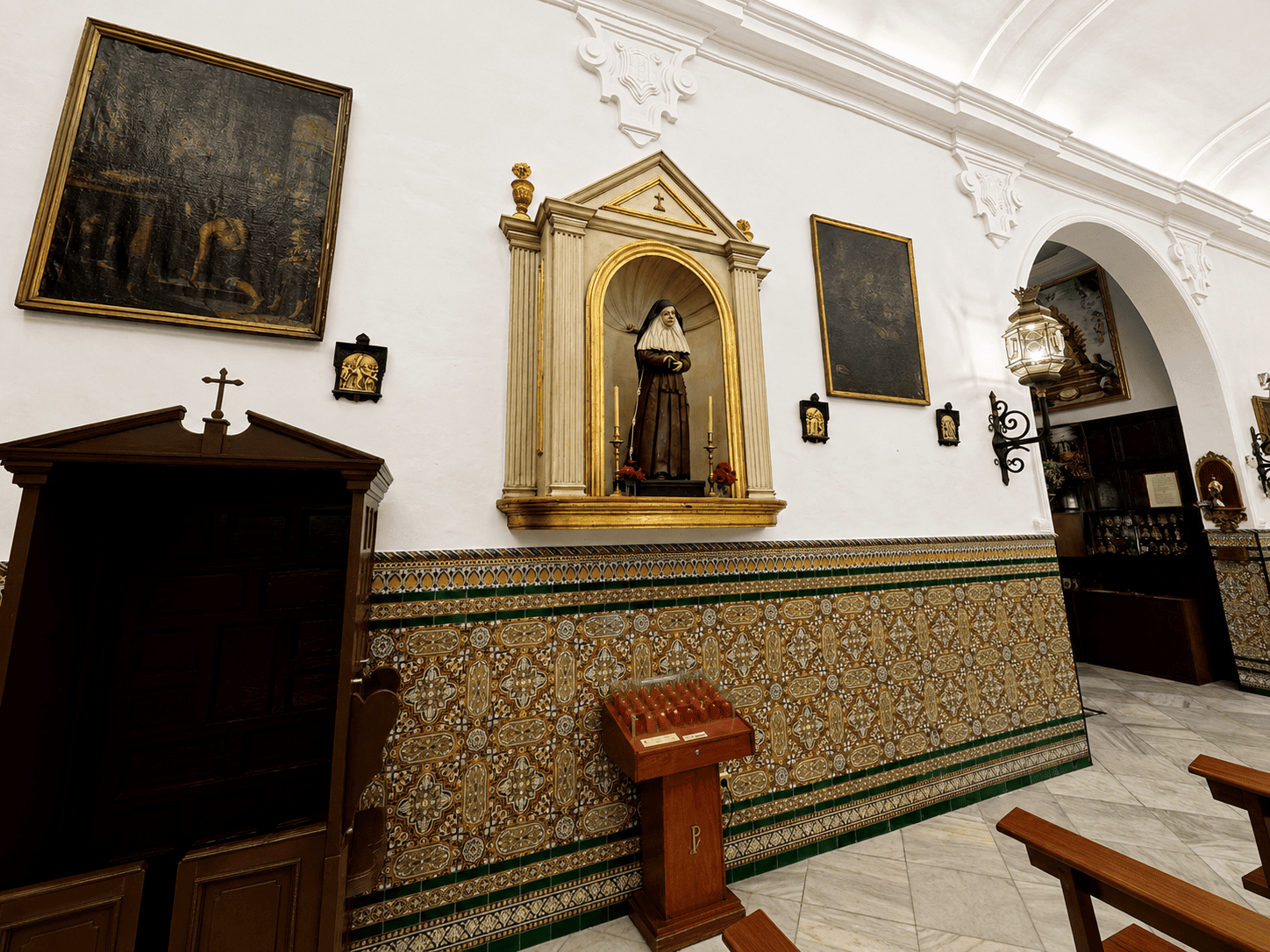
On the Gospel wall, there is also an image of Saint Angela of the Cross, a work created in 2003 by the sculptor Manuel Ramos Corona. Her feast day is celebrated every 5 November, and she is the object of a deeply rooted devotion amongst the local faithful.
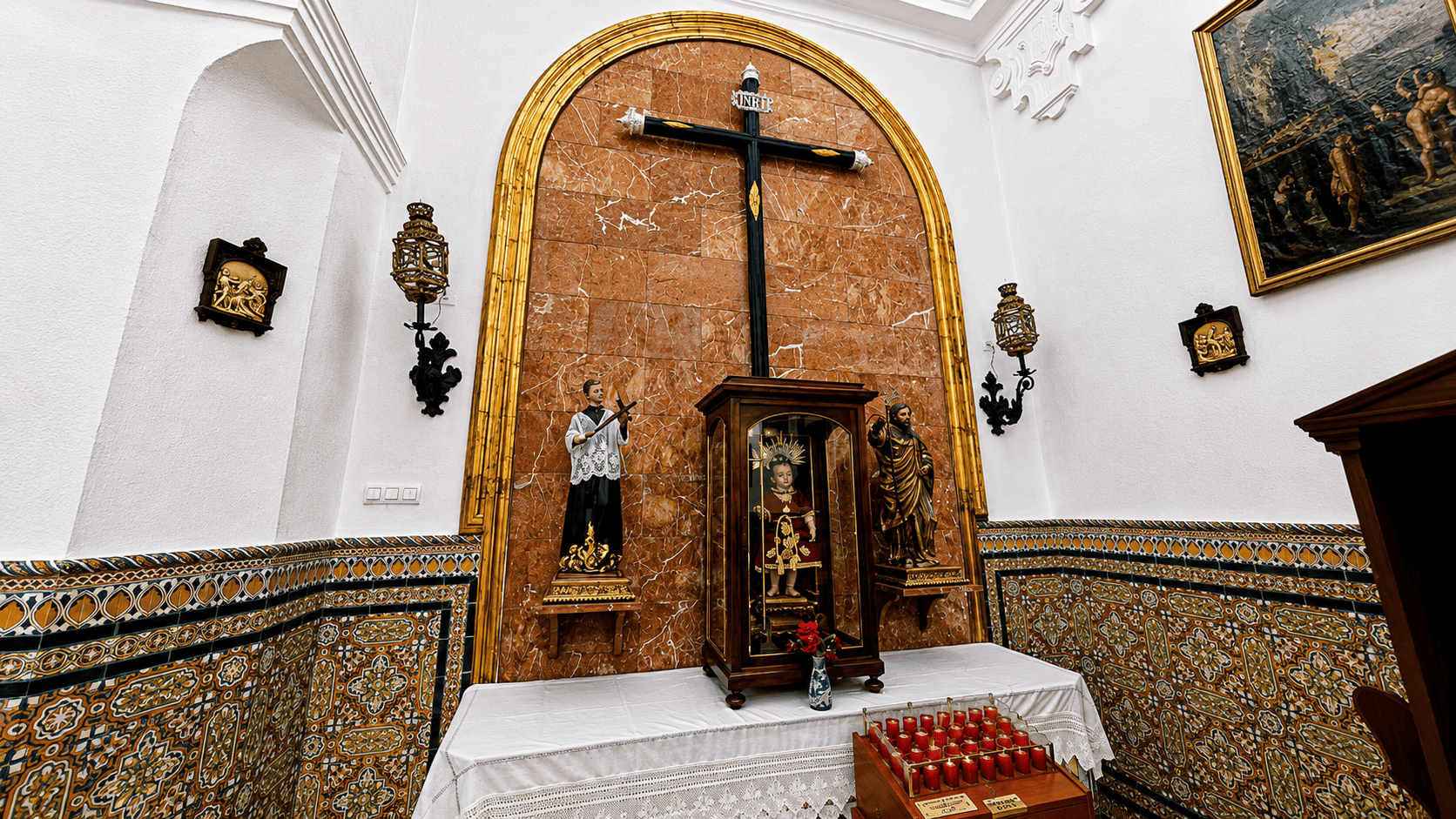
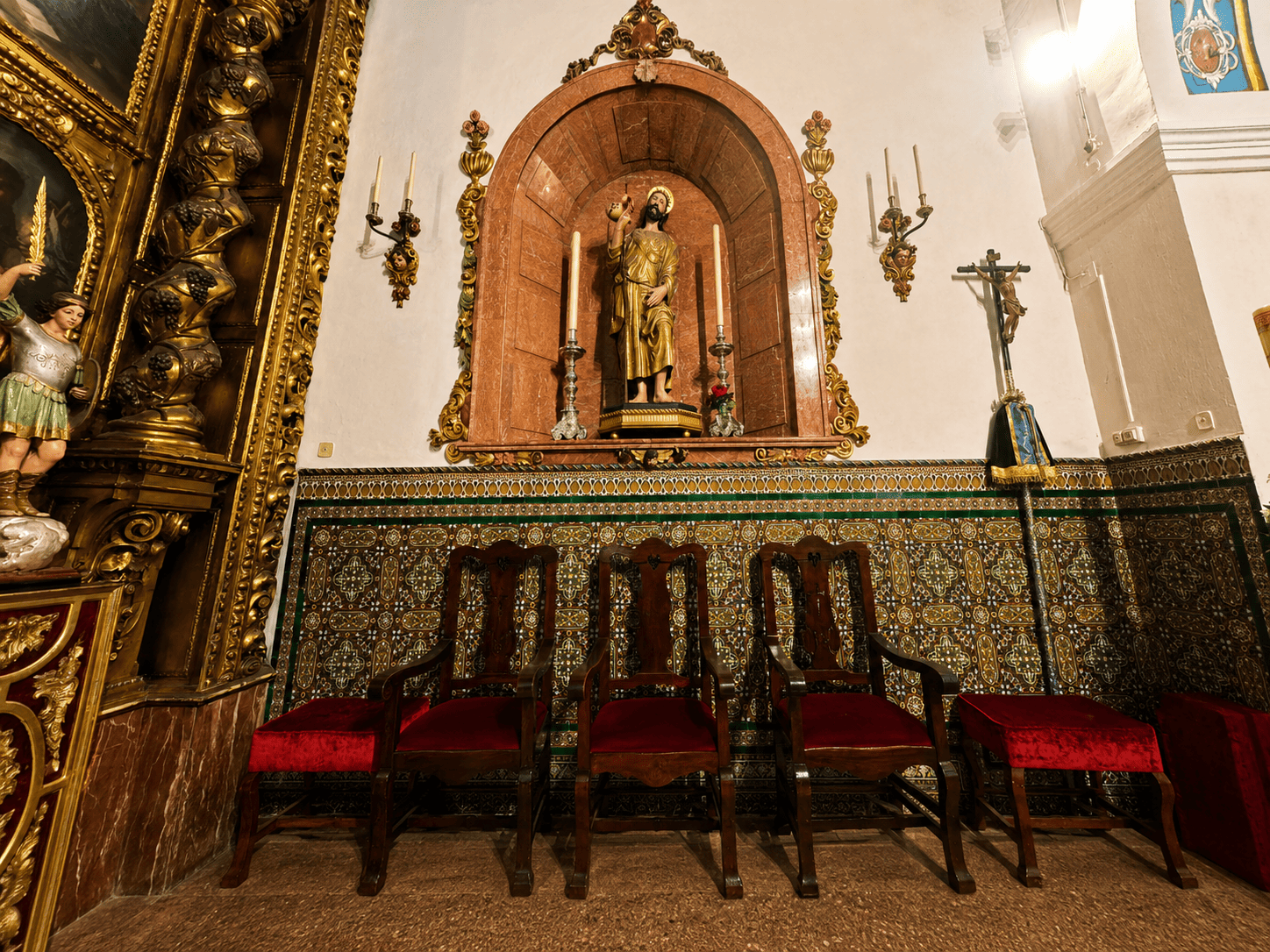
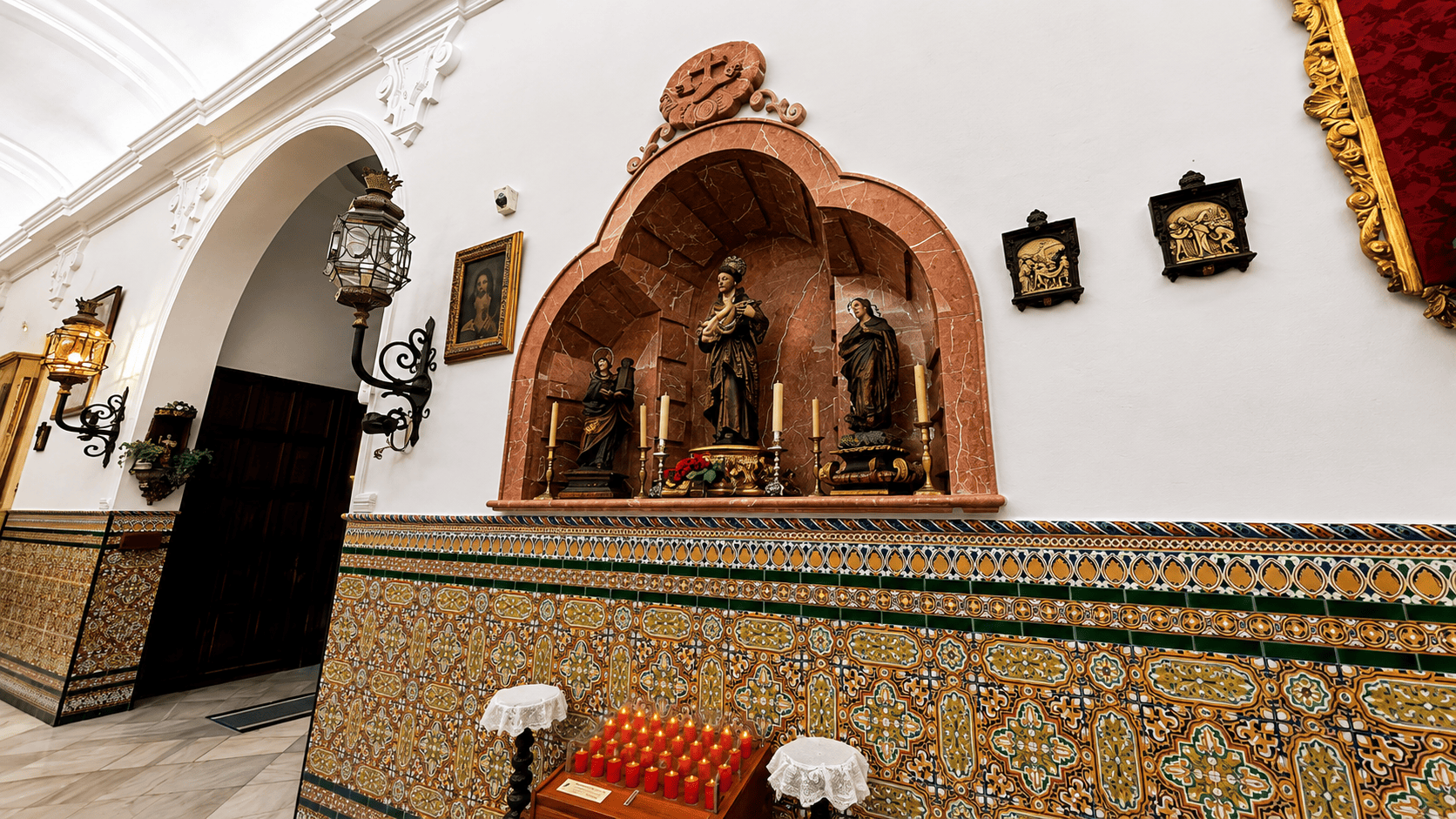
The tour concludes with an image of the Infant Jesus, situated in a red marble niche alongside a wooden cross and the images of Saint Louis and Saint James the Less. It is a 17th-century Baroque sculpture that reflects the naturalistic style of the Seville school and follows the models of the Infant Jesus figures by Juan Martínez Montañés. The Child is depicted standing, blessing with his right hand whilst holding a cross – an iconography that symbolically foreshadows the Passion of Christ. As is customary with this type of devotional image, he is dressed in rich vestments which are changed in accordance with the liturgical calendar.
Owing to its architectural value and the remarkable artistic collection it houses, the Chapel of Our Lady of Bethlehem constitutes an extraordinarily valuable heritage site, the conservation, research and promotion of which are essential for understanding the historical development of the municipality and preserving one of its most significant monuments.
Bibliography
Caro, M. J. (2004). El retablo mayor de la Ermita de Ntra. Sra. de Belén. En Sobre Historia de Pilas, vol. II. Pilas: Ayuntamiento de Pilas.
López Hernández, I. J. (2015). El retablo de la ermita de Nuestra Señora de Belén de Pilas (Sevilla), obra del círculo de Bernardo Simón de Pineda. Deducciones a partir de un estudio formal.
Morales, A. J.; Sanz, M. J.; Serra, J. M. y Valdivieso, E. (1981): Guía artística de Sevilla y su provincia. Sevilla: Diputación Provincial de Sevilla.
Valor Piechotta, M. (2023). La ermita de Belén de Pilas: nuevas aportaciones para el estudio de sus orígenes medievales. En Sobre Historia de Pilas, VOLUMEN XX - Tomo I, Pilas: Ayuntamiento de Pilas.
Fuentes on line:
Guía digital del patrimonio cultural de Andalucía. Instituto Andaluz de Patrimonio Histórico. Consejería de Cultura y Deporte: