
- Home
- Interest points
- Santa María la Mayor Church
Info
The Parish Church of Santa María la Mayor is the result of a long historical evolution that began after the Castilian conquest in the 13th century. Its current configuration reflects the successive transformations it underwent over the centuries, resulting in a basilica-plan church with three naves enriched with numerous chapels. Inside, it preserves an important collection of altarpieces, sculptures and pieces of silverwork that bear witness to the artistic evolution of the parish between the 16th and 20th centuries.
Know more
The Church of Santa María la Mayor has its origins in a primitive parish church built following the Castilian conquest of the territory in the mid-13th century. With the progressive growth of the population and the consolidation of parish life, the building underwent successive enlargements and transformations over the centuries.
One of the most significant renovations took place as a consequence of the Lisbon earthquake of 1755, an event that made it necessary to undertake major repair and reconstruction works. Subsequently, during the first half of the 19th century, further interventions were carried out, among which the construction of the Main Chapel and the bell tower stand out. The renovations undertaken between the late 18th century and the 19th century largely shaped the church’s present appearance, defined by the continued use of the traditional models of Sevillian Baroque architecture, although also incorporating elements characteristic of the Neoclassical style.
On the exterior, the church stands out for the volume of its structure and for its bell tower, built between 1830 and 1833. The main entrance, located in the Gospel wall, is preceded by a small atrium leading to the doorway dating from 1930, decorated with a ceramic tondo depicting Saint Raphael the Archangel and Saint Tobias.
The interior has a basilica plan with three naves separated by semicircular arches resting on pillars. The central nave is covered by a barrel vault with lunettes, while the side naves have wooden roofs. One of the most outstanding decorative elements is the ceramic dado made in the 1920s by the Mensaque Rodríguez y Compañía factory, whose panels depict different scenes from the life of Christ, some of them inspired by works by Bartolomé Esteban Murillo.
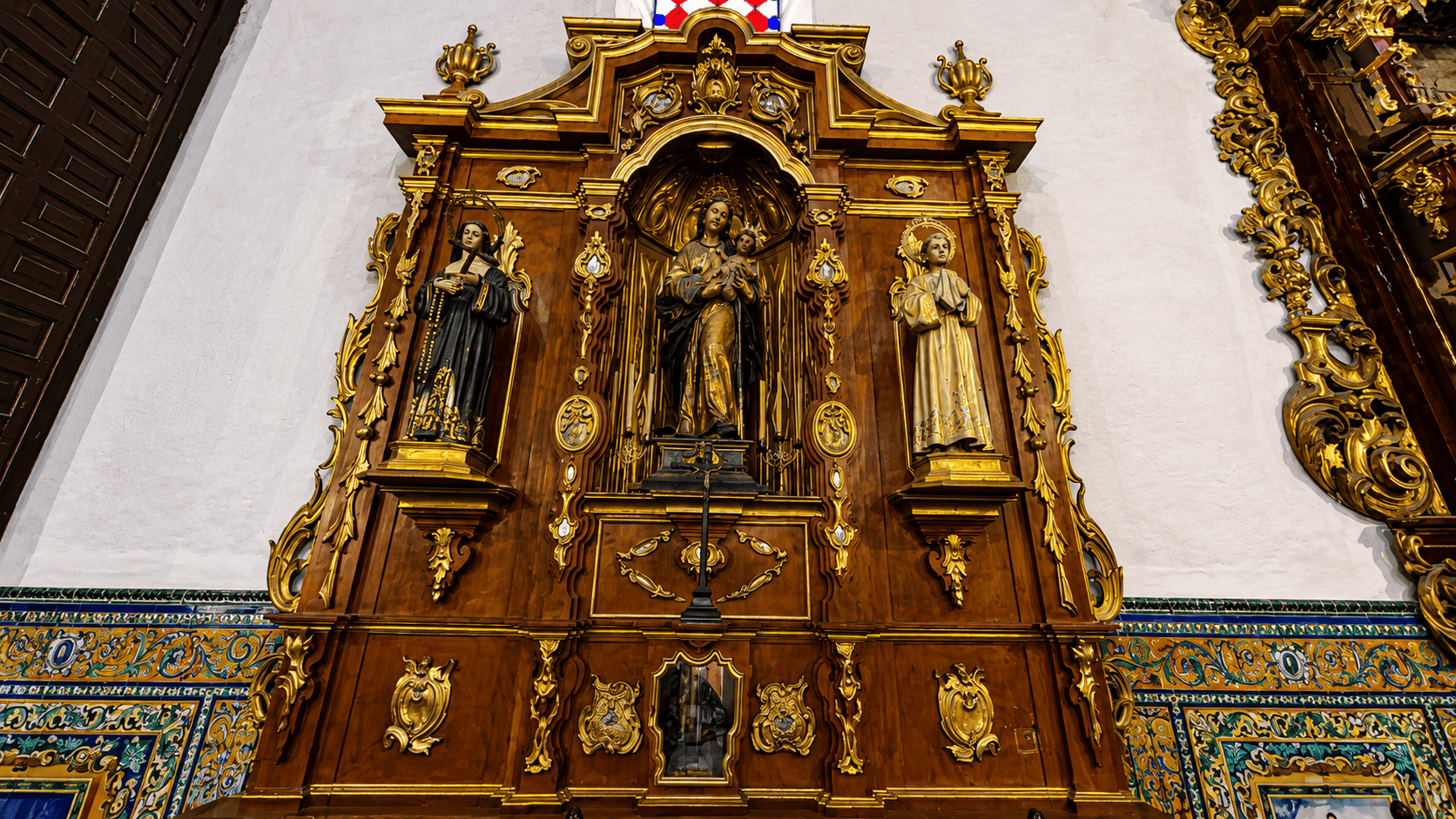
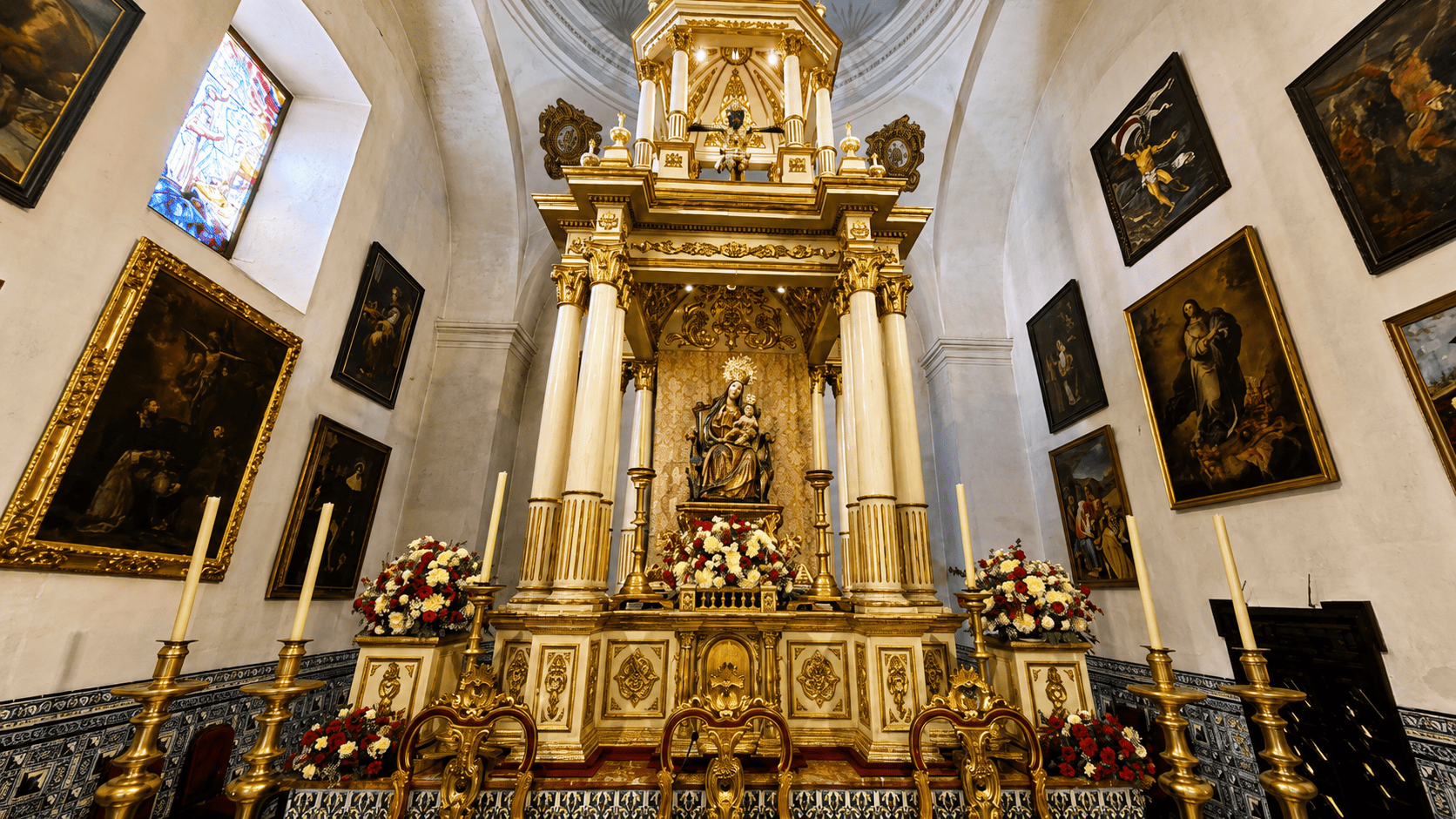
The Main Chapel, with a square ground plan and covered by a hemispherical dome resting on pendentives, constitutes the principal liturgical space of the church. It houses the main altarpiece, which has a distinctive tower-shaped structure inspired by the former Easter monuments erected during Holy Week. The altarpiece is presided over by the carving of Santa María la Mayor, an image dating from the second third of the 16th century and attributed to Jorge Fernández, which constitutes one of the most outstanding figures in the church.
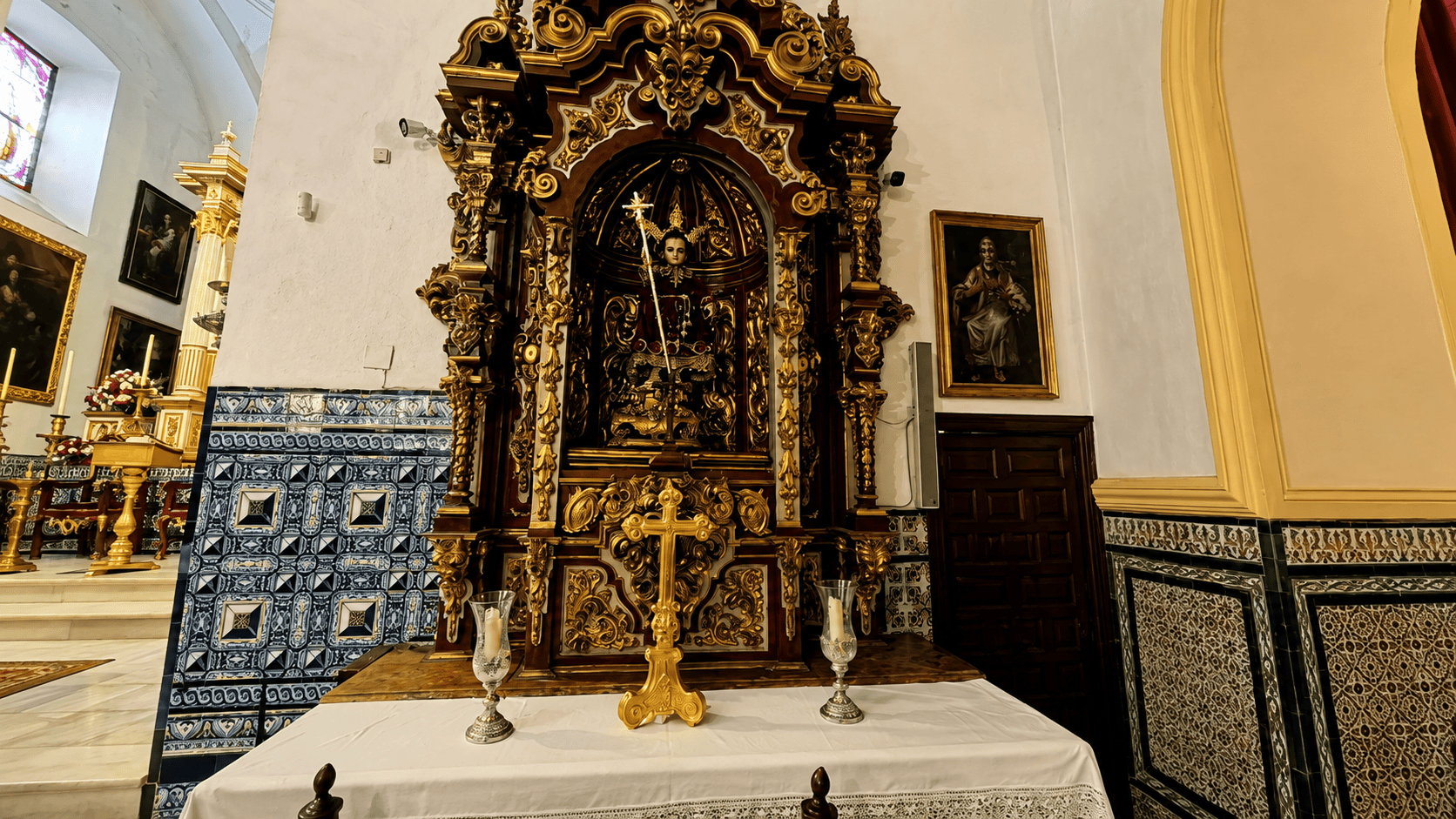
On either side of the presbytery stand the altarpiece of the Sweet Name of Jesus, presided over by the image of the Niño de Dios de las Carreritas, attributed to the circle of Martínez Montañés, and the altarpiece of the Virgin of Mount Carmel, dating from the mid-18th century and headed by an image attributed to Cristóbal Ramos.
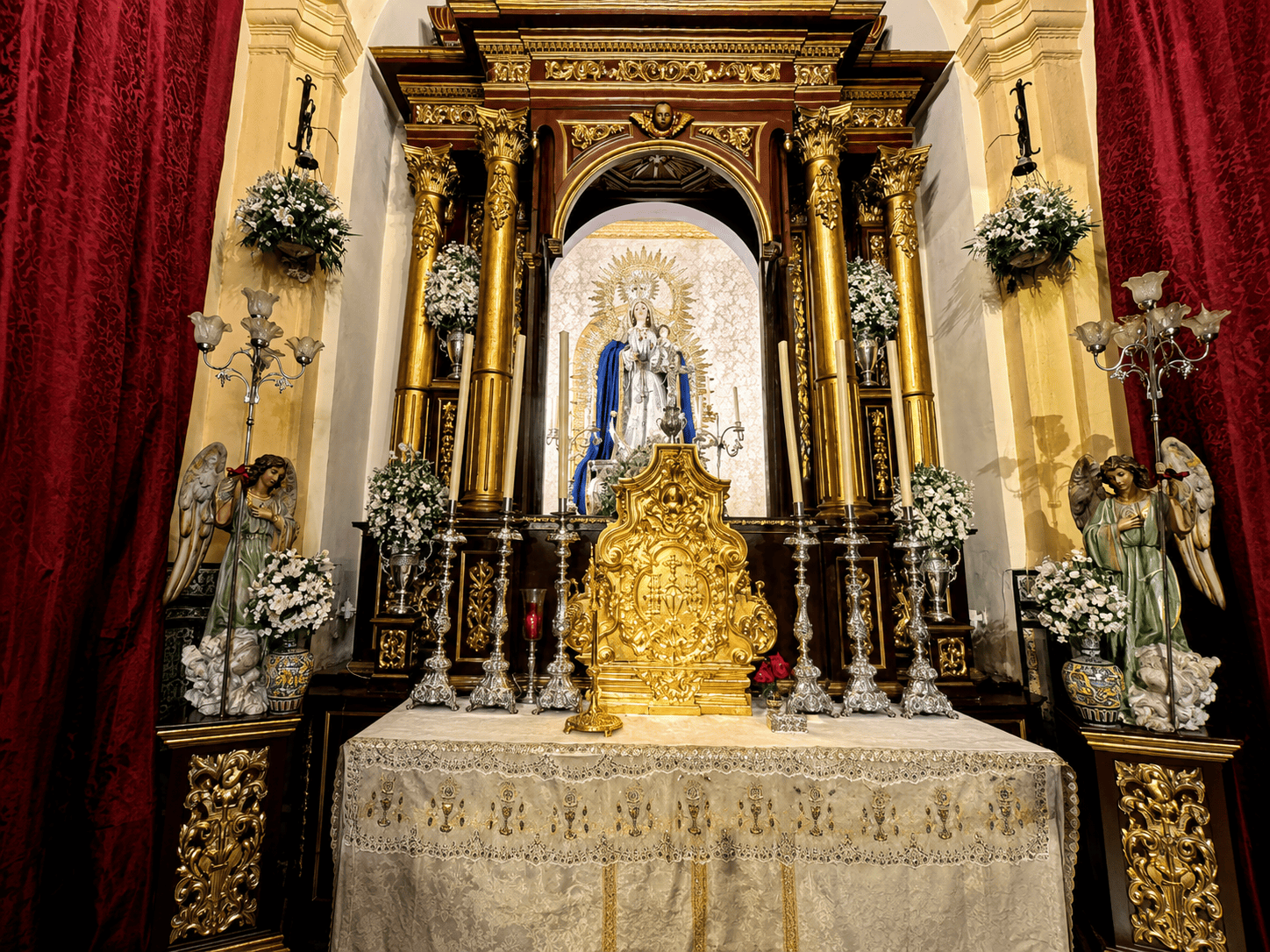
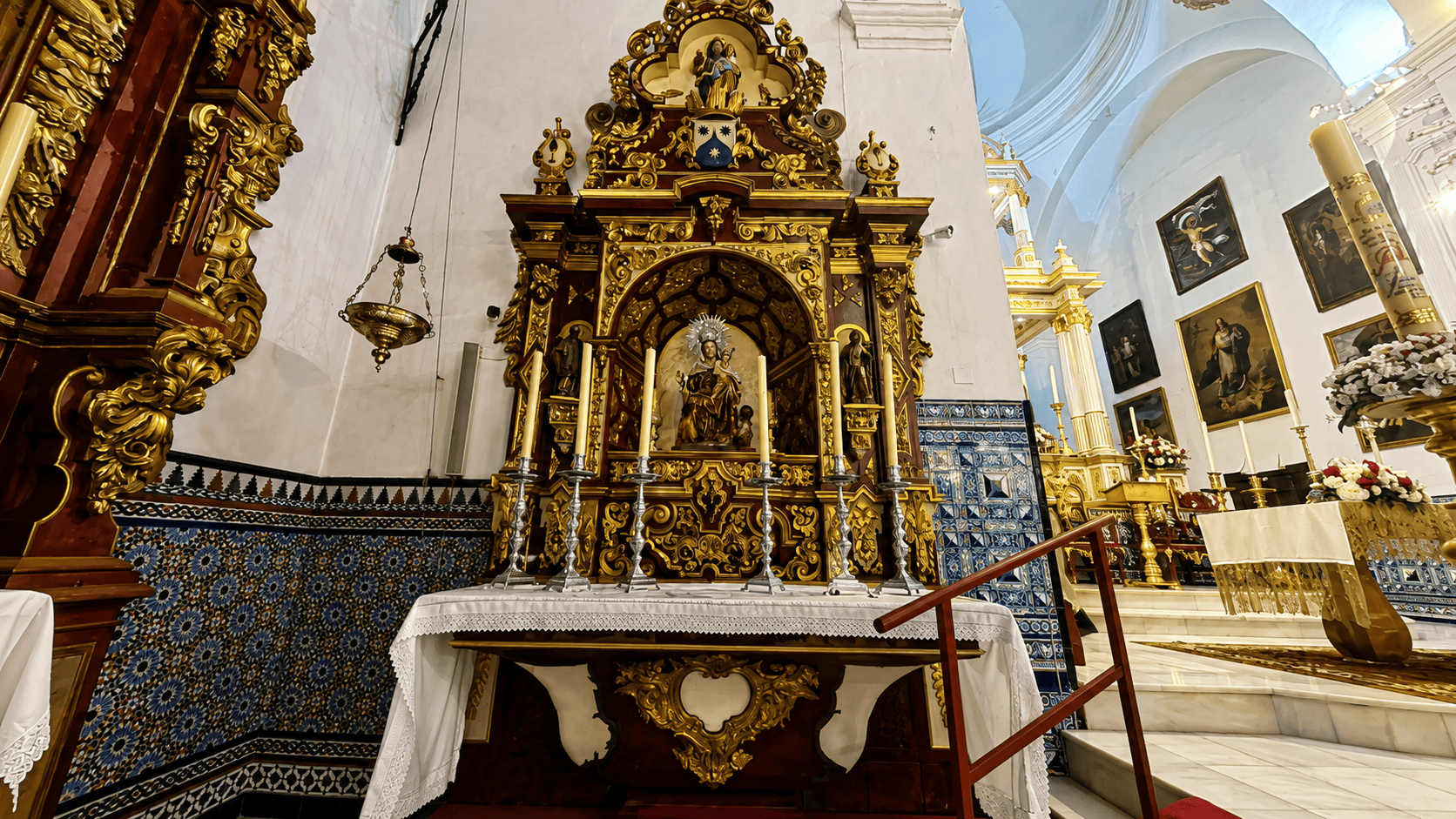
The Epistle nave contains some of the church’s principal devotional spaces. The first of these is the Sacramental Chapel, in which the image of the Virgin of the Rosary stands out, an 18th-century sculpture also attributed to the Sevillian sculptor Cristóbal Ramos, which is venerated in an altarpiece from the same century.
This same chapel houses the sacramental monstrance of the Church of Santa María la Mayor, one of the most outstanding pieces of the church’s liturgical heritage. It is a work of silverwork of great artistic value, dated 1858 and attributed to Ysaura. Standing two metres high, it has a structure composed of three superimposed sections supported by Doric columns, which articulate a complex iconographic programme centred on the exaltation of the Eucharist.
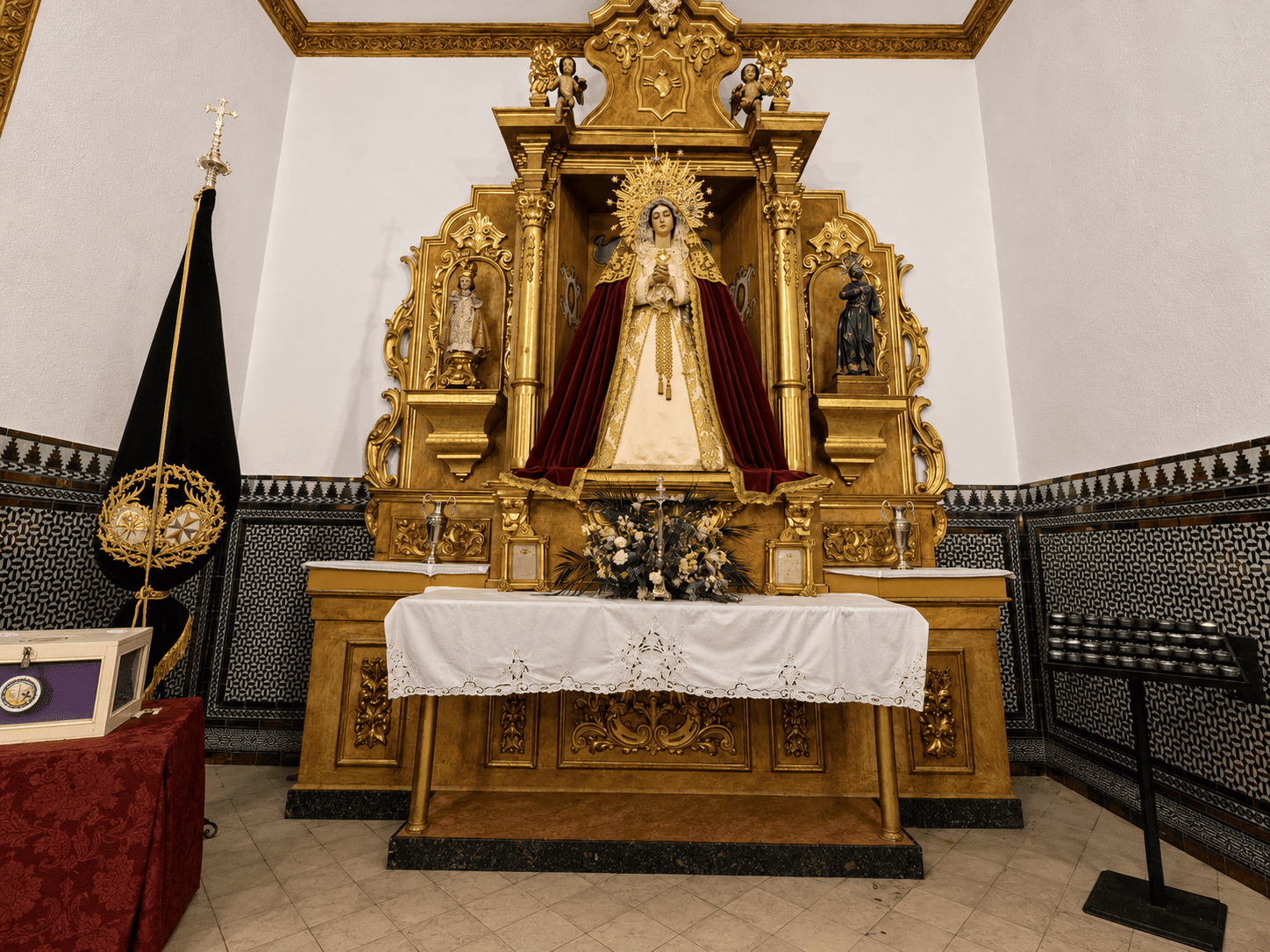
Continuing along the Epistle nave is the image of Most Holy Mary in Her Solitude, a dressable sculpture of unknown authorship and date, although the influence of Juan de Astorga has traditionally been noted.
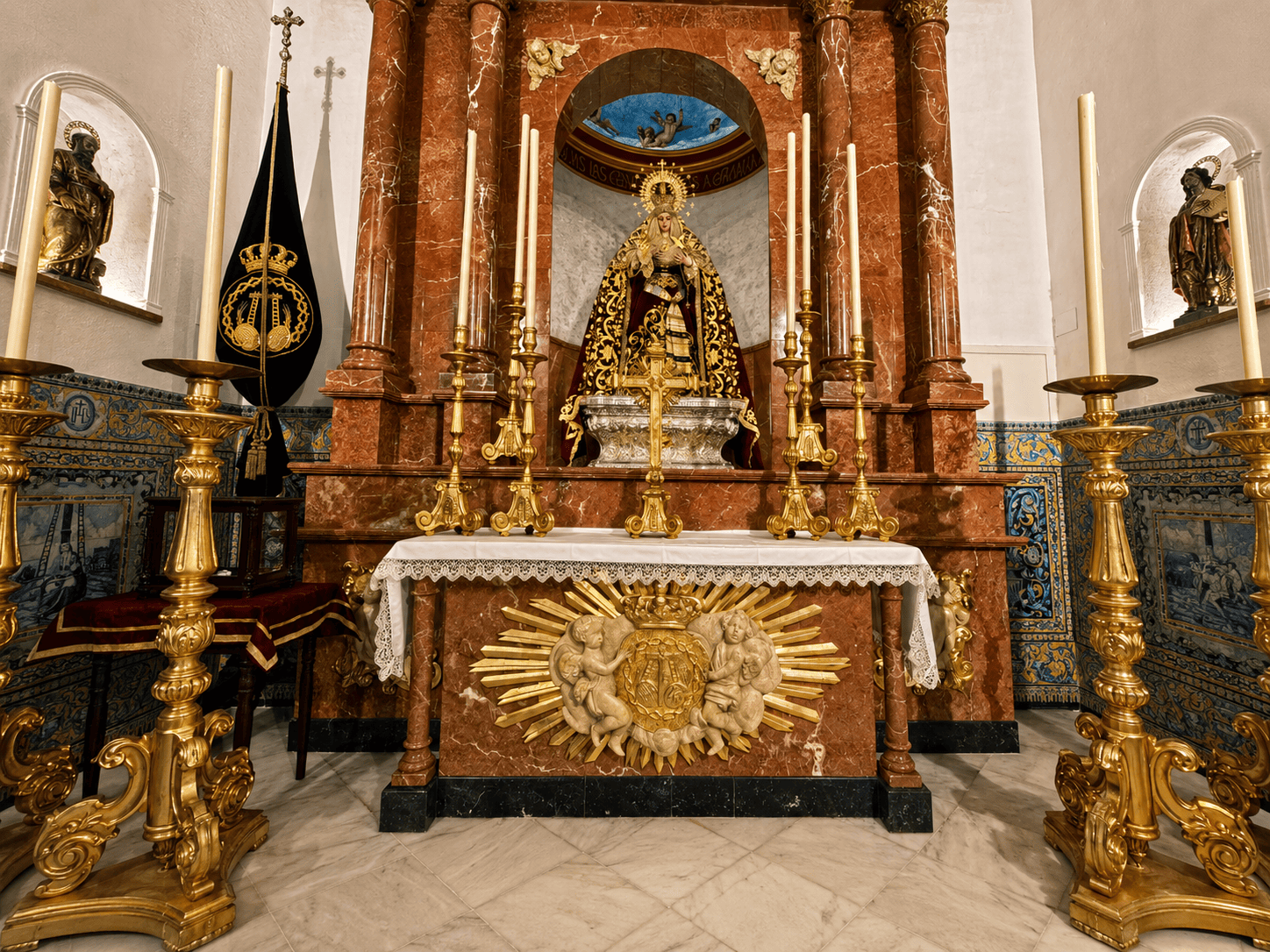
Beside it is the chapel of Most Holy Mary of Sorrows, co-titular image of the Parish Association of Our Father Jesus the Captive of Pilas. The image, by an unknown artist, dates from the 18th century and is attributed to the circle of the Genoese sculptor Juan Bautista Petrone.
The following chapel is dedicated to the Immaculate Conception of Mary, an anonymous image dating from the 20th century, which is venerated in a gilded wooden altarpiece decorated with mirrors.
The nave ends with the Baptismal Chapel, where a baptismal font made of red marble on an octagonal white marble base is preserved.
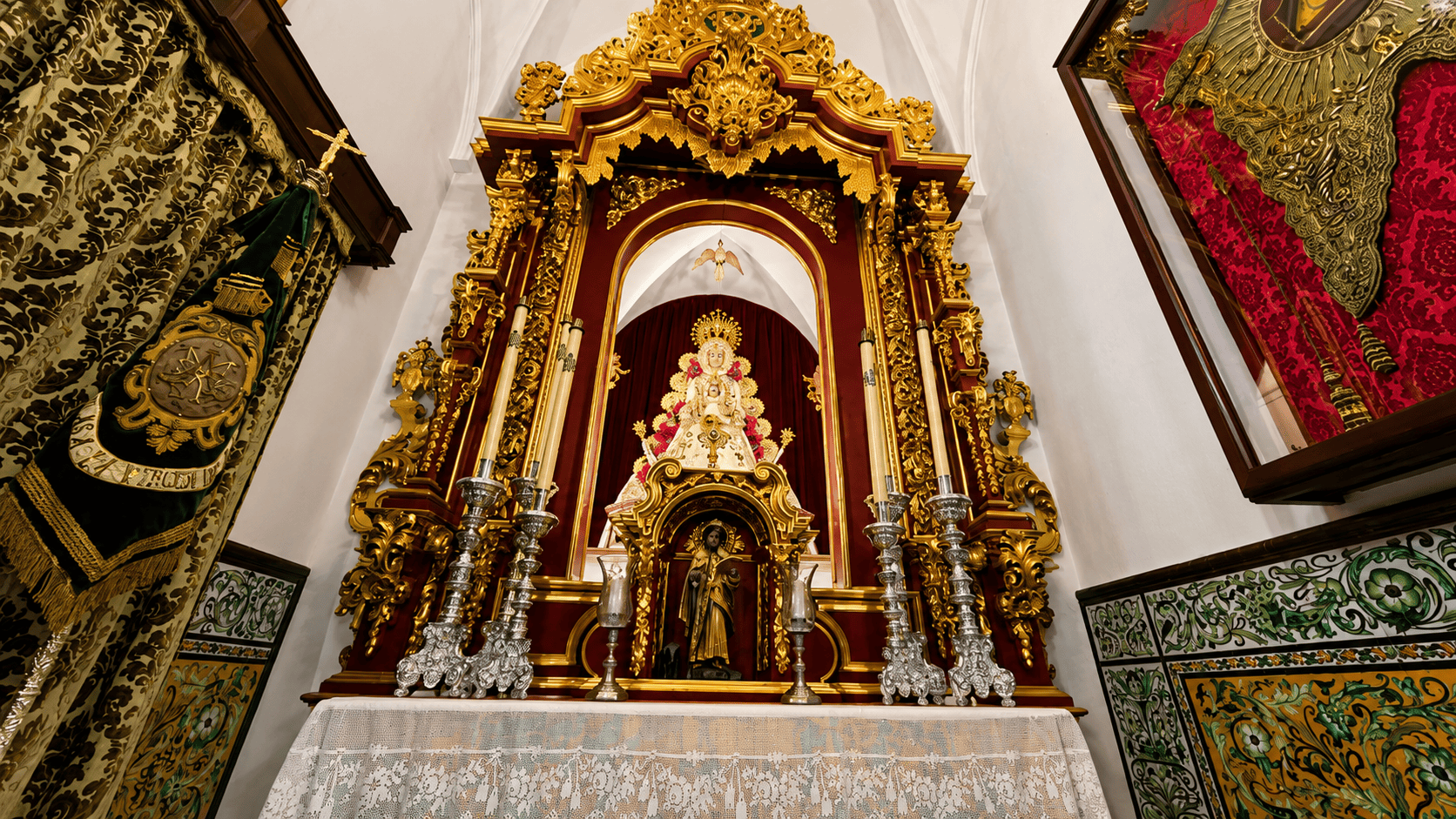
At the foot of the church are some of the images that inspire the greatest devotion among the people of Pilas. The first of these is dedicated to the Virgin of El Rocío, a candlestick-frame image made in 1941 by Antonio Castillo Lastrucci.
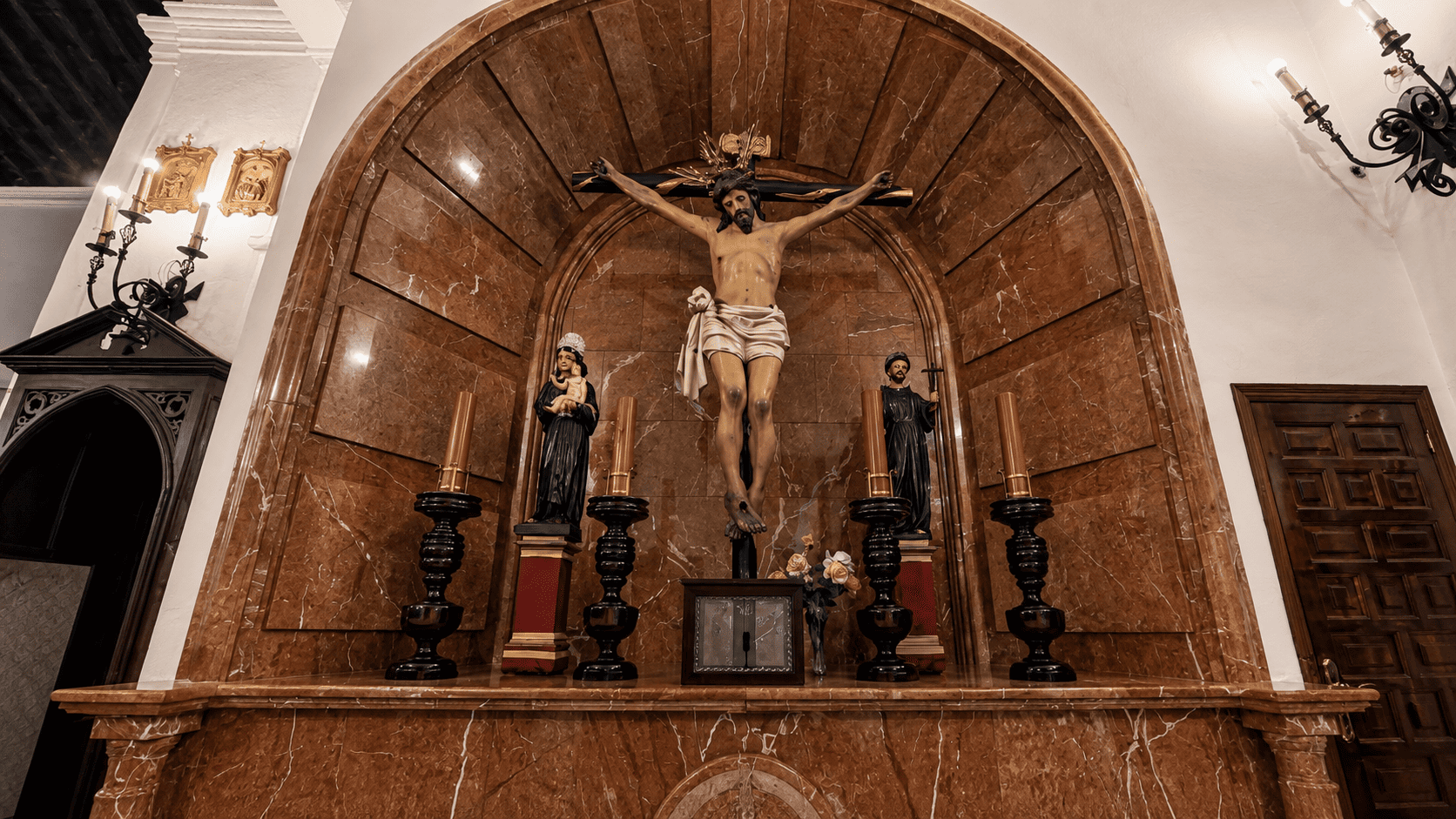
Beneath the choir is the altarpiece housing the Most Holy Christ of the Descent, a fully three-dimensional sculpture dating from between the late 17th and early 18th centuries. The sculpture has a system of joints in the shoulders that allows the arms to move and makes it possible to lower it from the cross so that it can be placed in a recumbent position during the Good Friday celebrations.
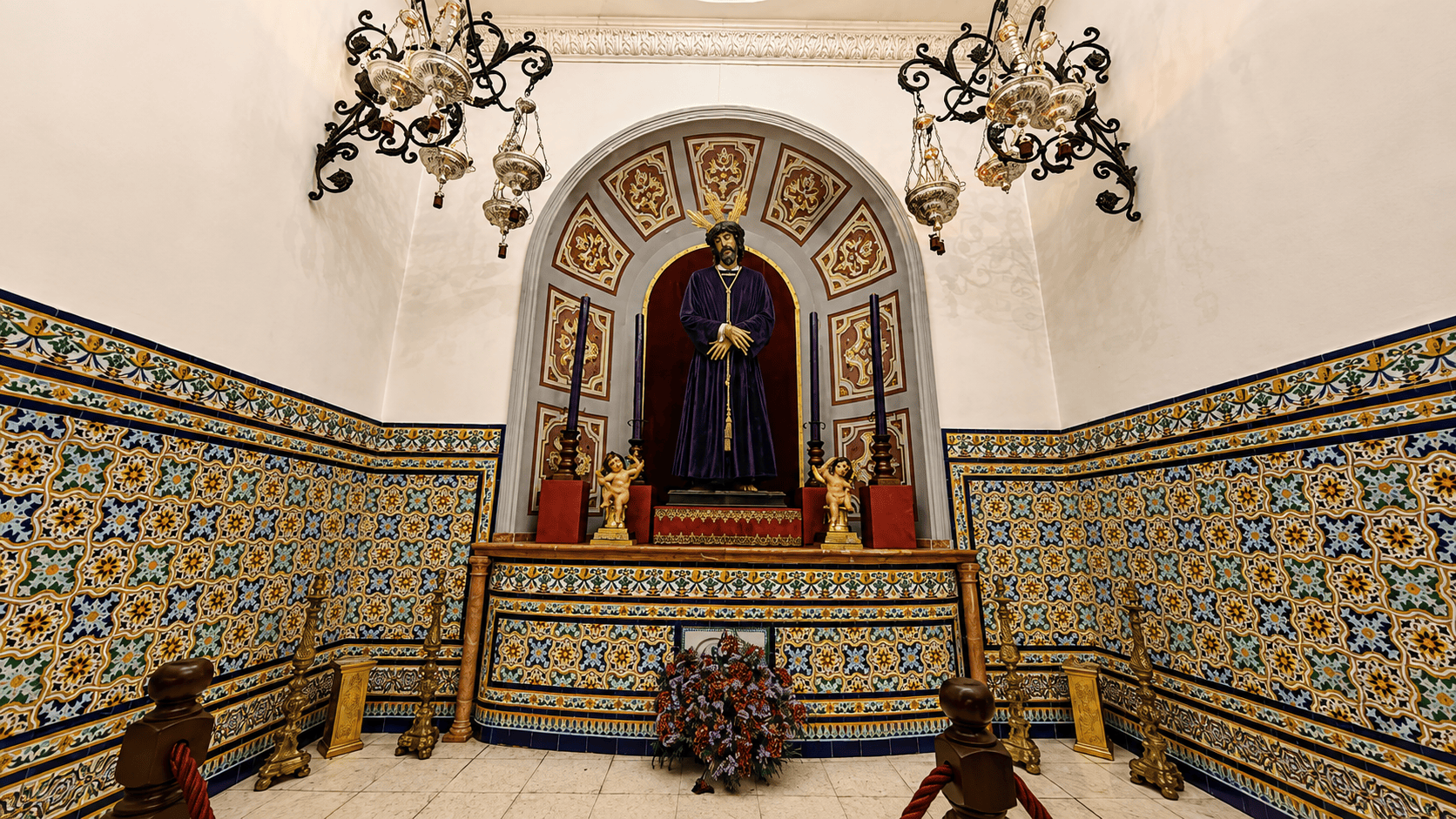
To the left is the chapel of Our Father Jesus the Captive, titular image of the Parish Association of the Captive. The image, made in 1962 by the religious sculptor Antonio Eslava Rubio, depicts Christ with His hands bound, following the traditional iconography of Christ the Captive.
On the Gospel wall are the altarpieces of the Souls and Saint Joseph, examples of the evolution of the Baroque and Neoclassical styles.
The Altarpiece of the Souls dates from the second quarter of the 18th century. It consists of a large architectural frame designed to house a monumental pictorial composition. The canvas, organised into different iconographic levels, depicts the passage from the Souls in Purgatory to heavenly glory, presided over by Christ and the twelve Apostles.
The final altarpiece encountered is the one dedicated to Saint Joseph, dated around 1800 and belonging to the Neoclassical style. It is composed of an altar table, a predella and a single main section crowned by an attic. The predella contains a small niche housing an image of the Ecce Homo, while the main section is presided over by the image of Saint Joseph, an anonymous sculpture dating from the second half of the 18th century.
Bibliography
López Hernández, I. J. (2015). La construcción del campanario y la Capilla Mayor de la iglesiaParroquial de Pilas.Obras y reformas entre1802 y 1834, en Sobre Historia de Pilas, Vol. XIII. Pilas
Instituto Andaluz de Patrimonio Histórico (2012). Informe diagnóstico ypropuesta de intervención.Cristo del descendimiento. Hermandad de Nuestra Señora de la Soledad.Pilas, Sevilla.
Herrera García, F.J. (2014). Flandes-Canarias, a través de los talleres sevillanos.Un encargo escultórico a Sevilla a comienzos del XVI en Homenaje a la profesora Constanza Negrín Delgado. Instituto de estudios canarios. La Laguna.
Fuentes on line:
Guía digital del patrimonio cultural de Andalucía. Instituto Andaluz de Patrimonio Histórico. Consejería de Cultura y Deporte: