
- Home
- Interest points
- Oil Press
Info
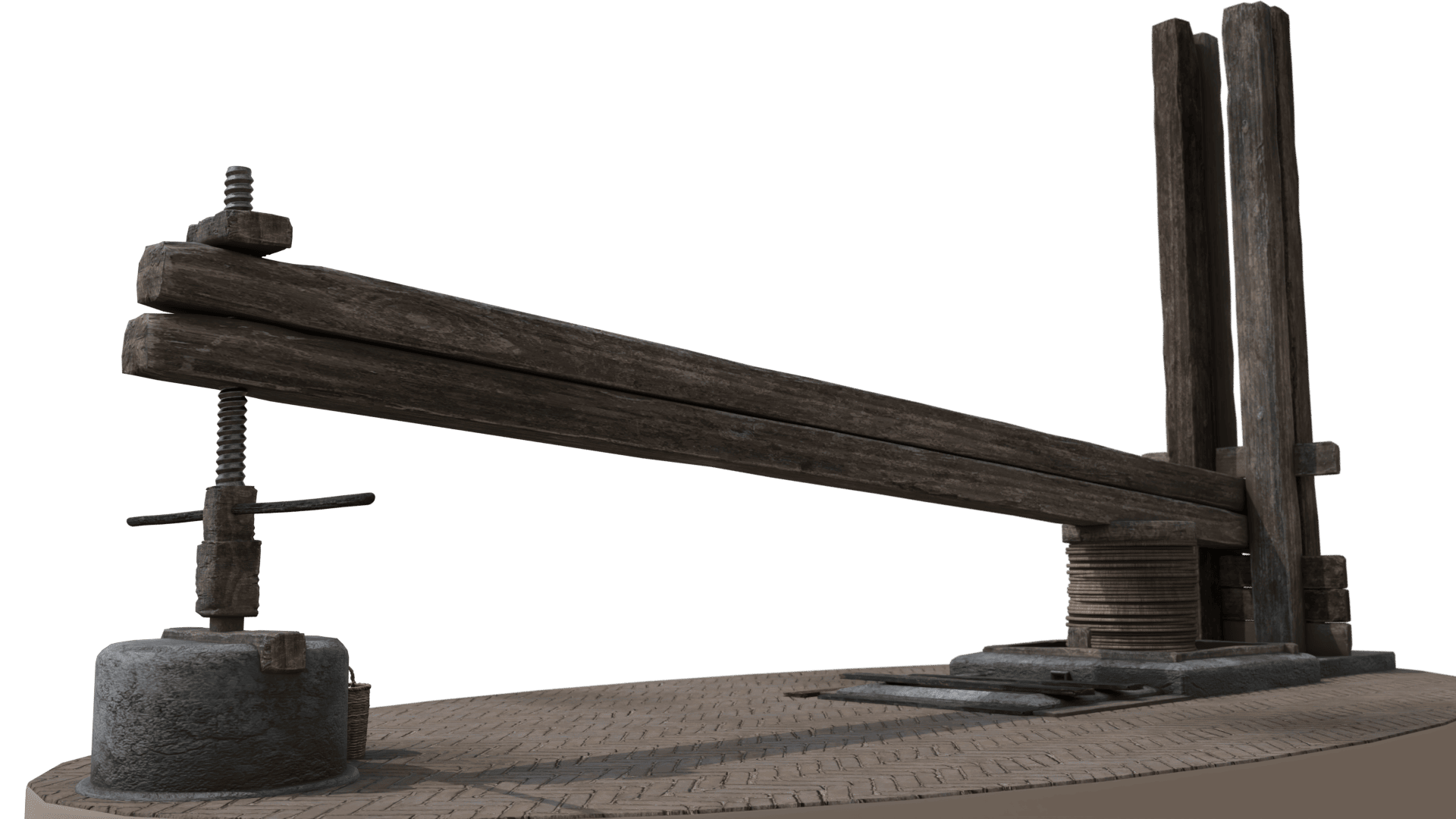
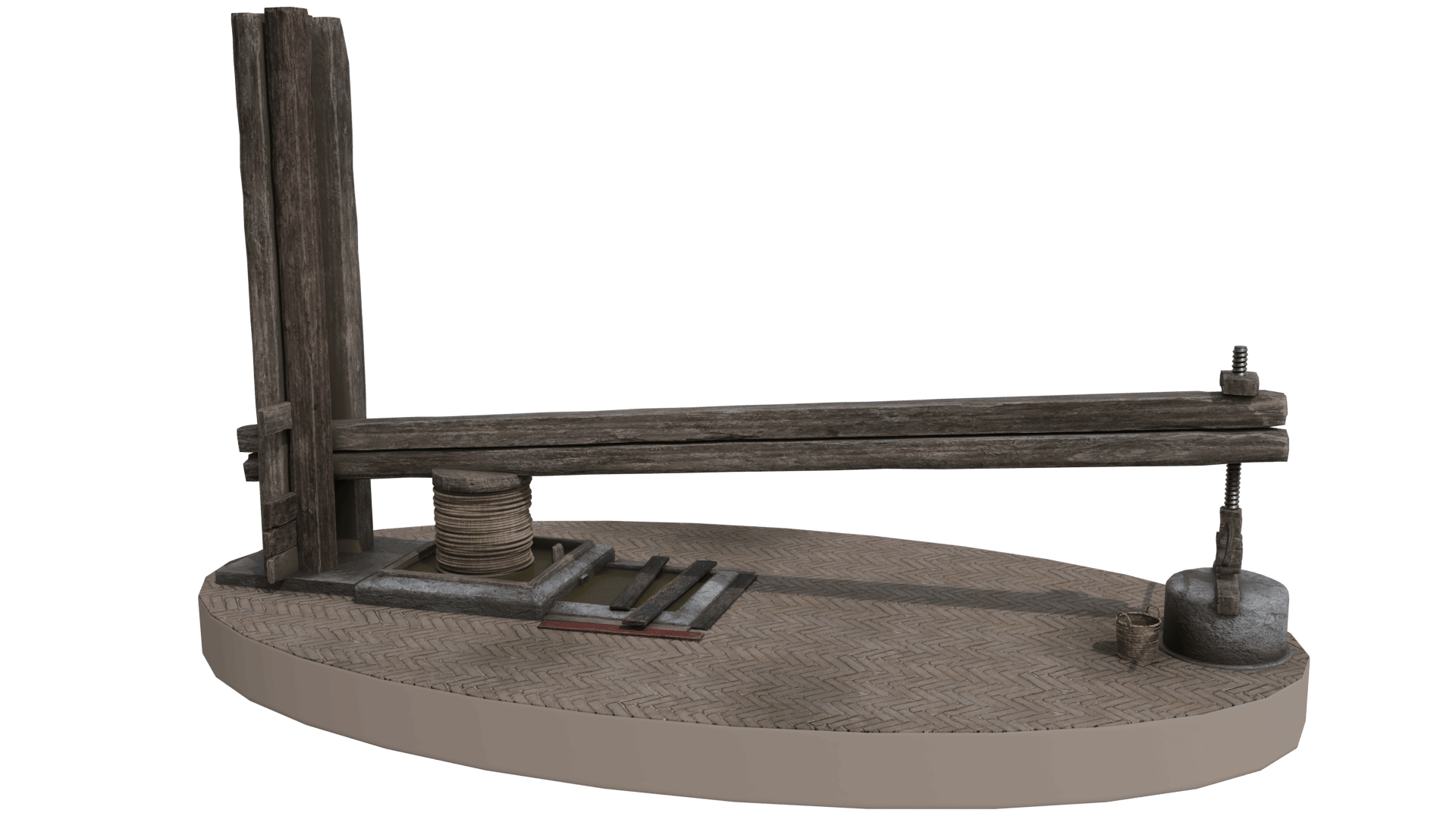
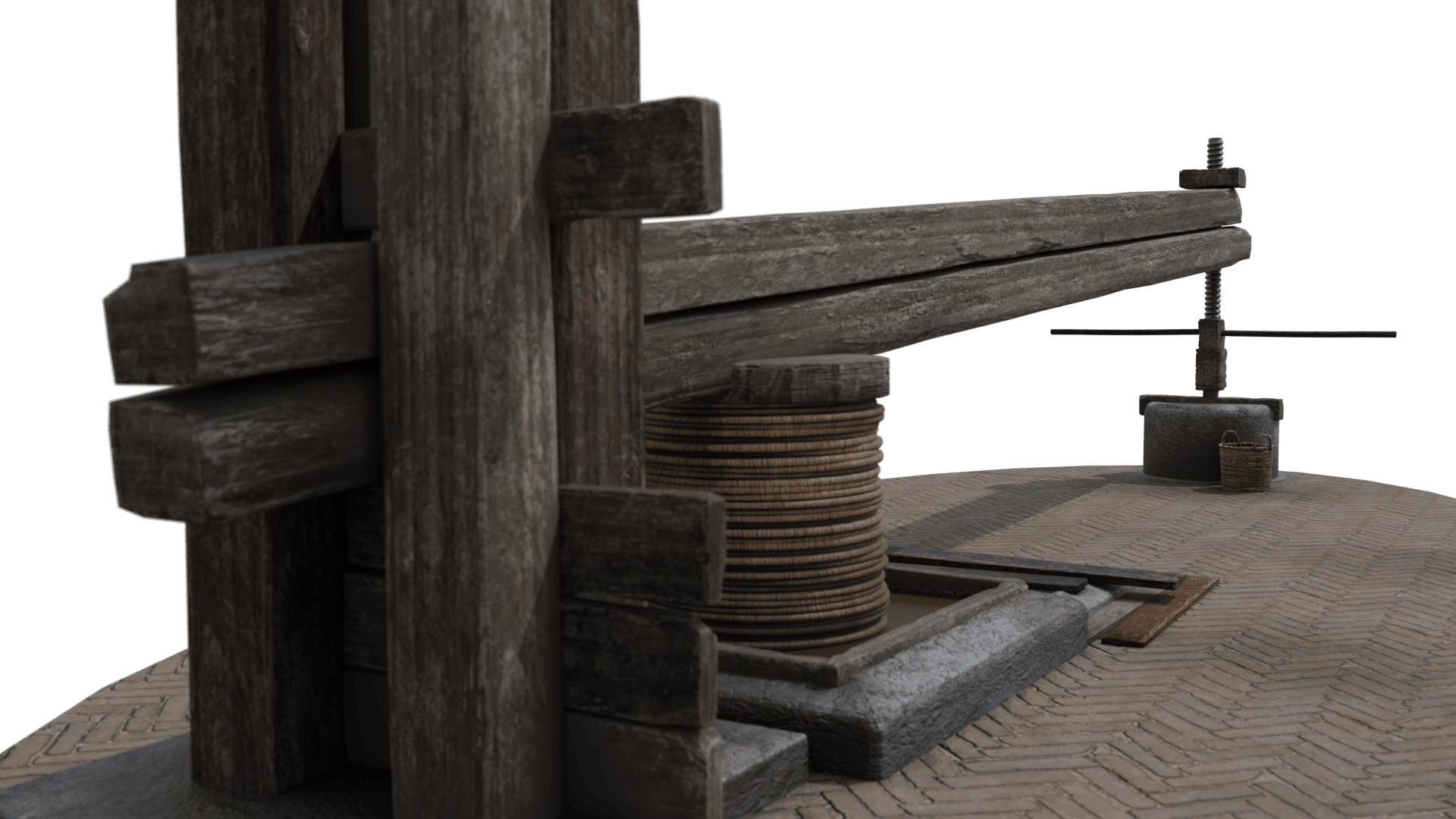
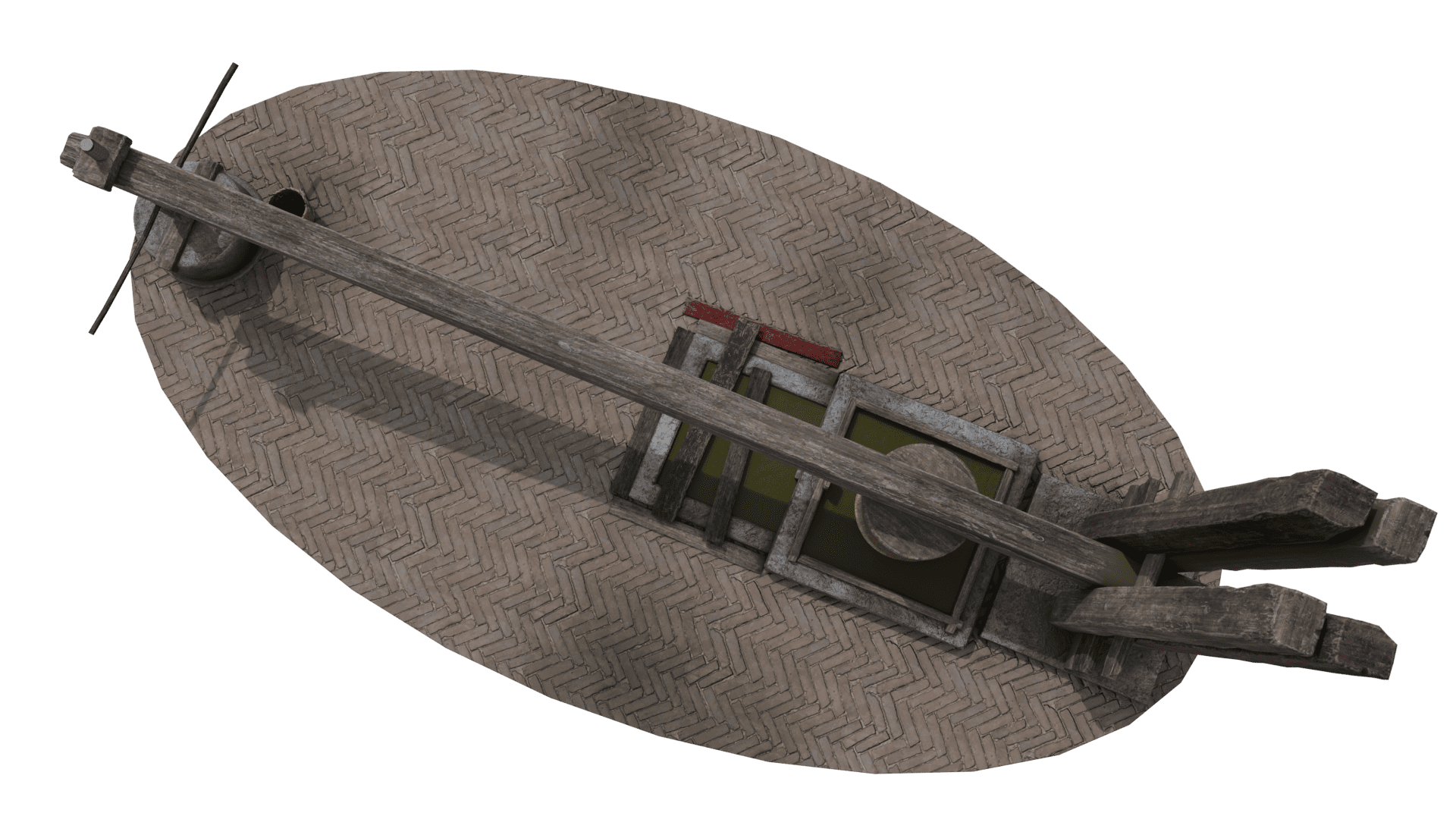
This 3D model recreates a Roman beam-and-screw press, used to extract oil from olive paste. Archaeological finds in the Estepa area have revealed installations and artefacts linked to olive oil production in Roman times, bearing witness to the importance of this activity in the region.
Know more
Oil production played a significant role in the economy of Roman Baetica. The Estepa region formed part of this vast producing area, which was well connected to the Guadalquivir valley and to the major distribution centres of Hispalis, Corduba and Astigi. The local connection to this activity is not based solely on later tradition: at the Cortijo de Bañuelos, within the municipal boundaries of Estepa, a limestone counterweight belonging to a Roman press has been documented, providing direct material evidence of these production facilities.
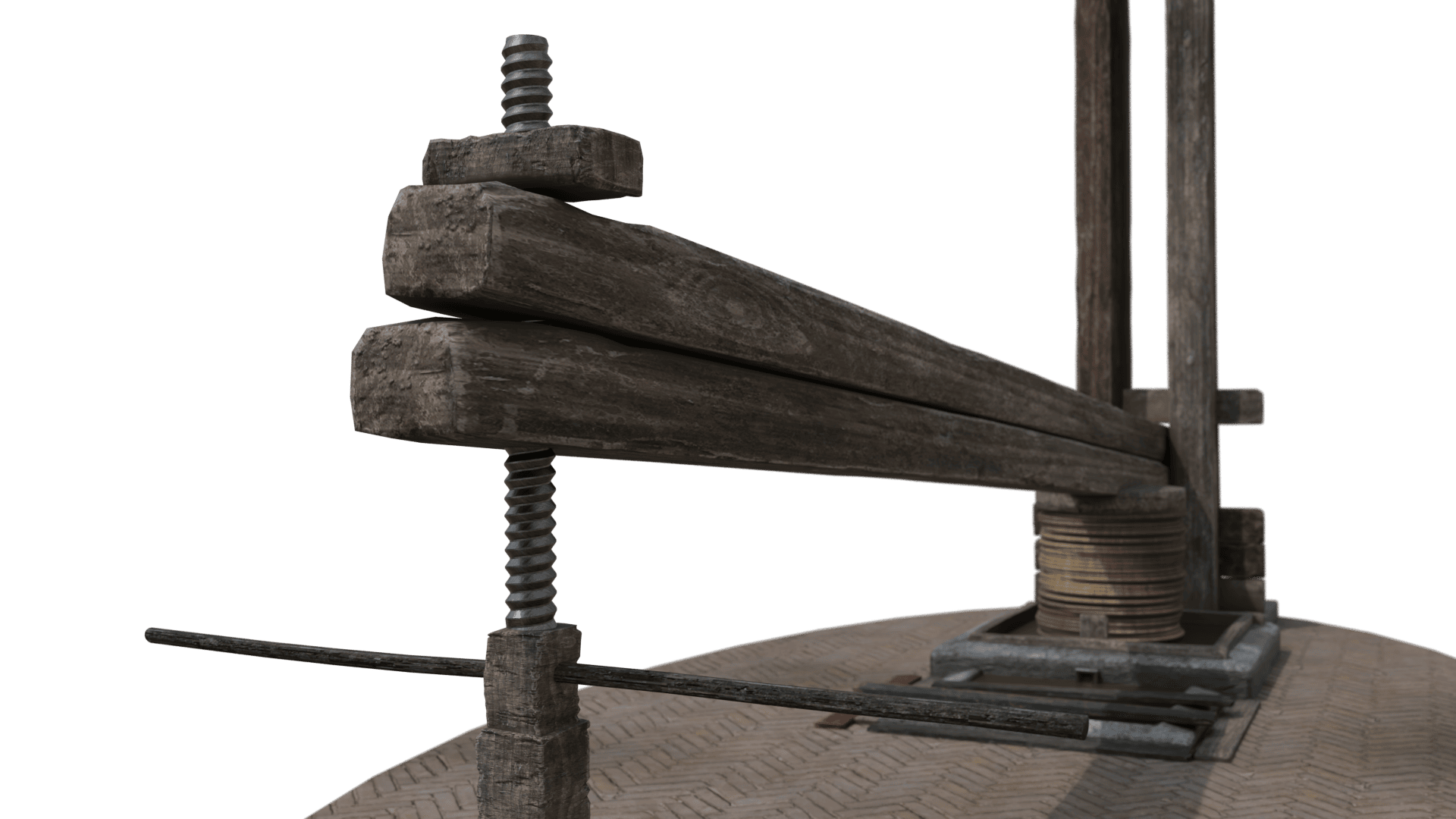
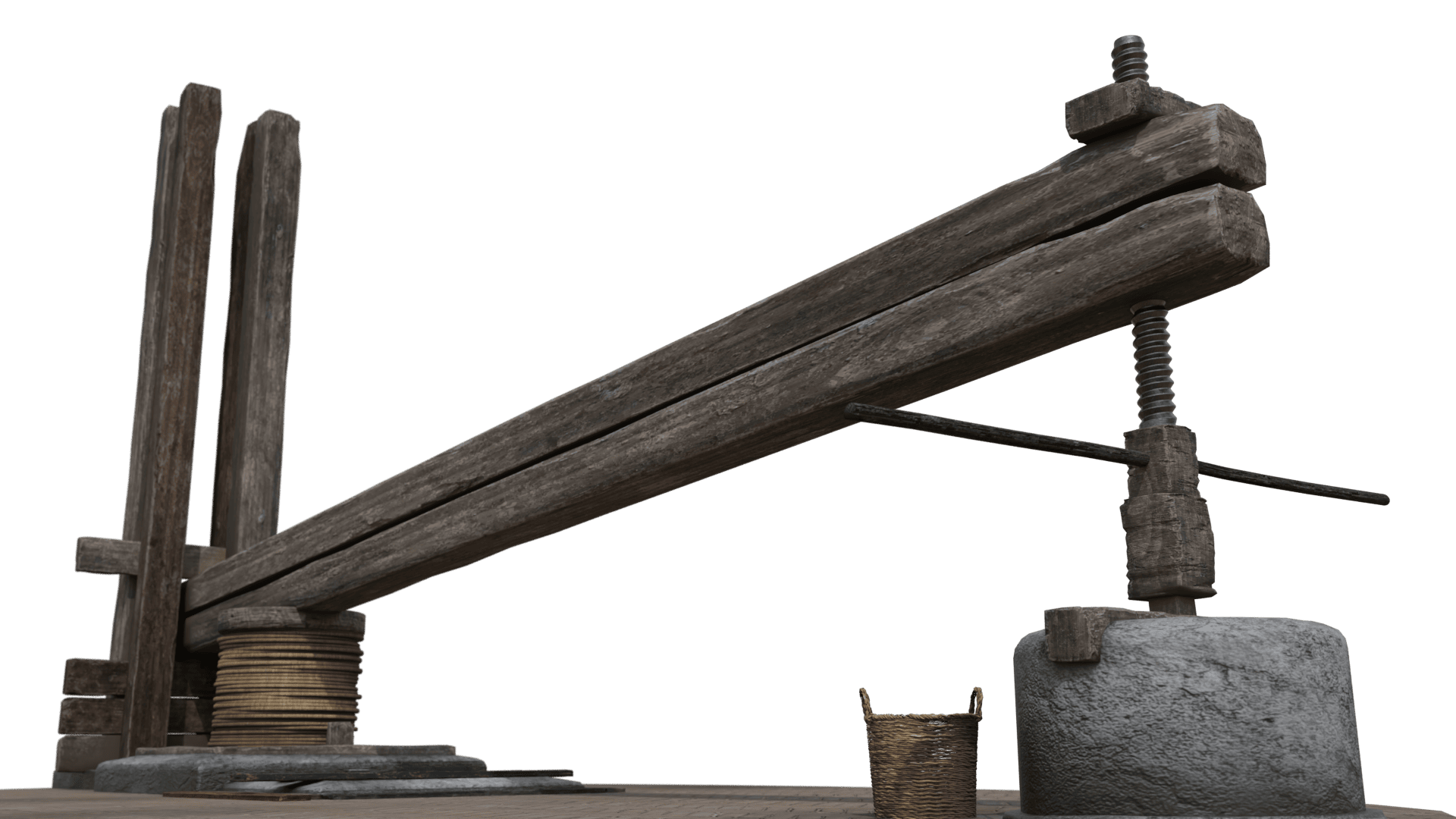
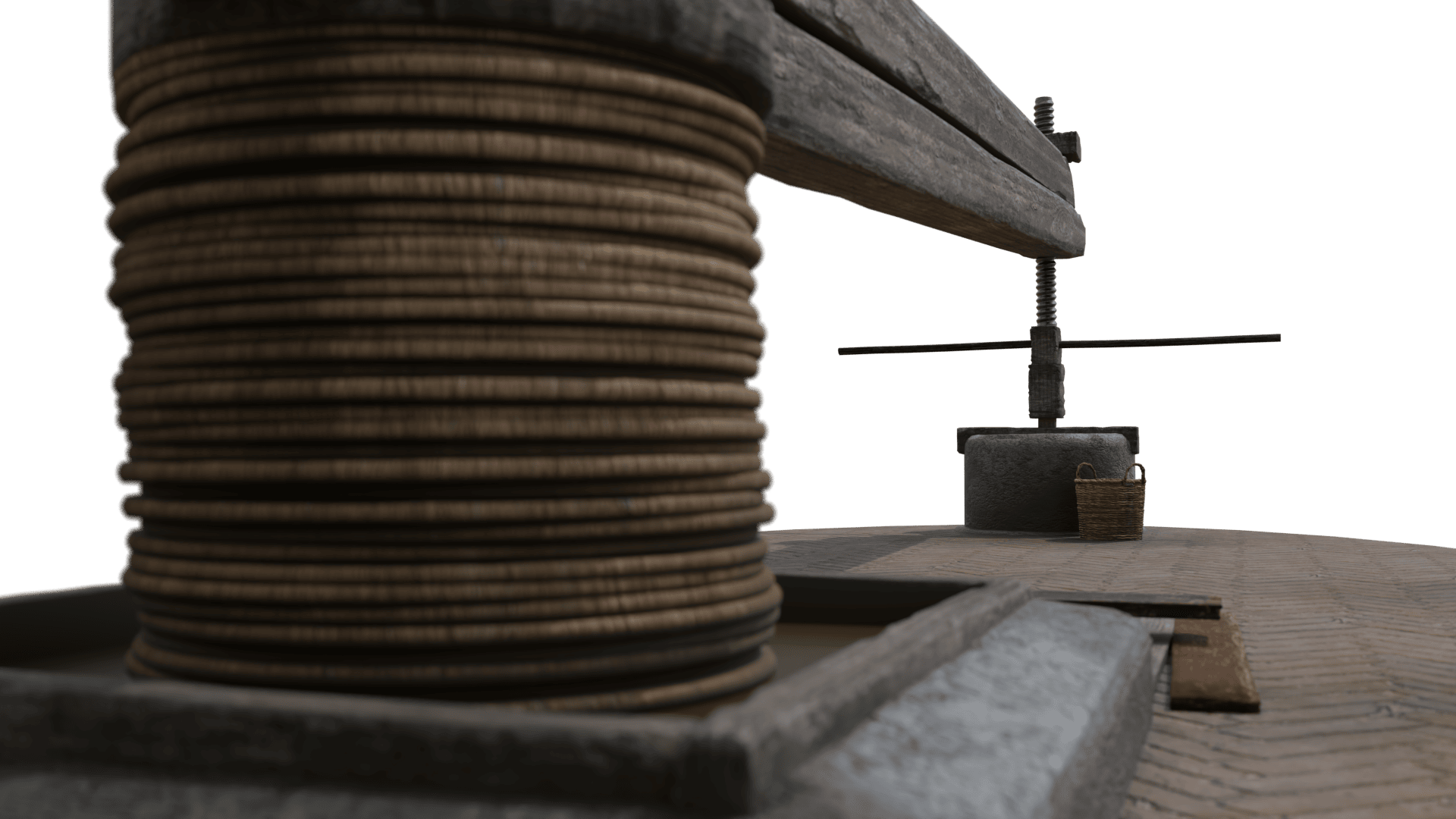
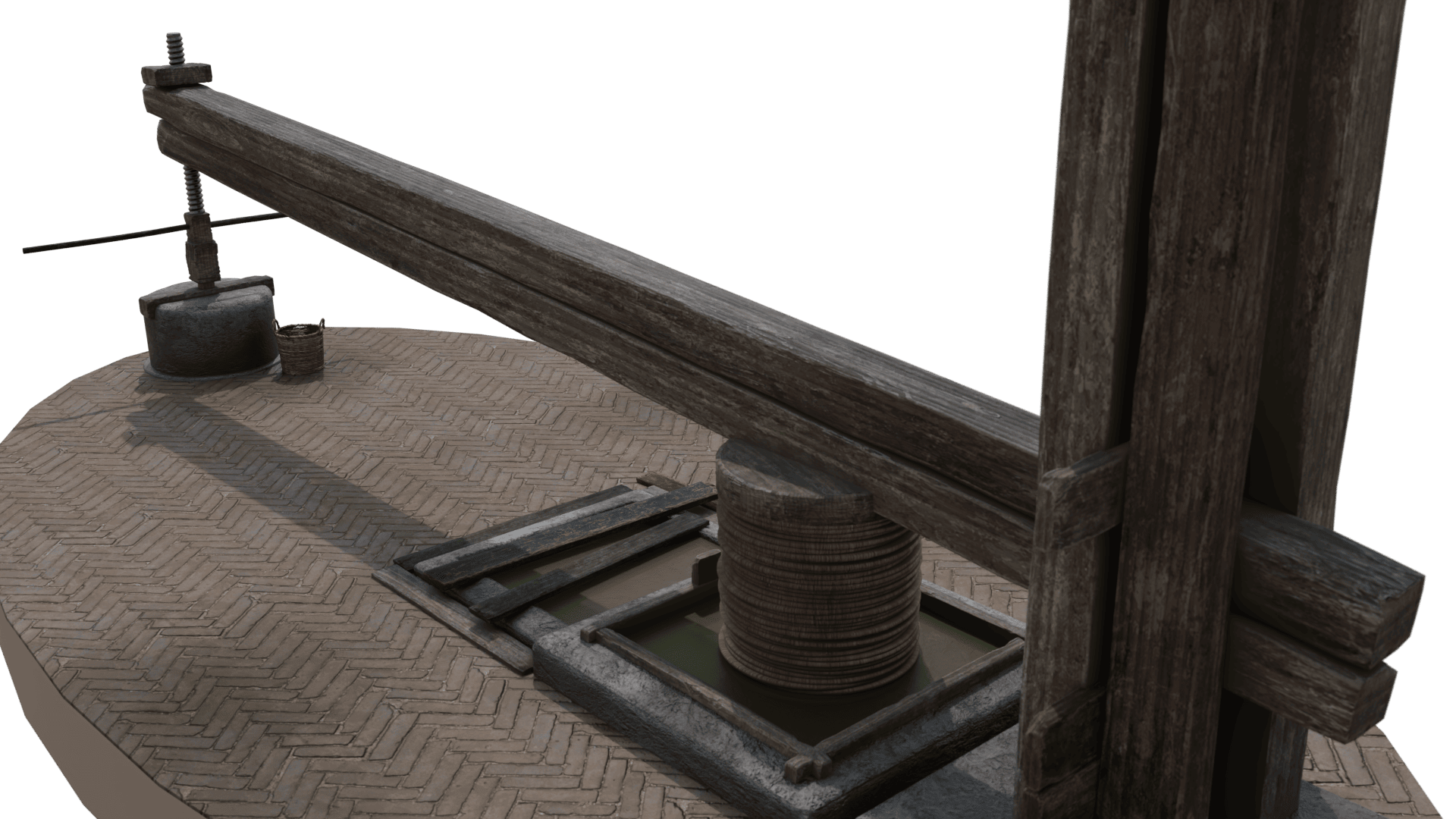
The 3D model shows a beam-and-screw press, the system that archaeological research has so far documented in the most complex olive oil production facilities in Baetica. Its main component was a long wooden beam that functioned as a large lever. One end was fixed in place, whilst at the opposite end a wooden screw, linked to a heavy stone counterweight, allowed it to be lowered gradually and maintain considerable pressure on the load.
Before reaching the press, the olives had to be crushed into a paste. This was spread out on ‘capachos’ – discs made of plant fibres – which were stacked one on top of the other beneath the beam. When the screw was turned, the pressure slowly squeezed the stack, causing a mixture of oil, water (naturally contained in the olives) and small impurities to flow out. The process did not end there: the liquid had to be channelled into containers or tanks where it was left to settle so that, thanks to differences in density, the oil could be separated by decantation.
The screw proved to be a particularly effective solution because it allowed the pressure to be regulated and maintained, whilst at the same time utilising the mechanical advantage of the large beam. Most of these machines were made of wood and, as such, have not usually survived. For this reason, stone elements such as the counterweights are essential for archaeologically identifying the presence of ancient presses. The specimen found at Bañuelos is particularly interesting in this regard: it directly links the technology represented in the model with the olive-growing activity documented in the Estepa region.
Nor did the history of these machines end with Rome. The principle of the large beam, driven by a screw and counterweight, survived – with modifications and improvements – for many centuries. Beam and quintal presses continued to be used in traditional Andalusian oil mills until they were gradually replaced by new industrial systems in modern times. The reconstruction thus allows us to observe an ancient technology whose mechanical principle enjoyed an extraordinarily long life within the culture of olive oil production.
3D Objects
Bibliography
· Peña Cervantes, Yolanda. La elaboración de aceite de oliva en la Bética romana. Técnicas y procesos. Estudio especializado sobre trituración, prensas de viga y tornillo, contrapesos y decantación en la Bética.
· Junta de Andalucía. Yacimientos arqueológicos de Estepa en el Catálogo General del Patrimonio Histórico Andaluz. Ficha del Cortijo de Bañuelos.
· Ayuntamiento de Estepa. El aceite de oliva. Historia de la actividad oleícola en la comarca y su vinculación con época romana.
· Junta de Andalucía. Pliego de condiciones de la DOP Estepa. Contexto histórico de la producción oleícola de la comarca.
· Moreno Onorato, Auxilio y Juárez Martín, José María. “Hallazgos romanos en la comarca de Estepa”, Cuadernos de Prehistoria y Arqueología de la Universidad de Granada, 10, pp. 413-447.